In this newsletter, you’ll learn how drop shipping works and discover why it’s the optimal way for you to start a new business. Let’s take a look.
What makes drop shipping great
One of the best things about drop shipping is that it allows you to start a business with no money down and with very little risk.
The low risk factor comes from the fact that you only have to pay suppliers when you sell something, and you don’t need to buy wholesale lots of stock. This means you’ll never have to risk buying stock that might not sell online.
Not having to buy wholesale stock also means that you don’t need to invest in a storage unit or a warehouse to store all your inventory, which can also eat into your profits.
Another major benefit of drop shipping is that you can offer your customers a wide variety of items. This is because you're not limited to dealing with just one supplier, as you can be when you buy a wholesale lot of items. With drop shipping, you can pick and choose the best items that several suppliers have to offer!
What you’ll love most about drop shipping, though, is that you can get started right now: You don’t need to save money, take out a bank loan, create a showroom or anything else to start selling! I'll come back to this later, but first of all, let me quickly explain how drop shipping works, because I get a lot of questions about this.
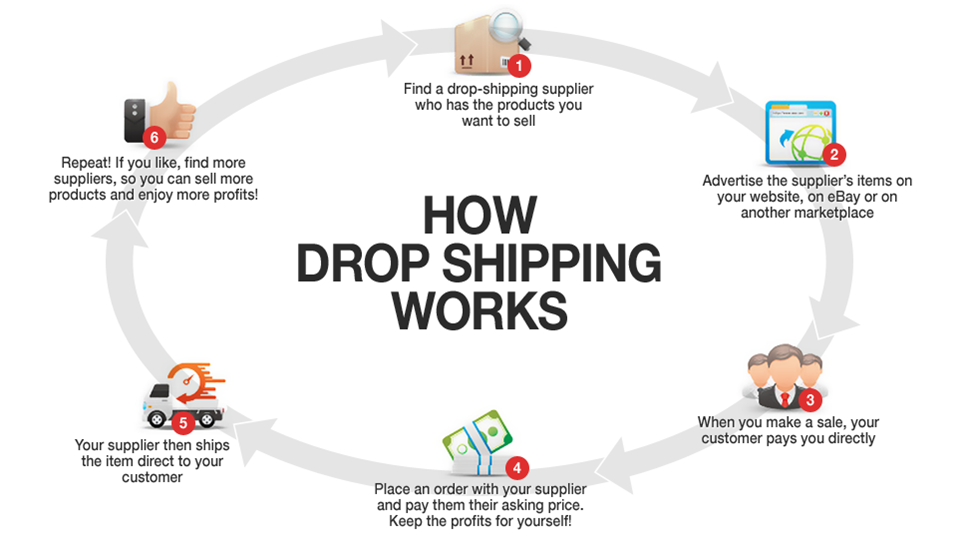
Drop shipping is actually quite straightforward, but there are a couple of steps involved. The diagram below covers each of these steps and shows you how drop shipping works.
The first step, which is at the top of the diagram here, is always to find a drop shipping supplier that you can trust and who has the product you want to sell.
You’ll usually create an account, so you can log in and view prices and products. Most drop shippers are free, but some charge a small setup fee to cover the cost of getting you set up in their system. You might not like the idea of paying this setup fee, but it’s usually only USD $20 or so and drop shipping suppliers must charge this in order to keep their prices down. They often get a lot of "phony" or "tire kicker" retailers who waste their time and you — the serious retailer — wind up paying more if drop shippers have to increase their product prices. The setup fee can also help ward off anyone who isn’t really serious about the business.
Moving clockwise on to step 2: Once you are all set up, you can start advertising your supplier’s products on your website, on eBay or on another marketplace.
When you make a sale, you move on to step 3, and your customer pays you directly. Most of your buyers won’t know, or won’t care, that you are drop shipping your products, so to them, this is a normal transaction.
In step 4, you place an order with your drop shipping supplier. Every drop shipper has a different system for taking orders. In some cases, it will be as simple as placing an order like you would if you were buying something from Amazon or another online store: Just select your product from the supplier’s website, add it to your shopping cart, and pay using your credit card. Other suppliers might take your order over the phone or via email. Either way, you’ll pay the supplier’s asking price and keep the profits for yourself!
Step 5 is when your supplier does the work! They pull the item from their inventory, pack it and ship it to your buyer. Some suppliers will include business cards, flyers or other marketing materials if you ask them to, but not all of them are set up to do this.
The last step is simple: repeat! The process of drop shipping rarely changes from transaction to transaction, and as you can see, it’s very straightforward. If you like, branch out and find more suppliers that you can work with so that you can offer your buyers more variety.
Can you really be successful with drop shipping?
You might be sitting there wondering whether drop shipping can really be a successful way to run a business. You’re right to question this method, given how easy it is, but the truth is, drop shipping products *is* a legitimate and profitable business! It’s a tried-and-true method.
Did you know that IKEA, the furniture retail giant, started its business using drop shipping? That was way back in the 1940s! While large brands still do use drop shipping, it’s even more popular for smaller "mom and pop" stores. Here’s an example:
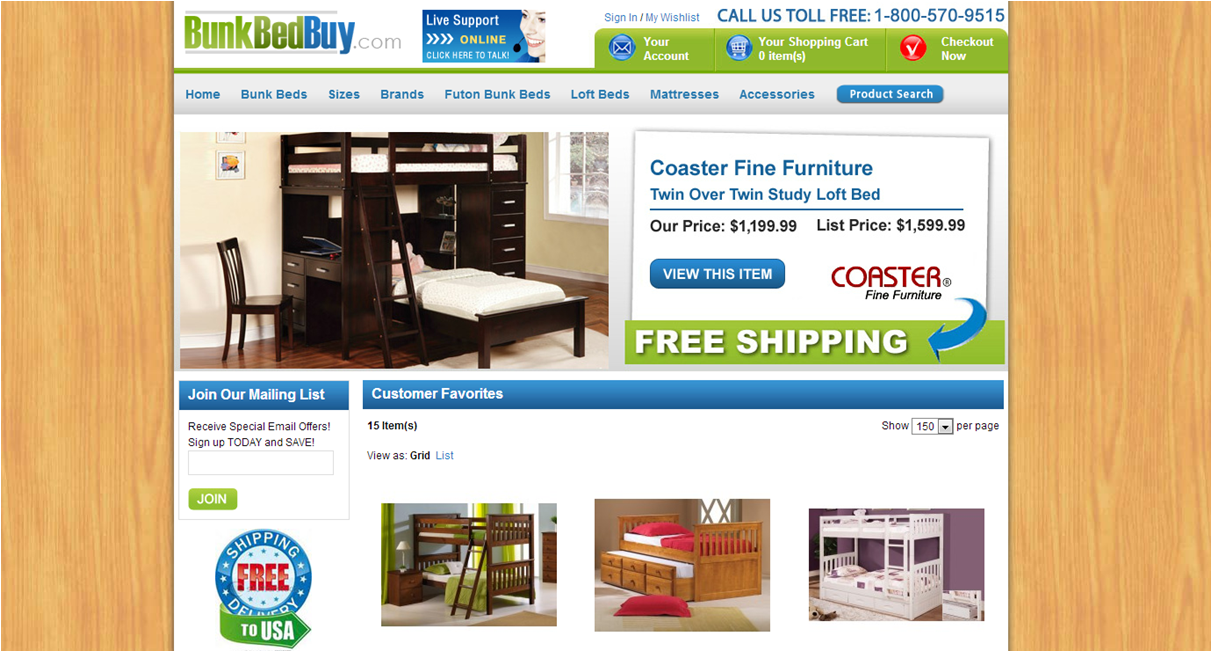
This is BunkBedBuy.com. It's a very small operation, but thanks to drop shipping, the site is able to offer a huge range of bunk beds, futons and loft beds. As you can imagine, it would require a large investment to buy and store hundreds of bunk beds, but drop shipping them means that BunkBedBuy can keep offering customers a wide range, without the risk or money required to buy them upfront. Want to know how much the owners make? Try $3,906 per month. How would you like another $4,000 or so in your bank account each month?
Ready to take action?
Hopefully, this newsletter has built up your excitement about drop shipping and you are ready to take action.
Get started the right way by joining SaleHoo, and get access to our directory of more than 8,000 trusted, pre-screened wholesale suppliers, including hundreds who offer drop shipping across dozens of product categories, including clothing, electronics, jewelry and more!
I have been selling on eBay part-time since 2002 and I am a former PowerSeller. In 2013 I decided to go full time on eBay and the first few months produced a small income of several hundr...read more
I have been selling on eBay part-time since 2002 and I am a former PowerSeller. In 2013 I decided to go full time on eBay and the first few months produced a small income of several hundred dollars a month. I knew if I wanted to do this full time, I needed to boost my sales. I stumbled upon SaleHoo and it is something I use every day in my business. My sales have increased dramatically; I have had over $4K in sales during the last two months.
The distributor information is very powerful linking me to wholesale suppliers, drop shippers and manufactures. The most valuable tool for me on SaleHoo is the Research Lab. It provides information on competition, sell through rate, when to end auctions and all of this information is essential if you want to make an income selling online.
I highly recommend SaleHoo. It is worth the investment and you will make that money back within the first month if you are diligent in your selling practices.