Generally speaking, product sourcing and setting up an online retail business is pretty straight forward. You come up with a few ideas for products you might sell and you choose a place to sell them. However, a lot of online sellers out there get a bit stuck when it comes to the actual sourcing of products from suppliers.
It's not really surprising that so many new sellers feel overwhelmed by the thought of doing business with a supplier for the first time - there is a lot to consider! And if you don't know what you are doing, it's easy to end up losing money with a bad supplier.
So with that in mind, this newsletter will cover some basic information about what product sourcing is, and what it involves, so that when it comes time for you to start sourcing some of your own products, you know what to expect.
We are also going to put suppliers under the microscope and examine exactly what it is that they do, who they are and how to deal with them!
What Is Product Sourcing?
Product sourcing is finding items to resell for a profit. Successful product sourcing is essential to creating an online retail business that is profitable in the long-term.
eBay Power Sellers and other professional online retailers take their product sourcing very seriously. Some will spend weeks researching the best way to source products to fulfil their business goals.
Successful product sourcing will allow you to:
- Select items that buyers want to purchase
- Buy those items at low prices to make good profits
- Find quality items that will help to increase your repeat customers
- Compete with other retailer's prices, both on and offline
- Offer your customers a good product range
Product Sourcing Methods
There are tons of places which you can source products from, and guess what? They don't all involve using professional suppliers.
Certainly the most conventional way to source products for reselling is through a supplier of some sort, but there are plenty of people who make a decent income selling items from alternative sourcing methods.
Selling Items From Around The Home
This might be short-lived for some people who don't tend to keep items hanging around when they aren't being used, but for most of us, it's the simplest product sourcing method there is, and a brilliant way to get your feet wet selling online.
Most people have hudreds or even thousands of dollars of goods lying around the house (and the garage - such a goldmine!) that simply aren't being used. This makes selling items from around the house a great way to get started in your product sourcing journey. It gives you some excellent experience selling, helping to familiarize you with all the processes involved, including listing items, managing buyer questions and packing and shipping items.
Selling items from around the house essentially gives you a 'free trial' in online retail - the opportunity to learn a lot about the business before actually investing any money. Lots of Power Sellers started out this way, and we at SaleHoo strongly recommend it as a first step for ALL newbies.
You might be looking around your place right now thinking you have nothing that you are willing to sell that anyone would actually pay money for, but you're highly likely to be wrong! eBay has even set up a funky interactive guide to help show you a few ideas for what you could sell.
Alternative Sources: Flea Markets, Estate Sales, Thrift Stores and Yard Sales
When you've sold the last item from the back of the closet, try these product sourcing ideas out for size - they're bursting with bargains that you can sell for great profits!
The best thing about these sourcing methods is that competition is often pretty low, so you're more likely to get some superb deals!
Often items at yard or estate sales sell for a fraction of what they would sell for on eBay. For example, few people are willing to spend $30 dollars on a dress that they find at a flea market, but buyers on eBay, for example, will think they are getting a bargain by paying only $30 for a dress.
This means there is an excellent opportunity for online retailers to make some quick cash by picking up items like a $2 vintage belt at a flea market, and then reselling it on eBay for $25.
The only downside to this method is that trawling through yard sales and/or thrift stores to find bargains can be time-consuming. To make the most of them, try to find a popular one-stop-shop type flea market where many stall-holders all come together and you can access a wider product range.
Estate sales are also a really good way to source products, but items are usually priced a bit more competitively than flea markets, so it's wise to do some market research before you go. Estate sales are often advertised in the classified section of local newspapers.
Introduction To Suppliers
The most popular way to source products is to use a professional product supplier. These come in a few different shapes and sizes, and in order for you to choose the best one for your business, you need to know a little about them. Let's start with who they are and what they do...
What Are Suppliers?
What's in a name, that which we call a supplier?
Suppliers are professionals that connect retailers with products. They come in various forms such as manufacturers, wholesalers, liquidators and drop shippers. Each supplier type holds an important part in the supply chain, and for us online retailers, they offer an excellent business opportunity.
Here's a quick-fire glossary so you can get a better understanding of supplier types.
Manufacturers:
This is where it all starts. Manufacturers buy in raw materials which they use to produce huge amounts of products. They usually operate out of large factories in industrial areas. Manufacturers can be found in most large cities, but the biggest concentrations are found in China and India where raw materials and labour are cheap. Some manufacturers will sell direct to retailers, but this is rare. They are much more likely to sell to factory-authorized bulk wholesalers or large stores like Target and WalMart.
Wholesalers:
Wholesalers are arguably the most popular and user-friendly supplier type. They buy from manufacturers in large amounts at a time (think thousands) then break the goods down into smaller lots to resell to retailers. They make very little profit per item, and instead rely upon selling in large bulk amounts.
Drop Shippers:
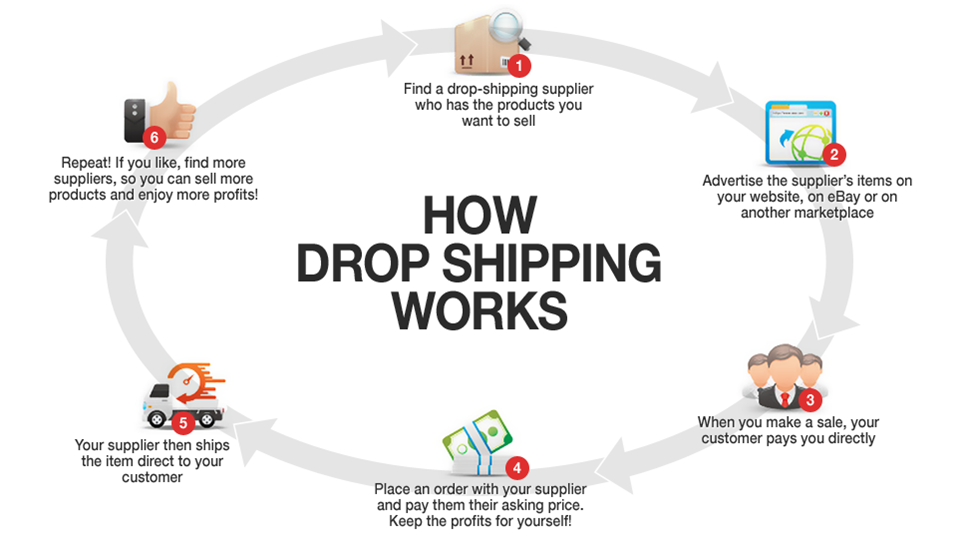
Drop shippers are wholesalers who offer drop shipping as a distribution method. Drop shipping involves partner clients who sell the wholesaler's goods on their behalf. These clients (the retailers) will create an account with the wholesaler and list one or more of the items the drop shipper has available. When the item is purchased, the retailer informs the wholesale drop shipper and pays them the wholesale cost of the item, keeping the profit.
The drop shipper then sends the item directly to the buyer. It may sound complicated, but it's actually a very simple system, and is very effective for a lot of sellers. We will be talking a lot more about drop shippers soon.
Liquidators:
Liquidators are at the end of the product chain, as they buy up items retailers no longer want to stock. Then they resell it again at a profit to eBay sellers and e-store owners looking for cheap inventory. One common way for liquidators to get hold of merchandise is to buy it from companies or stores that are closing down. They usually pay a single rock-bottom price to buy up everything, allowing the store owner to instantly get rid of old stock, clear out their warehouse or repay debts owed.
Another way liquidators get their hands on stock is when manufacturers produce faulty goods. As these cannot be sold at the retail price, the manufacturer reduces their wholesale price (often to as little as the cost to produce them) and sells them onto liquidators.
Liquidators also frequently buy up end of season items and shelf pulls from department stores.
So, we've given you a short introduction to the different types of suppliers out there so now let's take a closer look at how they work. The best way to demonstrate this is to show you the lifecycle of a product.
It goes something like this...

As you can see, the manufacturers get the ball rolling by producing the items, then selling them onto wholesalers.
The items are then supplied to you the retailer, and then sold on to consumers.
There are a few variations to this model. For example, some manufacturers will supply direct to retailers (think big stores like Target and Wal Mart) and sometimes big-time eBay Power Sellers who can buy 1000+ units per order.
Why Is Finding a Good, Trustworthy Supplier So Difficult?
It shouldn't be, but unfortunately there a quite a few con-artists out there who make a living scamming new and vulnerable sellers by fronting as established suppliers. Usually they will have a fairly legitimate looking website with product listings, and even customer testimonials.
However, lurking behind that website is a creepy con who is getting ready to play a nasty game - a game that you can't possibly win.
Lifting The Lid on Supplier Scams
There are a few different types of supplier scams. The worst are:
- Suppliers selling fake brand-name products. These suppliers can be spotted by the unbelievable prices they offer on popular products, like iPhones, designer handbags and jeans etc.
- Supplier 'fronts', who don't actually stock any product, and whose main intention is to get some money off you and then disappear. Sadly, this type of scam is most prevalent in China.
- Suppliers who advertise good quality merchandise but send out very cheap and nasty product quite different from what they advertised.
- Retailers pretending to be wholesalers. These sites often say 'wholesale prices'!, and although they don't steal your money, they can give the impression they are a legitimate wholesaler, when really they are just a discount retailer.
But don't worry! Stick with us and we will make sure that you never wind up being at the wrong end of a dodgy deal.
Quick Recap: Action steps
- Find a few items from around the house that you no longer use, and list them on eBay or another auction site. You can also try browsing flea markets, estate sales, thrift stores and yard sales to find some inventory. Remember that each of these product sourcing methods can help your business get started, although they are not very efficient long-term sourcing strategies.
- Start browsing the internet and looking at different supplier types. If you are a SaleHoo member, then you can easily compare different types of suppliers offering the same product, and see what will work best for where you want to sell.
- Remember that finding a reliable supplier isn't always easy so Unfortunately, it's not uncommon for new sellers to get taken for a ride by scammers.
Got some urgent questions about product sourcing and dealing with suppliers? In the next newsletter we answer 6 common questions from newbies about product sourcing. Find out where to find suppliers, how to avoid being scammed, whether you need to register your business, and plenty more. This Q & A session will arm you with essential product sourcing information from the pros.