

Quick answer
Six categories carry most of the action on eBay right now: consumer electronics and accessories, auto parts and accessories, tools and home improvement, health and recovery, beauty devices, and home and garden. Inside those, the money tends to sit in the accessories and the mid-priced workhorses, not the flagship items everyone fights over. And the single rule that beats every "hot product" list you'll read this year: chase sell-through, not hype.
That's it. The rest of this page shows you the specific products, what they actually sell for, how fast demand is moving, and the month each one peaks, so you can stock before the rush instead of after it. I'll also show you the stuff that looks tempting and quietly sits unsold, which almost nobody writes about. Honestly, that second list might save you more money than the first one makes you.
Jump to what you need:
- How something actually earns a spot on this list
- The three numbers that decide whether a product sells
- What's selling on eBay right now (with data)
- What quietly sits unsold
- The beginner on-ramp: start here if you're new
- The eBay mechanics that decide your margin
- How to find your own winners (not just copy mine)

How something actually earns a spot on this list
Most "best things to sell on eBay" articles are a list of categories someone guessed at, dressed up with a market-size stat. "The global apparel market is worth $1.79 trillion." Cool. That number tells you nothing about whether you can sell a hoodie this week.
I run our market-research tool, SaleHoo Insights, which tracks live demand, competition, average selling price, and sell-through across millions of products. So instead of guessing, every product below comes with three things pulled from that data: a real selling price range, how much demand has moved over the past 24 months, and the month it peaks.
That last one matters more than people think. Our seasonality scores are built on at least five years of global consumer-interest data, which is why we can say a solar power bank peaks in July and a massage gun peaks in December with some confidence, rather than just vibes. (Here's how we calculate seasonality if you want the methodology.)
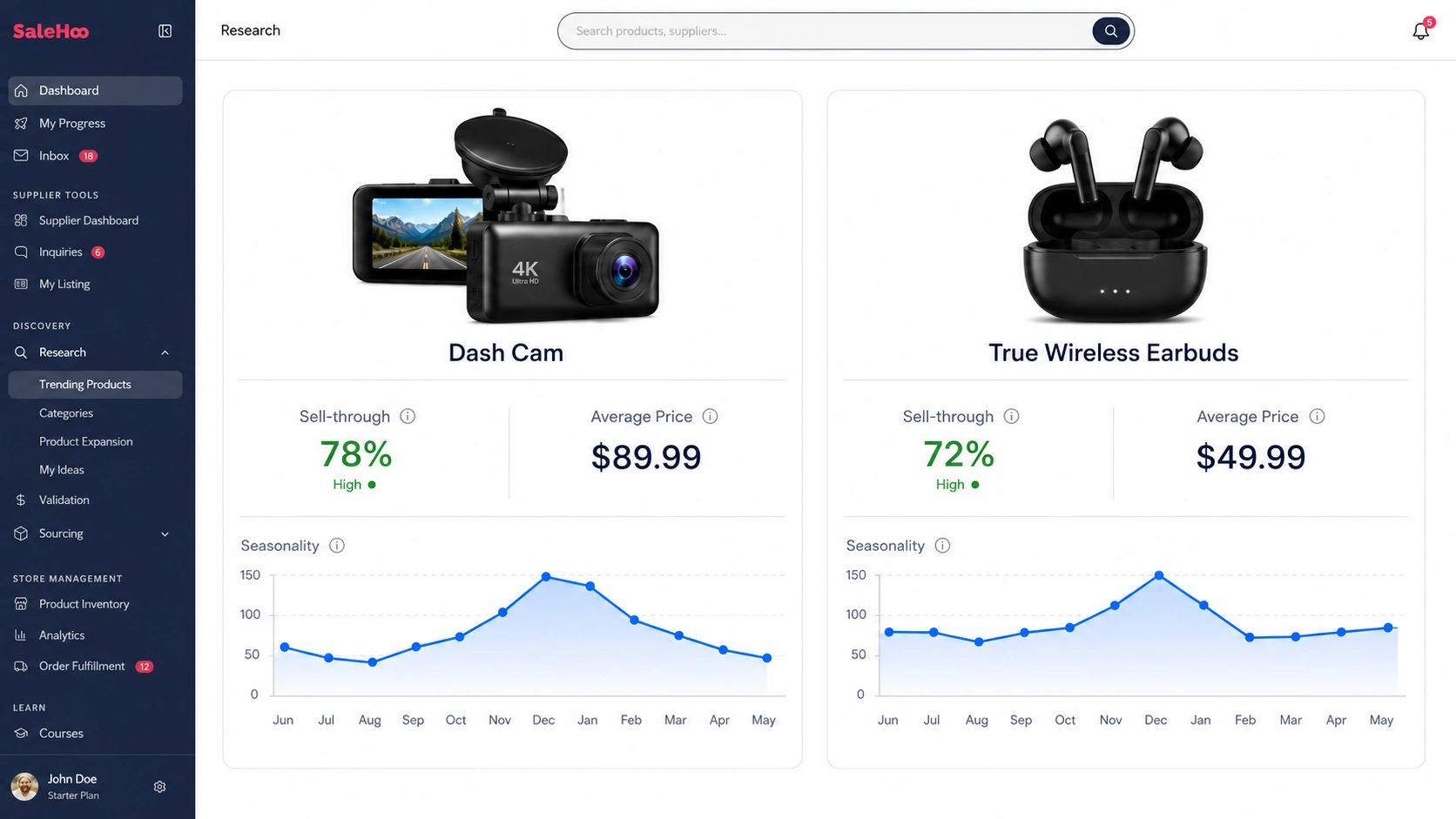
One more thing, and I'd rather say it up front. These figures move. The growth percentages and peak months are accurate as of June 2026, but the live Insights pages update daily, so if you're reading this six months from now, check the current number before you order stock. I'll link each product to its live page so you can.
The three numbers that decide whether a product sells
Before the list, learn the lens. Once you have it, you won't need anyone's list again.
Sell-through rate. This is the share of listings that actually result in a sale over a set period. A 90% sell-through means nine of every ten listings move. A 20% sell-through means most sellers are sitting on stock. High demand with a low sell-through is a trap, because it usually means the category is mobbed with sellers. You want healthy demand and room to win.
Price band and margin. A product's typical selling range tells you two things: what buyers expect to pay, and whether there's enough room to cover your costs. eBay's final value fee (more on fees below), shipping, and your cost of goods (COGS, what you actually paid the supplier) all come out of that band. A $12 gadget with $9 of cost and shipping is a hobby, not a business.
Seasonality. Demand for most physical products breathes in and out across the year. Selling a solar power bank in November is rowing against the current. Listing it in May, ahead of the July peak, means you're stocked and reviewed by the time buyers show up. The sellers who win on timing usually beat the sellers who win on price.
Hold those three in your head as you read. Every product below passes the first two, and I've given you the third for free.
What's selling on eBay right now (with data)
A quick orientation before the products. By share of listings, electronics is eBay's biggest category at roughly 16.4%, followed by apparel and accessories near 13.8%, then auto parts and accessories around 10.5%, according to eBay's own seller resources. Auto is quietly one of the strongest plays on the platform: parts and accessories generate over $10 billion in annual sales on eBay Motors, and about one in three eBay shoppers worldwide buys something from that category. Keep that in mind, because it's the category most beginners skip and most pros quietly love.
Now the products. Grouped by category, each with its live data and who's actually buying.
Electronics and accessories
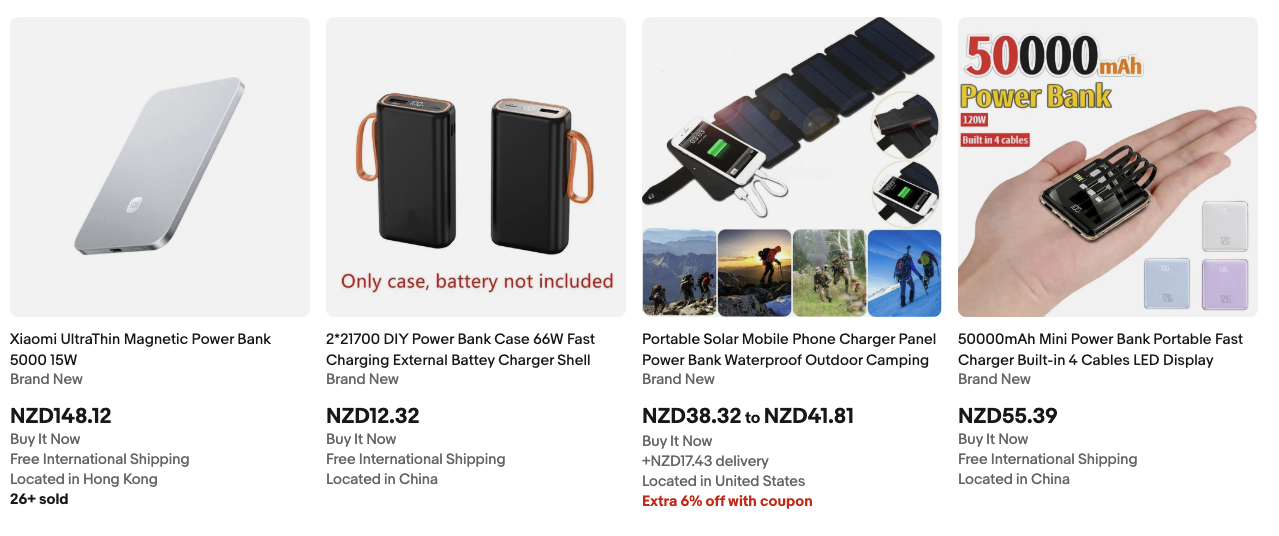
The pattern here is simple. The phones and consoles get the search traffic; the accessories make the margin. Sell the cases, not the iPhones.
Power banks and portable power stations. The everyday charging stuff stays in steady demand because every phone, tablet, and camp trip needs it, and buyers replace these constantly. Portable power stations run roughly $150 to $360 and serve campers, van-lifers, and anyone who's been through a power outage. Smaller phone accessories sit around $9 to $17 and sell on impulse and volume. Browse the live numbers on power banks and charging devices.
Solar power banks. This one's a genuine mover. Demand is up about 43.7% over the past 24 months, with a typical range of $30 to $150, and it peaks in July as outdoor season hits. So the play is obvious: source in spring, be reviewed and ranked by summer. See the live trend for portable solar power banks.
Wireless earbuds. Up roughly 32.6% over 24 months, typically $20 to $50. These are high-velocity, giftable, and bought as replacements when people lose a pair, which they do, often. The catch is competition and price sensitivity, so this is a volume game with tight, well-managed margins. Live data: wireless earbuds.
Bluetooth over-ear headphones. A step up in ticket and margin. Average selling price around $51 in a $30 to $80 band, demand up about 41.2% over 24 months, and a clean December peak driven by holiday gifting. If you only run one audio product into Q4, this is a stronger margin bet than earbuds. Live data: Bluetooth over-ear headphones.
Auto parts and accessories
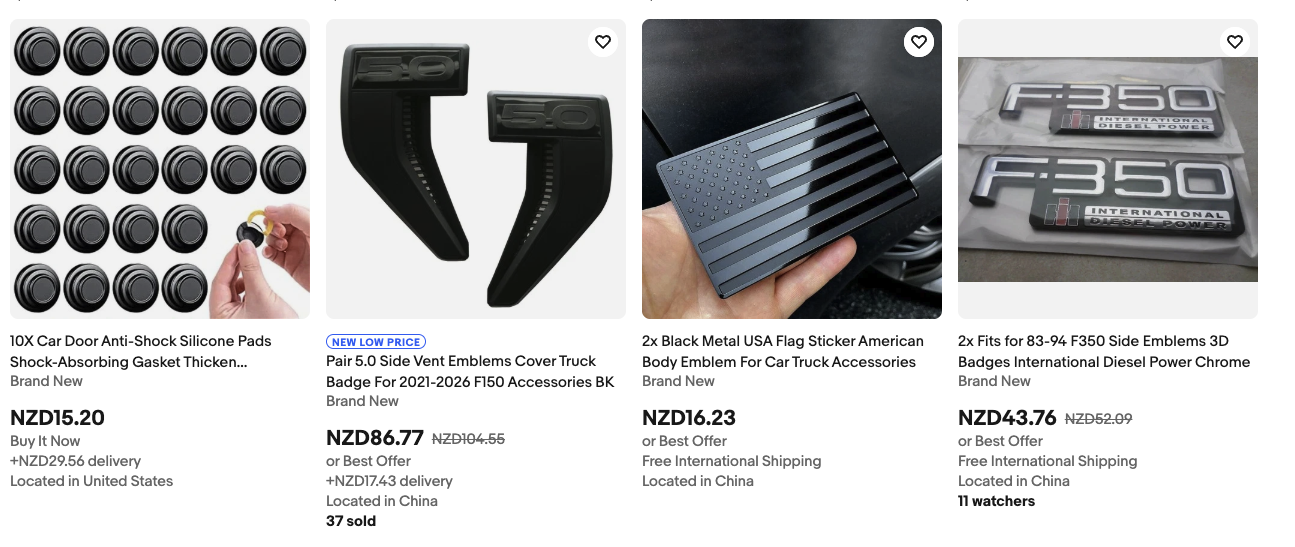
The category beginners overlook. Buyers here are motivated, specific, and ready to spend, because a broken part isn't a want, it's a need. Two things help you win: accurate fitment data (so your listing shows up when someone filters by their exact vehicle), and clear photos of the part numbers.
Dash cams. One of the strongest auto movers on the platform, up about 71.1% over 24 months, typically $60 to $170, peaking in June. Buyers want evidence for insurance and a sense of security, and that demand isn't going anywhere. For context beyond eBay, the global dashcam market is forecast to grow from around $5.41 billion in 2025 to $12.84 billion by 2030 (about an 18.8% CAGR), per ResearchAndMarkets. Live data: dash cams.
Steering wheel covers. A perfect low-risk starter item. Cheap to ship, easy to list, $13 to $20, with a December peak (cold hands, holiday gifting). Growth is modest at around 8.8%, but that's fine; this is a steady add-on and a low-stakes way to learn the auto category. Live data: steering wheel covers.
Car seat covers. Up about 25.9% over 24 months, $25 to $60, peaking in July alongside the rest of the car-accessory season. Buyers want to protect interiors or refresh a tired car cheaply. Universal-fit sets are the easy entry; vehicle-specific sets convert better but need more SKUs. Live data: car seat covers.
Tools and home improvement
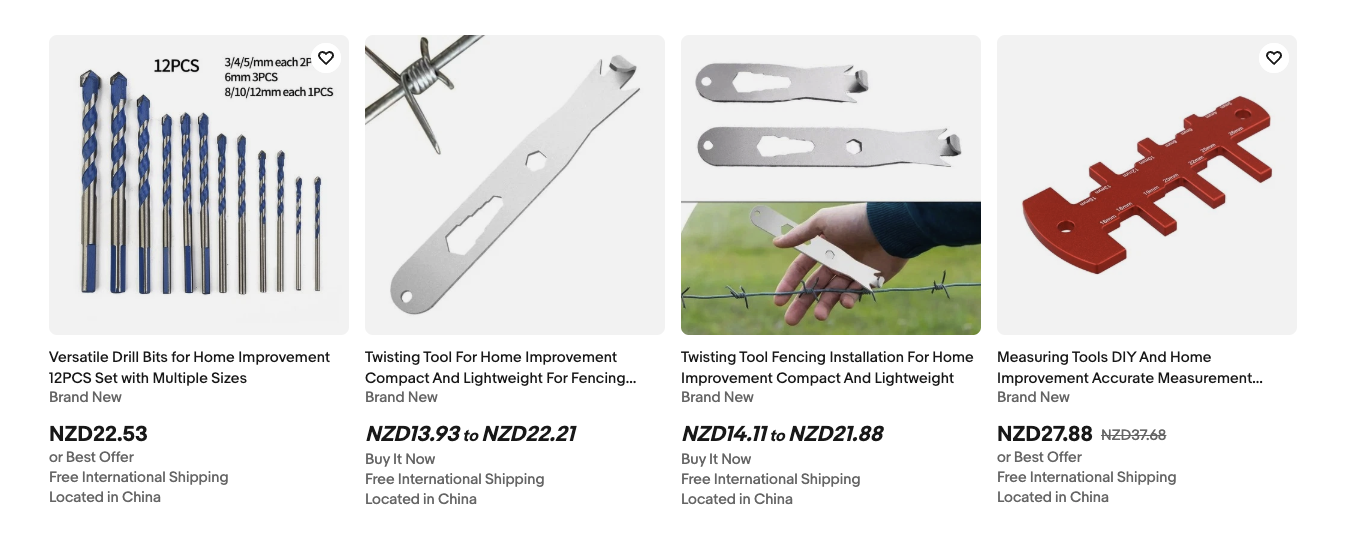
DIY didn't fade after the pandemic; it became a habit. eBay buyers in this category split into two groups: pros replacing gear and weekend renovators chasing a deal. Both buy a lot, and both come back.
Cordless and brushless power tools. Brushless tools (more efficient, longer-lasting motors) typically run $99 to $166 and pull serious buyer interest. Nail guns sit around $54 to $95. These are mid-ticket items with real margin and strong repeat behavior, because someone who buys your impact driver often comes back for bits and batteries.
Drill bits and consumables. The quiet winner. Drill bits run roughly $16 to $43, and they're a textbook attachment sale: low cost, high repeat, easy to bundle with the bigger tool. Stock the consumables alongside the headline tools and your average order value climbs. Browse the category data on home improvement and power tools.
Health, fitness, and recovery
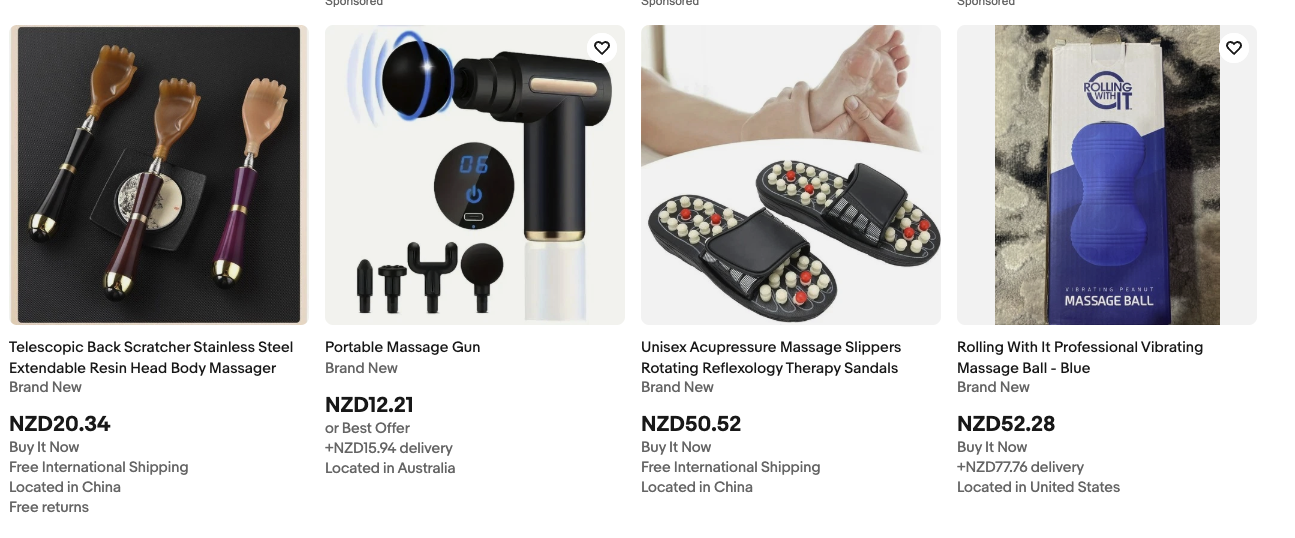
Wellness spending keeps climbing, and recovery tools have moved from gym-bro niche to mainstream gift. The bonus: most of these are giftable, which gives you a reliable Q4 spike.
Massage guns. Average around $55 in a $36 to $110 band, with a strong December peak. Here's the honest read most lists skip: the growth run cooled after a few hot years, so the smart play now isn't chasing the cheapest $40 knockoff. It's stocking quieter, mid-priced units and selling the attachments and maintenance packs alongside them. Listings that spell out noise level, torque, and battery life convert better and get returned less. Live data: massage guns.
Massage balls and small recovery tools. A great low-cost companion product. Up about 21.6% over 24 months, just $10 to $26, December peak. These are impulse buys and stocking-stuffers, perfect for bundling with a bigger recovery item to lift your cart value. Live data: massage balls.
Beauty tools and devices
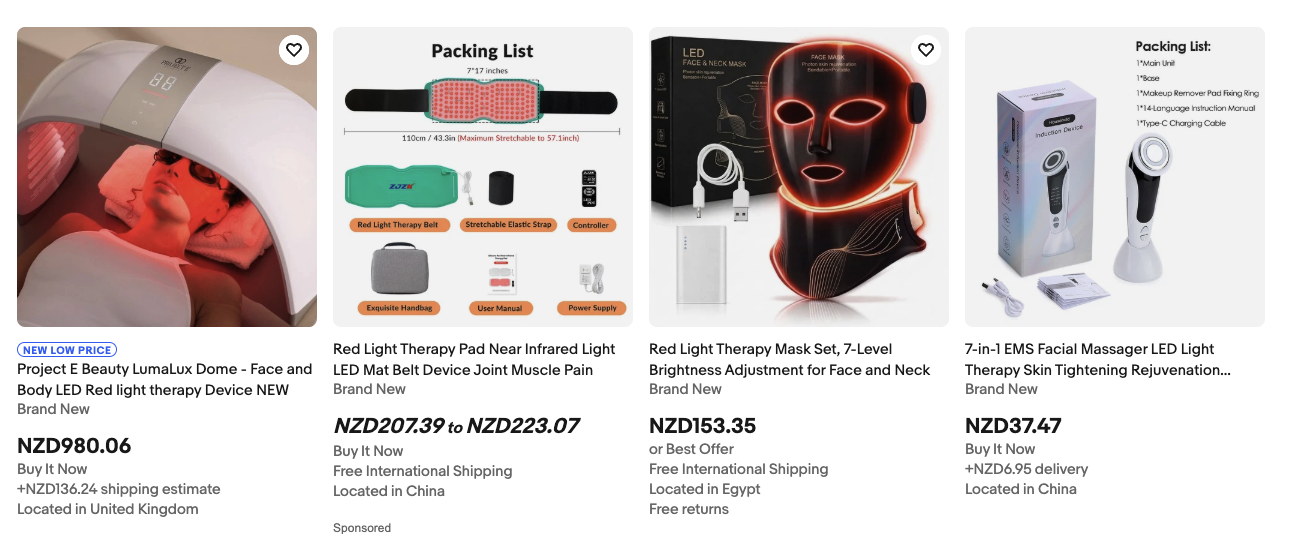
At-home beauty tech has real legs because the devices solve a recurring problem and buyers keep upgrading. This is a category where good photos and honest descriptions matter more than rock-bottom price.
LED and red light therapy devices. Typically $60 to $130, with steady, gift-driven interest. Buyers want skin and recovery benefits without a clinic visit. Pore vacuums ($19 to $40) and facial steamers ($40 to $90) are accessible entry products, while an electric gua sha peaks around November, ahead of holiday gifting. Browse the spread on beauty tools and devices.
What quietly sits unsold
This is the section the competitors leave out, and it's the one that protects your bank account. Some products look like obvious winners and then sit in a corner of your garage for a year. Here's what to watch for.
The saturated viral gadget. When a product blows up on TikTok, every dropshipper on earth lists it within a week. Demand looks huge. Sell-through quietly craters because there are 4,000 identical listings underpricing each other. By the time a "hot product" reaches a listicle, the easy money is usually gone. Check the sell-through before you believe the hype.
Branded items you can't prove are real. Counterfeit and grey-market goods will get your listings pulled and your account at risk, fast. eBay disqualifies them, and so do we when vetting suppliers. If you can't verify authenticity with paperwork or close-up photos of tags and serials, walk away. No margin is worth a suspended account.
Heavy, bulky, low-margin stuff. A $40 item that costs $28 to ship and arrives cracked half the time is a customer-service job, not a business. Oversized, fragile, or heavy goods eat your margin in shipping and returns. Beginners get seduced by the sticker price and forget the freight.
Electronics you can't warranty. I learned this one personally. One of the first things I ever sold was a barely-used camcorder, and I got buried in questions I couldn't answer ("how badly does the sun reflect off the screen?", "what does the warranty cover?") and a couple of buyers even phoned me. I was woefully unprepared. The lesson stuck: used electronics without a clear warranty are high-risk, because buyers expect you to be the expert and lose confidence the moment you can't be.
Anything you're only chasing because it's trending. If you have zero interest in the product and no way to add value, you'll write a flat listing, answer questions slowly, and quietly lose to a seller who cares. Pick categories you can actually stand behind.
If you're already holding stock that won't move, don't panic-dump it. There are smarter exits, from bundling to relisting strategy, in our guide on how to sell stale, slow-moving stock.
The beginner on-ramp: start here if you're new
If you've never sold on eBay, don't start by ordering a pallet of anything. Start with three moves, in order.
First, sell what's already in your house. It sounds like filler advice you've read elsewhere, and it is everywhere, for a good reason. eBay is a strange, intricate machine, and nothing teaches you the reality of listings, shipping, fees, and difficult buyers like doing it with stock you don't care about losing. There's a second payoff too: those first sales build feedback. Buyers genuinely hesitate to buy from a seller with single-digit feedback, so the first hundred sales are the hardest. Get them out of the way on low-stakes items. (Here's how feedback works and why it matters: eBay positive feedback.) You'll also learn your own selling personality, which products you enjoy, which ones drain you.
Second, move to small wholesale lots. Once you've got the mechanics down, buy small quantities of products people use daily and replace often. Resist the urge to sell everything to everyone. Target a specific buyer. Sales may start slower while you learn the niche, but you'll end up with sharper listings and far less dead stock. Good starting lanes: phone and tech accessories, auto add-ons, simple home and kitchen goods, basic apparel staples.
Third, get data-driven about niches. This is where you stop guessing and start using the numbers from the section above. Pick a category you can live with, then use the demand, competition, and sell-through data to find the specific products inside it that have room to win. That's the whole game from here on.
A seller who let the data pick her winner. Maggie Outridge and her partner sold their car for $12,000 and put every dollar into one product: a designer-style dog carrier for their brand, St Argo. They were sure the carrier was the hero. It wasn't. The collars and leashes they almost didn't make, stitched from leftover vegan-leather offcuts, turned into their best sellers. The cork-material collar they were excited about? A total flop. Eighteen months later, that $12K had grown into roughly $600,000 in sales (founder-reported, from her SaleHoo interview).
The takeaway isn't "sell dog collars." It's that your gut is a worse product-picker than your sell-through data. Maggie bet on the carrier; the market bet on the collars. So start lean, list a small range, and let the numbers tell you which product to pour money into, which is exactly what SaleHoo Insights shows you before you place an order instead of after.
The eBay mechanics that decide your margin
The product is only half the equation. The boring stuff below decides whether you actually keep any money.
Fees. eBay charges an insertion fee and a final value fee (a percentage of the total sale, including shipping), and the rate varies by category. This is the number most beginners forget when they price, and it's why that $12 gadget doesn't work. Run your real numbers before you list. Our step-by-step guide to eBay selling fees walks through the math, and the complete guide to high-profit selling on eBay covers the rest of the setup.
Authenticity Guarantee. For new and pre-owned sneakers in the US priced $75 and up, eBay routes the order through independent authenticators before it reaches the buyer. It's free for sellers and it builds trust, but it's a step to know about before you list kicks.
Guaranteed Fit (auto). For vehicle parts, eBay's Guaranteed Fit program reassures buyers the part matches their car, which cuts returns. Add accurate fitment data to your listings and you'll show up in filtered searches and convert more. In the auto category, fitment data isn't optional; it's how buyers find you.
Returns and processor holds. New sellers often hit a payout hold on early sales while eBay establishes trust, so don't count on cash being instant. And a clear, fair return policy usually wins more sales than it costs you in returns. Build both into your plan.
How to find your own winners (not just copy mine)
Here's the part most people miss. A list like this one is a starting point, not a strategy. The moment a product appears on a public list, more sellers pile in. The real edge is being able to run the research yourself, on demand, before the crowd shows up.
That's exactly what SaleHoo Insights is for. You filter by demand, competition, sell-through, price, and seasonality, find the products with genuine room to win, then jump straight to vetted suppliers for them. Every supplier in our directory clears a four-step check first: we verify their legal registration and ownership, confirm branded goods are genuine (counterfeits are disqualified on the spot), assess minimum order quantities, pricing, shipping, and returns, and then keep watching them through live reviews from our community of 137,000-plus sellers. The point of all that vetting is simple: you skip the scams I spent years getting burned by, and you start selling faster.
I'll be straight with you, the way our guidelines actually require me to be. If you only need to sell a few items from your closet this month, you don't need us; eBay's own free tools and a Saturday afternoon will do. SaleHoo earns its keep when you're ready to source seriously, sort real suppliers from fakes, and find products with data instead of guesswork. That's the moment it pays for itself.
When you're there, this is where I'd point you next.
→ Find products with real demand using SaleHoo Insights
→ Browse verified electronics suppliers or auto parts suppliers to source the categories above.
About this article
About the author


)