

Key takeaways
- Category fit beats platform size. The best app is the one where your item's buyers already hang out, which is why a niche marketplace often nets more than a giant one.
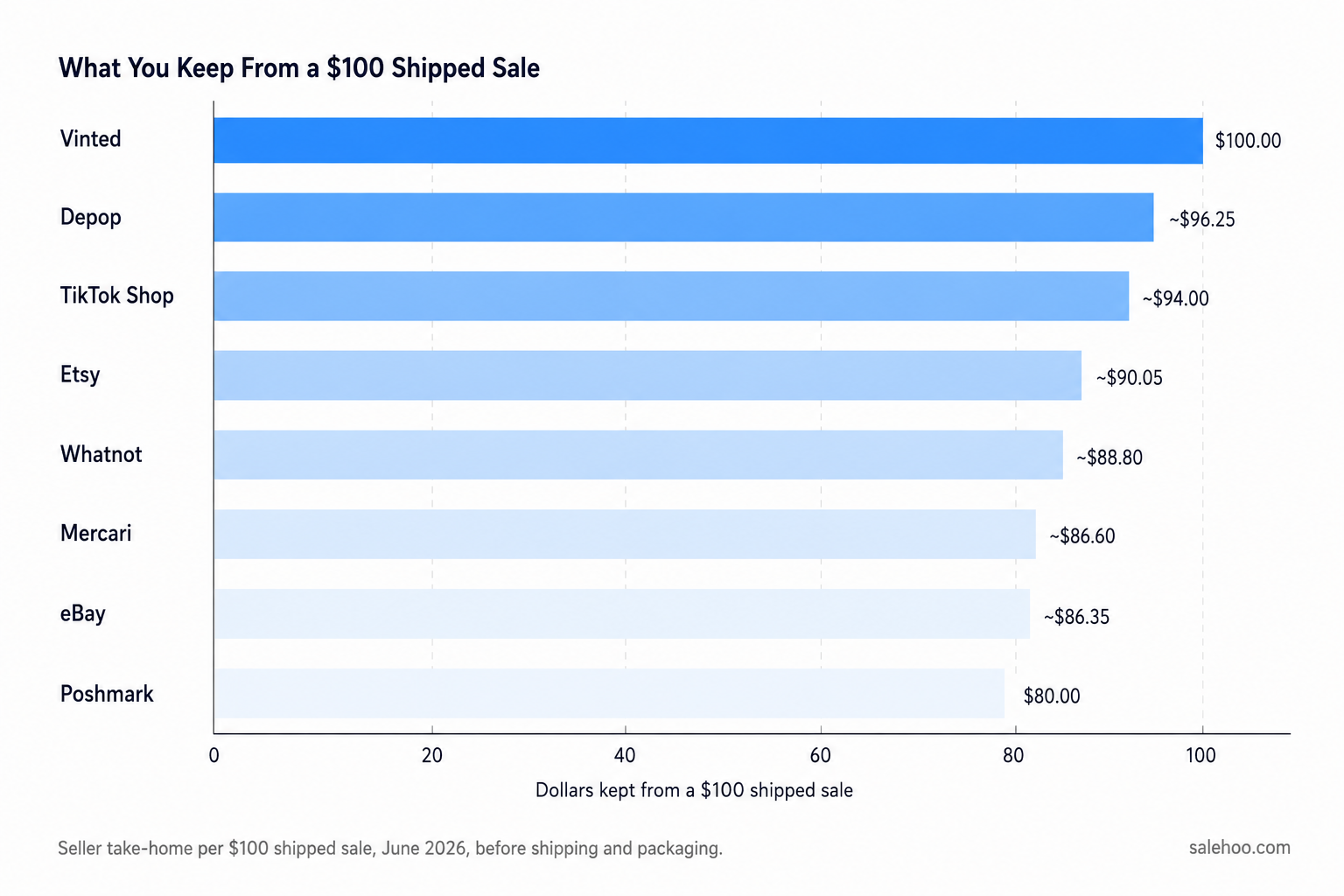
- Fees run from 0% to 20%, and the sticker rate isn't the real number. After processing, per-order charges, and shipping, a $50 sale can leave you about $35 before you've even counted what the item cost you.
- Let shipping decide local vs online. If postage would eat more than roughly 25% of your price, sell it locally. Facebook Marketplace, OfferUp, and Craigslist cost nothing for pickup.
- One app is plenty for a one-off declutter. For a real business, run your own store plus a marketplace or two, because eBay changes fees and Amazon suspends accounts without much warning.
- The app is maybe 30% of the outcome. The product is the rest. Check demand before you buy inventory, not after.

For most people selling most things, start with eBay (biggest buyer pool, sells almost anything). Selling locally? Facebook Marketplace, free for pickup sales. Clothes? Poshmark for brand names, Depop for vintage, Vinted if fees would eat your margin. Handmade or vintage goods belong on Etsy. And if you're building an actual business rather than clearing a closet, pair Shopify with a product-sourcing tool so you know what to stock before you spend a dime.
The longer answer depends on three things: what you're selling, whether it ships or gets picked up, and whether this is a one-time declutter or a repeat operation. This guide sorts all 19 apps by those decisions, shows you the take-home math on each, and covers the part every other list skips: what to sell once the app is picked.
I've been selling online since the early 2000s, first on Trade Me (New Zealand's eBay) out of my flat in Christchurch, and the questions people asked me about sourcing stock eventually became SaleHoo. So I've watched every one of these platforms from both sides: as a seller moving product, and as someone whose company has spent 20 years vetting the suppliers behind sellers on eBay, Amazon, Etsy, and Shopify.
The Best Selling App by Situation
- Best overall: eBay
- Best for local sales: Facebook Marketplace
- Best for brand-name clothes: Poshmark
- Best for vintage and streetwear: Depop
- Best for zero seller fees: Vinted
- Best for handmade and vintage goods: Etsy
- Best for electronics: Swappa
- Best for furniture and bulky items: Facebook Marketplace or OfferUp
- Best for building a real ecommerce business: Shopify
- Best for live selling: Whatnot
- Best for viral, video-friendly products: TikTok Shop
- Best for print-on-demand: Printful
- Best for finding products and suppliers to sell: SaleHoo
19 Best Selling Apps Compared
| App | Best for | Seller fees | Local or shipped | Effort | Main drawback |
|---|---|---|---|---|---|
| eBay | Almost anything | ~13.25% + $0.40/order | Shipped (local possible) | Medium | Fees sting on cheap items |
| Mercari | Easy closet clearing | 10% + processing | Shipped or local | Low | Fees returned in Jan 2025 |
| Amazon Seller | Branded volume | 8–15% referral (most categories) + FBA | Shipped | High | Pay-to-play; strict rules |
| Facebook Marketplace | Fast local sales | Free local / 10% shipped | Both | Low | No-shows and lowballers |
| OfferUp | Verified local buyers | Free (local only since Sept 2025) | Local | Low | No shipping option now |
| Craigslist | Bulky cash sales | Free (most categories) | Local | Low | Zero platform protection |
| Poshmark | Brand-name fashion | 20%, or $2.95 under $15 | Shipped | Medium | Highest commission here |
| Depop | Vintage, Y2K, streetwear | 0% + 3.3% + $0.45 processing | Shipped | Medium | Photos must be styled |
| Vinted | Cheap fashion, zero fees | 0% (buyer pays protection fee) | Shipped | Low | Smaller US buyer pool |
| ThredUp | Zero-effort clothing | Consignment payout, 5–80% of price | Shipped (send-in bag) | Minimal | Payouts are small |
| Etsy | Handmade, vintage 20+ yrs | $0.20 listing + 6.5% + processing | Shipped | Medium | Fees stack up |
| Whatnot | Live auctions, collectibles | 8% + 2.9% + $0.30 | Shipped | High | Must apply; streaming takes energy |
| Swappa | Phones, laptops, consoles | 3% + PayPal processing | Shipped | Low | Tech only; no broken items |
| Shopify | Your own store | From $5/mo (Starter), $39/mo (Basic) | You decide | High | You bring the traffic |
| WooCommerce | Full ownership, technical | Free (you pay hosting) | You decide | High | You maintain everything |
| Square Online | Brick-and-mortar going online | 3.3% + $0.30 on free plan | Both | Medium | Best only if you use Square POS |
| TikTok Shop | Impulse buys, video products | 6% referral | Shipped | High | Needs content, not just listings |
| Printful | Print-on-demand designs | Free; you pay per product made | Shipped (they fulfill) | Medium | Per-unit costs squeeze margin |
| SaleHoo | Sourcing products + suppliers | $9–49/mo subscription | n/a (sourcing layer) | Low | Not a marketplace itself |
Fee figures checked June 2026. Fees change often, so confirm on each platform before pricing your items. Want the exact math on a specific sale? Our eCommerce profit calculator does it in seconds.
How We Picked These 19 Apps
Plenty of lists in this space are written by people who've never packed a box. Here's what we actually weighed, in order of how much it matters to your bank account:
- Seller fees and payout speed. Not the headline rate, the real take-home after processing fees and per-order charges.
- Buyer reach for your category. A smaller app full of the right buyers beats a giant app full of the wrong ones.
- Listing workflow. How many minutes from photo to live listing.
- Shipping and pickup support. Prepaid labels, local options, and who eats the cost.
- Trust and seller protection. What happens when a buyer claims "not as described."
- Fit for your seller type. We label every pick for casual sellers, resellers, or business builders, because those are different jobs.
We also update this page when fees change, and platforms changed a lot recently: Mercari brought back its 10% seller fee in January 2025, OfferUp killed nationwide shipping in September 2025, and Depop dropped seller commissions entirely for US sellers back in 2024. If a "2026" guide still shows Depop charging 10%, it hasn't been touched in two years.
Best Apps to Sell Almost Anything
1. eBay
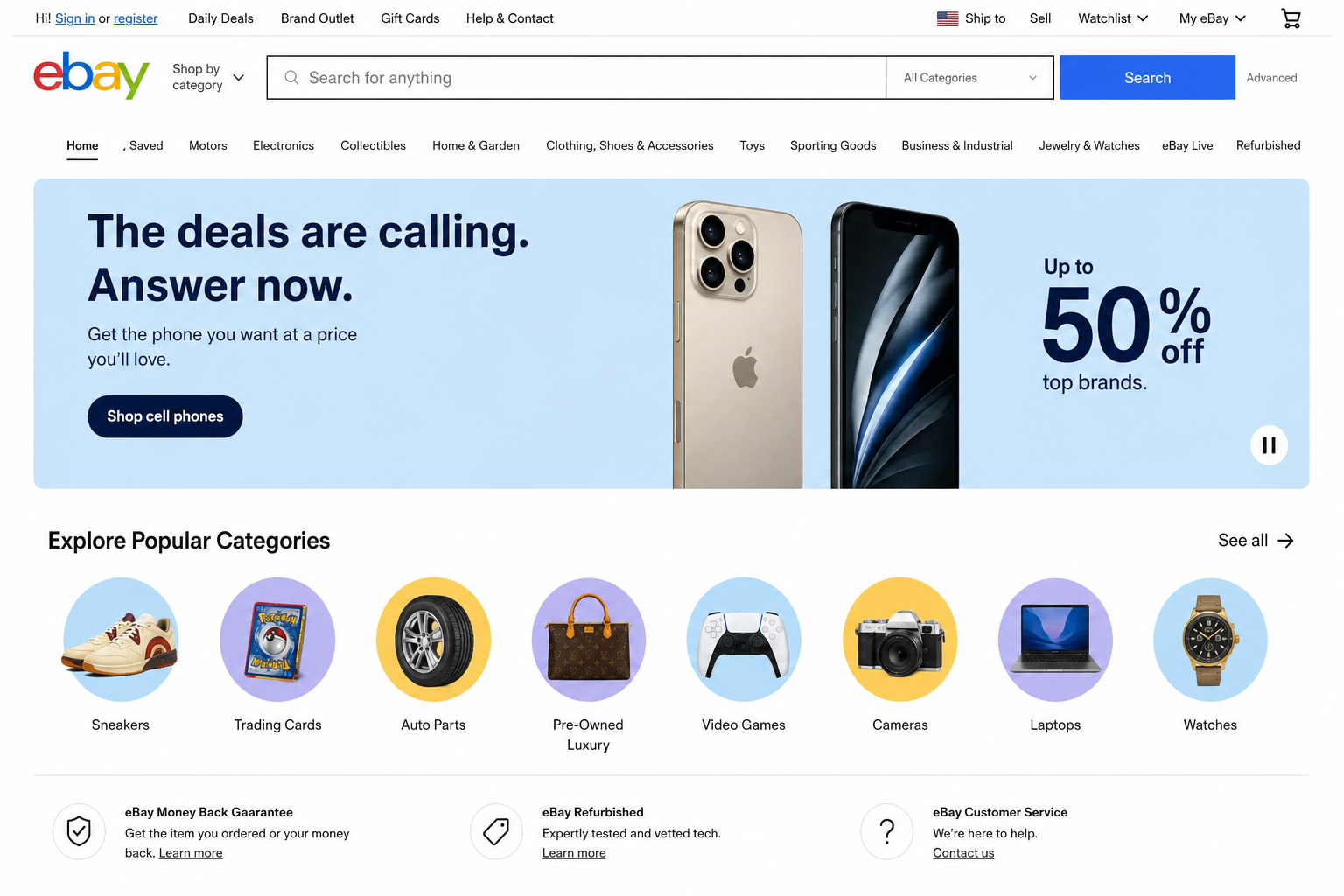
Still the default answer, and for good reason: the buyer pool is enormous and the search intent is strong. People come to eBay looking for something specific, which means your weird, niche, or used item gets found. As of mid-2026, most categories pay a final value fee of about 13.25% plus a small per-order fee.
The International Shipping Program is quietly one of its best features. You ship to a domestic hub, eBay handles customs and the rest. Selling a vintage camera to a collector in Germany takes no more work than selling it to one in Ohio.
- Best for: Collectibles, used electronics, auto parts, anything with a searchable model number
- Fees: ~13.25% most categories; first 250 listings/month free
- Use this if: You want the biggest possible audience and don't mind fees
- Avoid this if: You're selling $8 items where fees plus shipping erase the profit
- Verdict: The safest single choice. If you're only downloading one app, it's this one. Not sure what moves there? Start with what sells best on eBay.
2. Mercari
The easiest listing flow of any general marketplace. Photograph, describe, price, done, usually under three minutes. Mercari experimented with zero seller fees, then reinstated a 10% seller fee in January 2025 alongside a buyer service fee. It's still the right pick for people who find eBay's options overwhelming and just want the garage empty.
- Best for: General household clutter that isn't trendy enough for Depop or valuable enough for eBay
- Fees: 10% + payment processing
- Use this if: You want simple more than you want optimized
- Avoid this if: You're chasing every last dollar of margin
- Verdict: The path of least resistance. Fine trade for casual sellers.
3. Amazon Seller
Amazon is a volume machine, and it charges like one. Referral fees run 8 to 15% in most categories (clothing over $20 hits 17%, jewelry 20% up to $250), plus FBA costs if Amazon handles fulfillment. And it's pay-to-play now: expect to spend on ads before your first organic sale.
But nothing else moves branded product at this scale. If you have your own product line and margins that survive the fee stack, FBA removes your entire logistics burden.
- Best for: Private-label brands chasing volume
- Fees: 8–15% referral (most categories) + FBA fees
- Use this if: Your margins survive 15% plus fulfillment plus ads
- Avoid this if: You're a casual seller. The rules alone will exhaust you.
- Verdict: A business platform, not a decluttering app. If you go this route, read up on Amazon dropshipping rules first, because compliance mistakes get accounts suspended fast.
Best Apps for Selling Locally
4. Facebook Marketplace
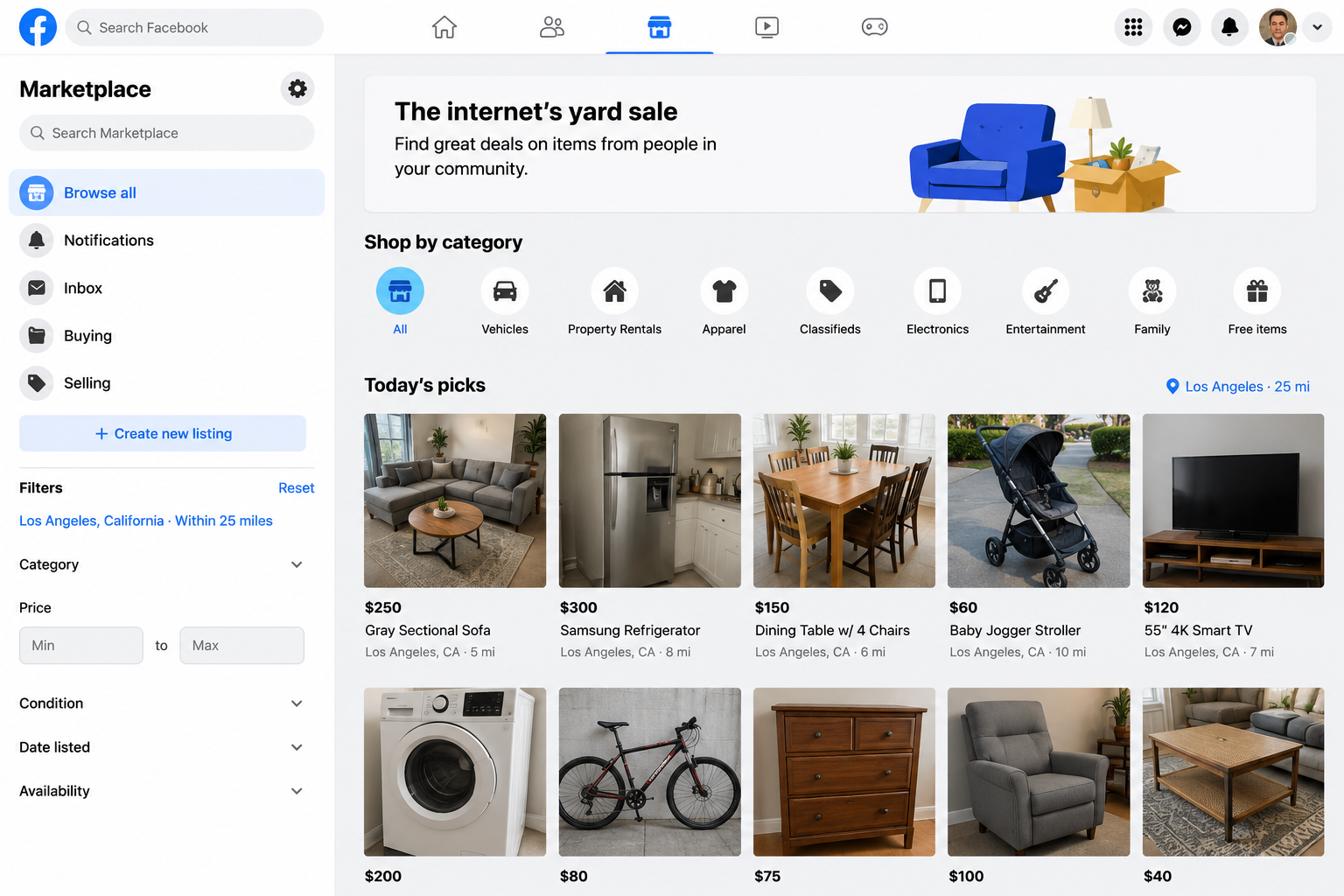
The internet's yard sale. The algorithm shows your couch to locals who actually browse couches, and local pickup sales are completely free. Shipped orders carry a fee (reported at 10% since April 2024, though some current guides still show 5%, so check before you price).
The catch is the humans. You will get "Is this available?" from people who never reply. Price in some patience.
- Best for: Furniture, appliances, baby gear, anything heavy
- Fees: Free for local pickup
- Use this if: You want it gone by the weekend
- Avoid this if: You hate negotiating in chat
- Verdict: The fastest free option in this entire guide.
5. OfferUp
OfferUp went all-in on local. As of September 2025 it discontinued nationwide shipping entirely, which sounds like a downgrade but actually sharpened the product: TruYou ID verification plus buyer ratings make it the most trustworthy way to sell a car, a sofa, or power tools to a stranger.
- Best for: High-value local items where buyer verification matters
- Fees: Free
- Use this if: You're selling something expensive enough that trust matters
- Avoid this if: Your item needs a national audience
- Verdict: Facebook Marketplace with a background check.
6. Craigslist
Ugly, ancient, effective. No listing fees in most categories, cash on pickup, you keep 100%. For flipping gym equipment, appliances, and furniture, nothing beats the economics. Just meet in public and trust your gut; the platform offers you nothing if a deal goes sideways.
- Best for: Bulky, expensive-to-ship items
- Fees: Free (most categories)
- Use this if: Margin matters more than interface polish
- Avoid this if: You want any platform protection at all
- Verdict: The cash king. Our Craigslist selling guide covers the safety playbook.
Best Apps for Selling Clothes and Fashion
7. Poshmark
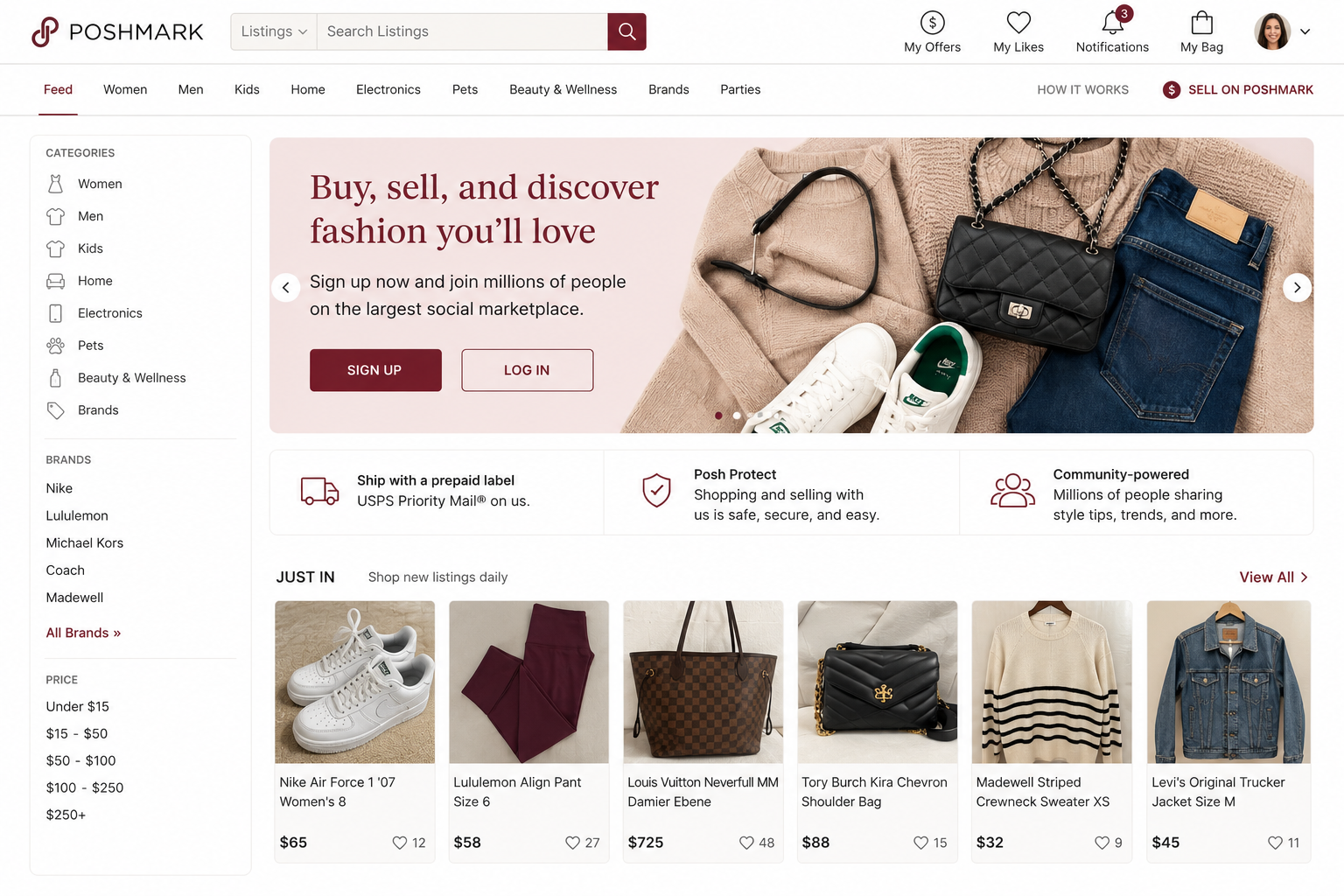
The social network of fashion resale. Sharing, following, Posh Parties, and now live "Posh Shows" that move inventory like QVC for your closet. The 20% commission is the highest in this guide, but it buys you a prepaid Priority Mail label and a buyer pool that shows up ready to spend on brand names.
- Best for: Nike, Lululemon, designer bags, items priced $20–100
- Fees: 20%, or flat $2.95 under $15
- Use this if: You'll actually engage; social activity drives Poshmark sales
- Avoid this if: You're selling $10 fast fashion (the fee math fails)
- Verdict: Highest fees, but often the highest realized prices for brand-name women's fashion.
8. Depop
If your buyer is under 30, they're here. Depop removed seller commissions for US sellers in 2024, so you pay only payment processing (3.3% + $0.45). The trade: aesthetics rule. Flat-lay photos on a beige carpet won't cut it.
- Best for: Y2K, vintage band tees, streetwear
- Fees: 0% commission + processing
- Use this if: Your photos look like an Instagram feed
- Avoid this if: You're selling formal wear or luxury (wrong crowd)
- Verdict: The lowest-fee route to Gen Z wallets.
9. Vinted
The buyer pays the fees. As a seller you keep 100% of your asking price, which makes Vinted the only place where selling a $9 H&M top actually makes sense. The US buyer base is still smaller than Poshmark's, so items can sit longer.
- Best for: Low-cost everyday clothing
- Fees: Zero for sellers
- Use this if: Fees would wreck your margin anywhere else
- Avoid this if: You need a fast sale
- Verdict: Slowest of the fashion apps, cheapest by a mile.
10. ThredUp
The zero-effort option. Order a Clean Out bag, stuff it with clothes, mail it back. ThredUp photographs, lists, and ships everything. You earn a consignment payout that ranges from roughly 5% on cheap items to 80% on premium ones. Read that again: on a $10 item you might see fifty cents.
- Best for: People who value their Saturday more than the payout
- Fees: Consignment; payout 5–80% of sale price
- Use this if: The alternative is donating anyway
- Avoid this if: You want real money for good clothes (sell those yourself on Poshmark)
- Verdict: Convenience, priced accordingly.
Best Apps for Handmade, Vintage, and Collectibles
11. Etsy
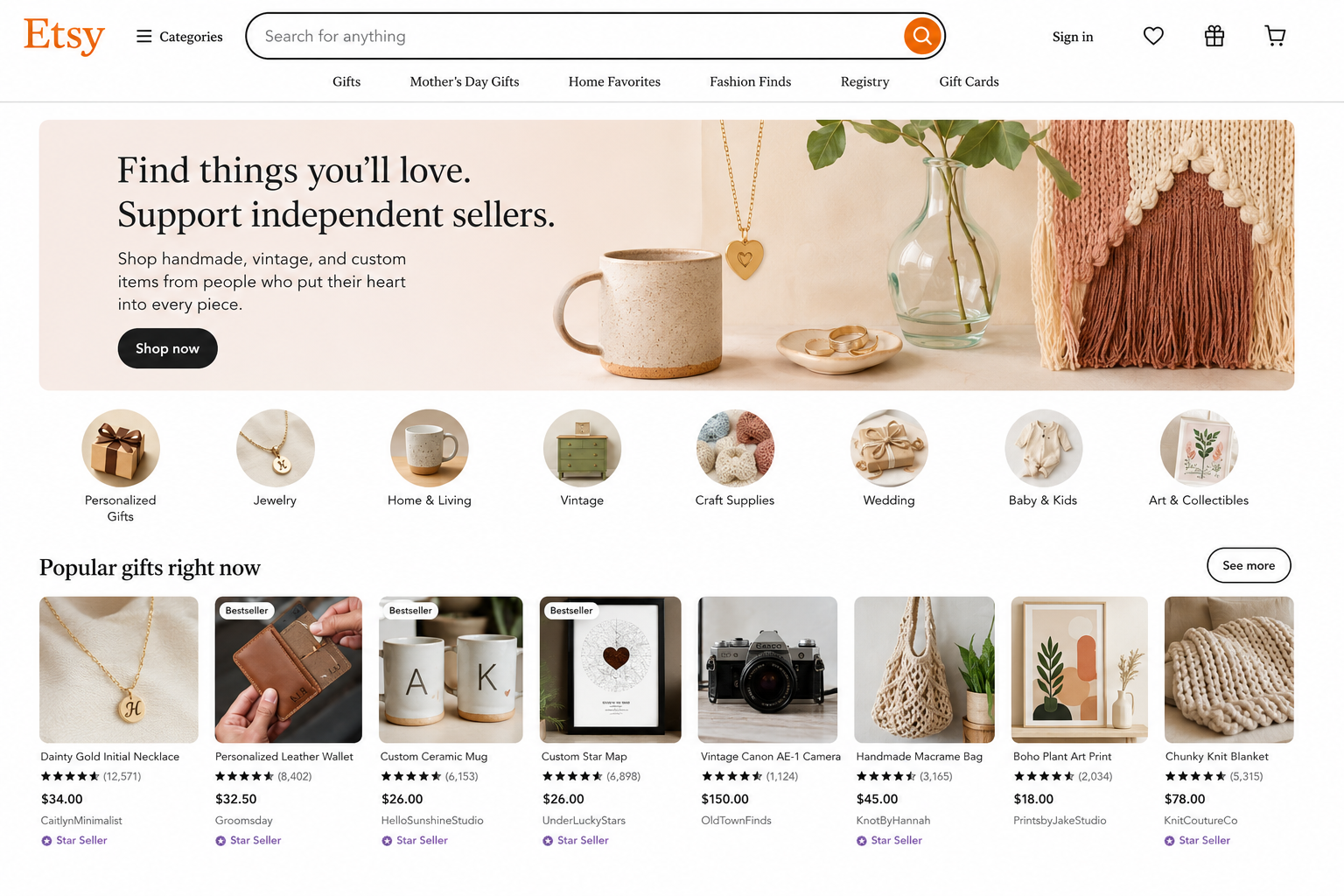
Still the king of handmade and vintage (20+ years old), and buyers arrive expecting to pay for unique. The fees stack, though: $0.20 per listing, 6.5% transaction fee, 3% + $0.25 processing, and mandatory Offsite Ads fees once you pass $10,000 a year. Price high enough to absorb all of it. Run your numbers through our Etsy fee calculator before you set a single price.
Print-on-demand is allowed if you disclose your production partner, which opens Etsy to designers who never touch inventory.
- Best for: Handmade jewelry, custom gifts, genuine vintage
- Fees: ~10% effective, more with Offsite Ads
- Use this if: Your product has a story mass-produced goods can't tell
- Avoid this if: You're reselling generic goods (against the rules, and enforced)
- Verdict: Premium buyers, premium fee stack. Getting found there is its own skill; our Etsy SEO guide covers it.
12. Whatnot
The largest live-selling platform going. You host a stream, buyers bid in real time, and the auction energy routinely pushes prices past what a static listing would fetch. Fees total about 11% (8% commission plus processing), meaningfully cheaper than Poshmark. You must apply and get approved, and streamers who go live once a month don't build audiences. This one rewards showing up.
- Best for: Trading cards, sneakers, vintage, comics
- Fees: 8% + 2.9% + $0.30
- Use this if: You're comfortable on camera and have inventory depth
- Avoid this if: You have twelve items and stage fright
- Verdict: The highest-energy way to move collectibles in 2026.
Best App for Electronics
13. Swappa
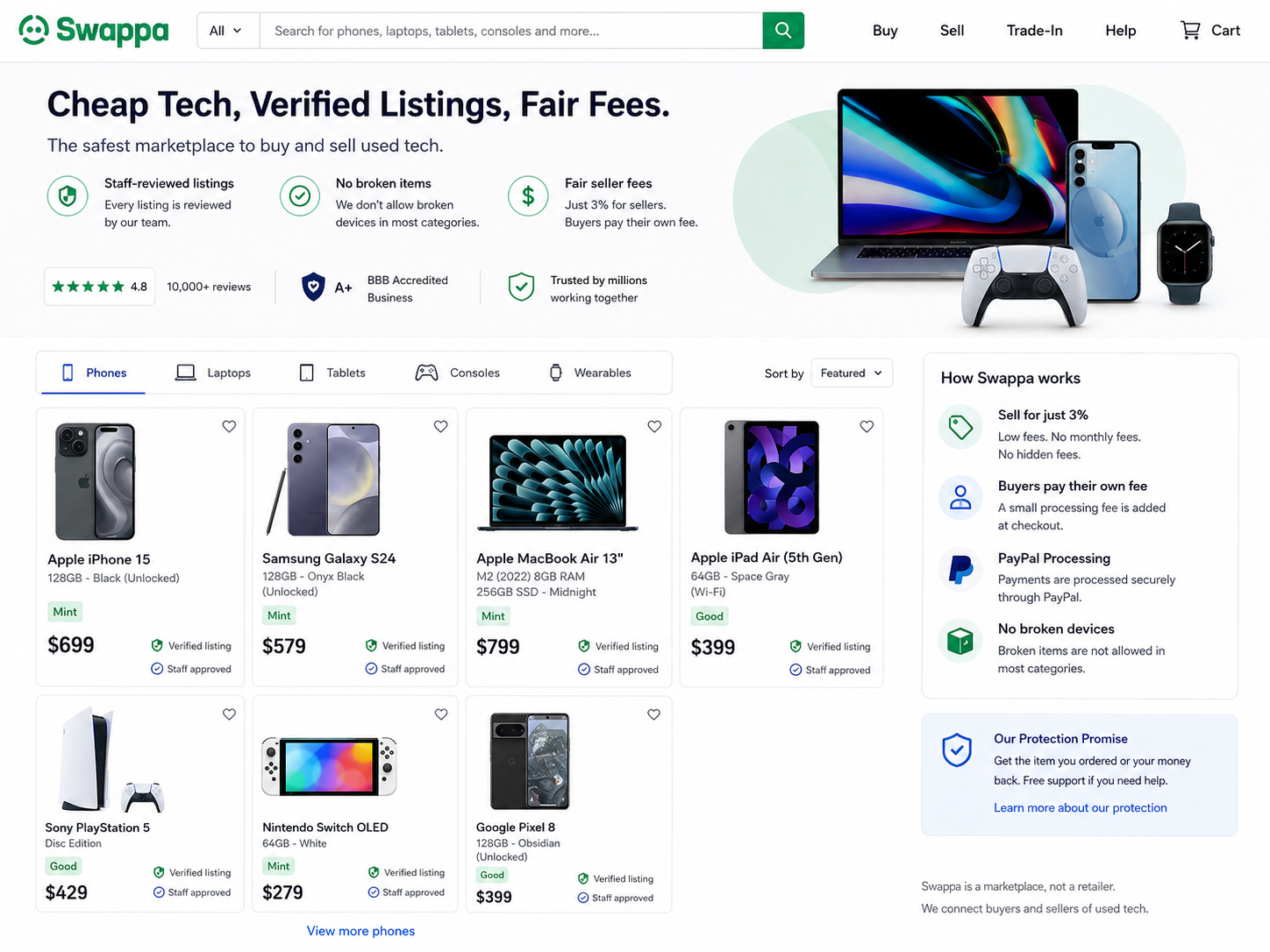
Swappa staff review every listing before it goes live, so buyers trust the platform and pay fair prices without haggling. Seller fee is just 3% (buyers pay their own 3%), plus PayPal processing. The trade-off: tech only, and no broken items in most categories. If your phone has a cracked screen, a trade-in service like Decluttr will quote you instantly, though you'll take less than a Swappa sale would bring.
- Best for: Phones, laptops, tablets, consoles
- Fees: 3% + PayPal processing
- Use this if: Your device works and has a clear model number
- Avoid this if: The item is damaged
- Verdict: The fastest fair-price exit for working tech. eBay is your backup for everything Swappa won't take. Buying tech to resell? Check demand first with electronics sourcing data.
Best Apps for Building an eCommerce Business
14. Shopify
.png)
The moment you stop decluttering and start operating, you need a store you control. Shopify's $5/month Starter plan handles link-in-bio selling on Instagram or TikTok; the $39/month Basic plan is a full storefront. The real advantage is the ecosystem: POS sync, marketplace channels, and one-click product importing from sourcing tools, including SaleHoo Dropship, which syncs inventory automatically so you never sell what's out of stock.
The honest downside: nobody visits a new Shopify store by accident. You bring the traffic, through content, ads, or marketplace channels.
- Best for: Anyone building a brand rather than clearing a closet
- Fees: From $5/mo
- Use this if: You want to own the customer relationship
- Avoid this if: You're selling once and done
- Verdict: The standard for a reason. Our Shopify guide walks the full setup.
15. WooCommerce
For the control freaks, said with respect. It's a free WordPress plugin, so you own the platform, the data, and the customer list outright, and no company can raise your rent next month. You also own the hosting, security, and maintenance. That trade is wonderful or terrible depending entirely on your technical comfort.
- Best for: Technical sellers allergic to platform lock-in
- Fees: Free software; hosting from ~$10/mo
- Use this if: You can debug a plugin conflict without crying
- Avoid this if: "FTP" sounds like a tax form
- Verdict: Cheapest long-run option, highest sweat equity.
16. Square Online
If you already run a Square card reader at a physical shop or market stall, this is your shortest path online. Inventory syncs in real time between your counter and your website, and the free plan (3.3% + $0.30 per transaction) is genuinely usable. If you don't use Square in person, Shopify is the better pick.
- Best for: Brick-and-mortar retailers adding "buy online, pick up in store"
- Fees: 3.3% + $0.30 free plan
- Use this if: Square already runs your register
- Avoid this if: You're online-only
- Verdict: A niche pick that's perfect inside its niche.
Best Apps for Social and Video Selling
17. TikTok Shop
.png)
Products tagged directly in videos, sold without leaving the app. The referral fee is 6%, competitive against Amazon, and the algorithm doesn't care about your ad budget. One genuinely entertaining video can outsell a month of paid campaigns. Social commerce now accounts for roughly 19% of global ecommerce sales, and TikTok is the reason.
The requirement is content. Listings alone go nowhere here.
- Best for: Impulse products that demo well in 30 seconds
- Fees: 6% referral
- Use this if: You can make videos, or you're willing to learn
- Avoid this if: You want passive listings
- Verdict: The highest ceiling in this guide for the right product. See our TikTok dropshipping guide for how sellers pair it with suppliers.
Best Apps for Dropshipping, Print-on-Demand, and Sourcing
18. Printful
Upload a design, and Printful prints it on shirts, mugs, or posters when an order comes in, then ships under your brand. No inventory, no minimum order quantity (MOQ, the smallest batch a supplier will produce). It connects to Shopify, Etsy, and TikTok Shop. Per-unit production costs are high, so margins live or die on your pricing and design appeal.
- Best for: Designers and creators monetizing an audience
- Fees: Free; you pay production per item sold
- Use this if: Your value is the design, not the logistics
- Avoid this if: You're competing on price
- Verdict: The cleanest zero-inventory entry point. Compare options in our print-on-demand company roundup.
19. SaleHoo
.png)
Full disclosure: this is us, so judge accordingly. SaleHoo isn't a marketplace; it's the layer underneath one. It answers the question every app above leaves open: what do you actually sell, and who do you trust to supply it?
The directory holds 8,000+ suppliers our team has vetted over 20 years, which matters because eBay and Amazon both suspend accounts over supplier failures, late shipping, and third-party branding in the box. Market Insights shows sell-through rates and competition data on 2.5 million products, so you validate demand before spending on stock. And the Dropship tool imports products to Shopify in one click, letting you test a product with zero inventory, then switch to wholesale once it proves out and keep more of the margin.
If you're a casual seller emptying a closet, you don't need us, and the free local apps above will serve you better. SaleHoo earns its $9 to $49 a month when selling becomes repeatable: when you're deciding what to stock, not what to discard.
- Best for: Repeat sellers and store builders who need products and suppliers
- Fees: $9–49/mo
- Use this if: You've picked your channel and now need something to sell on it
- Avoid this if: You're doing a one-time declutter
- Verdict: The sourcing layer under whichever marketplace you chose.
Selling App Fees Compared
Fees come in five flavors, and knowing which flavor you're dealing with changes your pricing:
Free local apps (Facebook Marketplace pickup, OfferUp, Craigslist) charge nothing because you handle everything in person. Commission marketplaces (eBay, Mercari, Amazon, Poshmark, Whatnot, TikTok Shop) take 6 to 20% when you sell. Listing-fee platforms (Etsy) charge whether you sell or not. Consignment services (ThredUp) do the work and keep most of the money. Storefront platforms (Shopify, WooCommerce, Square) charge subscriptions or processing instead of commissions, which flips the math in your favor at volume.
Then there are the hidden costs no fee schedule mentions: shipping supplies, promoted-listing creep (eBay and Etsy both nudge you toward paying for visibility), payment processor holds on new accounts, and returns. On my first month back testing a new eBay account for this article, PayPal held early payouts for weeks, a policy trap that catches most new sellers exactly when they need cash flow to buy more stock.
.png)
.png)
The lesson inside that chart: the sticker fee is never the whole story. A $50 sale returning $35 before item cost is normal, and it's why cheap items on shipped marketplaces so often lose money.
I Tested This: One Box of Stuff, Four Apps, 30 Days
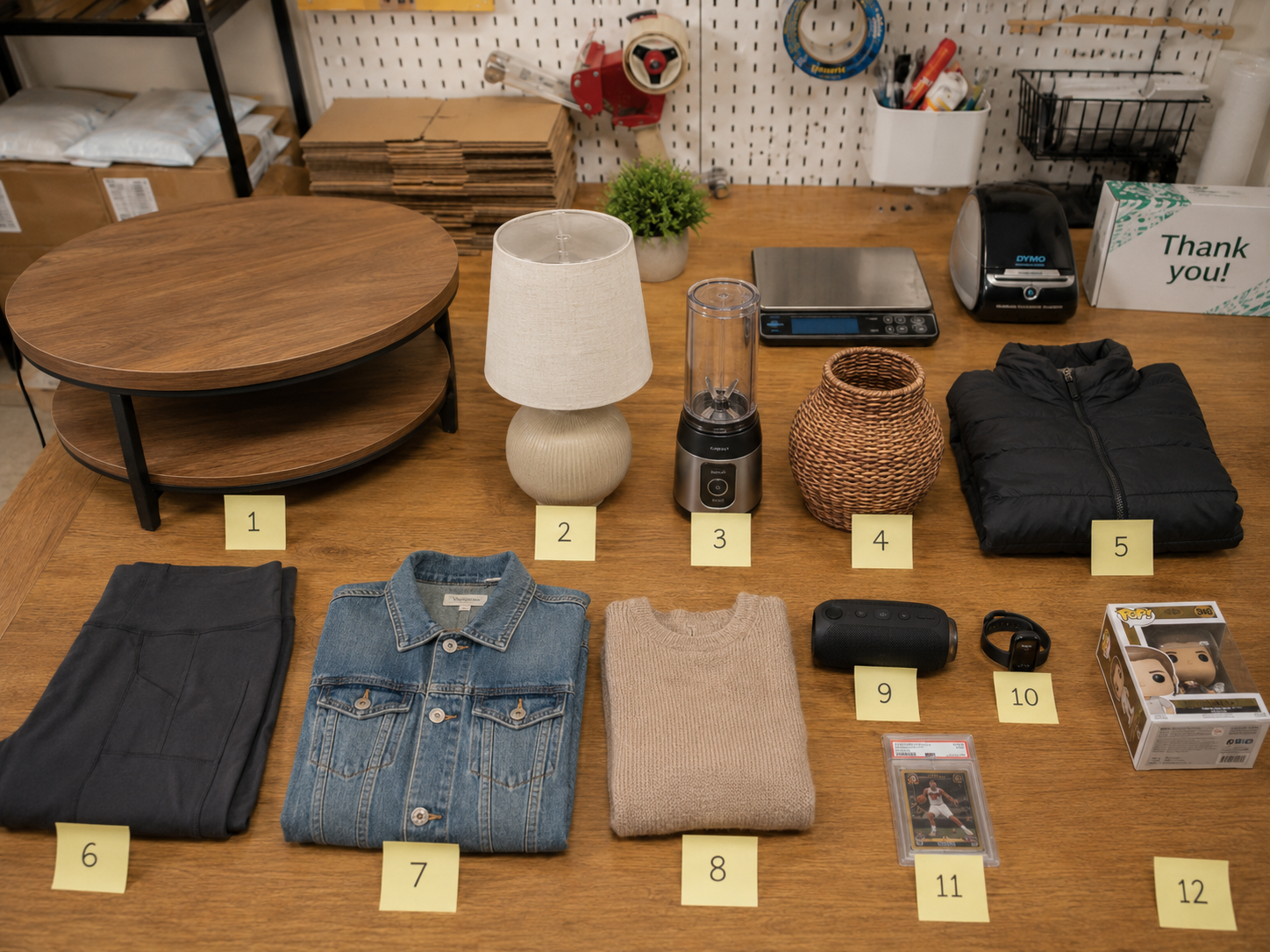
Lists are theory. So before this update, we ran the boring version of the experiment: 12 identical-condition items (four clothing pieces, four household items, two gadgets, two collectibles), cross-listed across eBay, Facebook Marketplace, Mercari, and Poshmark, tracked for 30 days.
What the polished version of this story won't tell you:
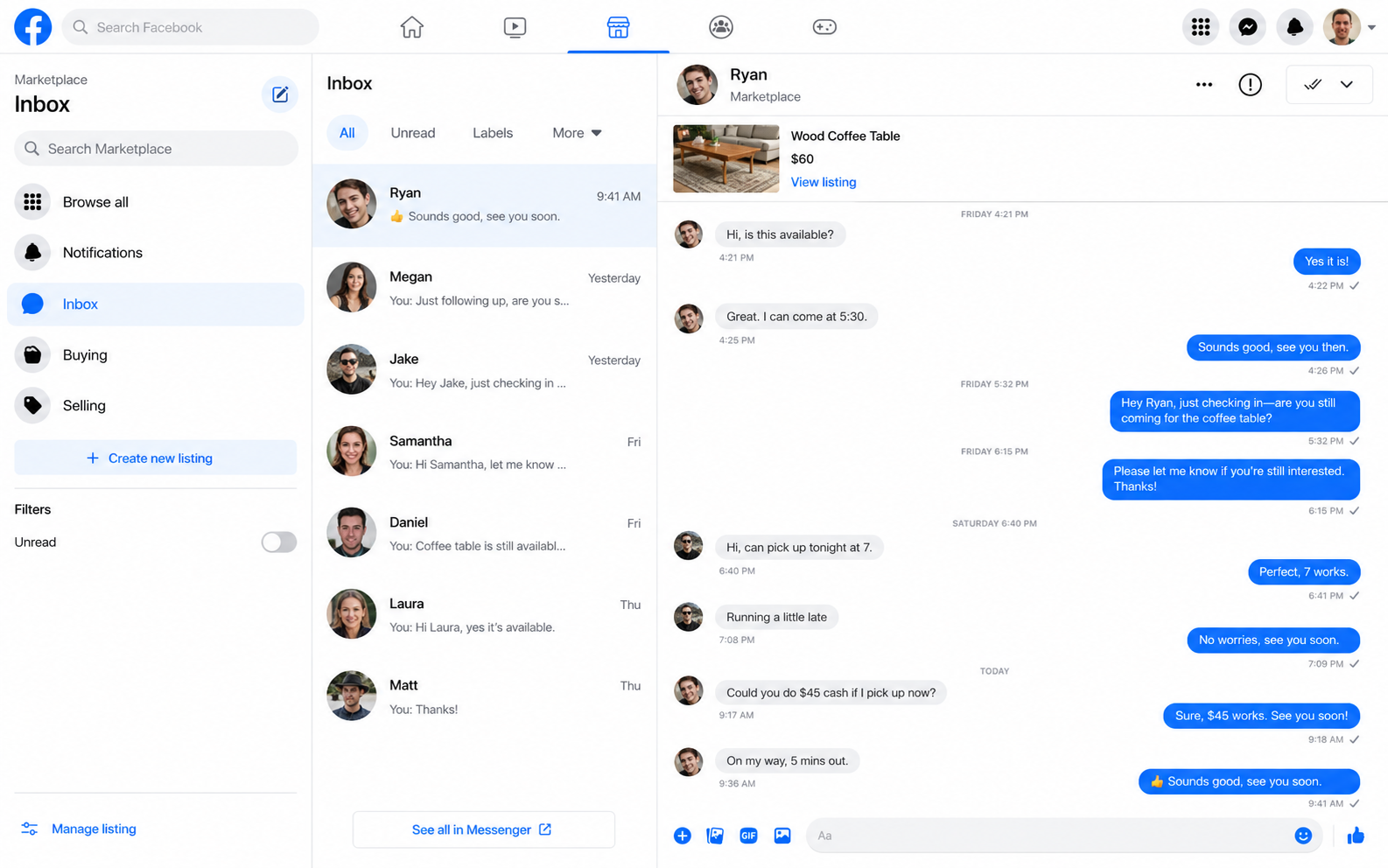
Facebook was fastest and flakiest. The coffee table sold in under 48 hours, but only after two no-shows, and the eventual buyer talked us down $15 in the driveway.
eBay produced the highest net on the gadgets, but not passively. Both sat invisible for a week until we added a promoted listing at 2%, which is the quiet fee nobody includes in comparison tables.
Poshmark's 20% stung less than expected on the brand-name jacket because the realized price ran well above what Mercari watchers were offering for the same item. Voolist's crowd is right about this: fees and exposure trade off, and the cheapest platform is frequently not the most profitable one.
Mercari was the workhorse for everything unglamorous. Nothing sold fast, nothing sold high, everything eventually sold.
And the two collectibles taught the real lesson: the platform mattered less than the product. The item with proven search demand sold twice as fast at a better margin on every app it touched. Which is the whole argument for checking demand data before you buy inventory, not after.
How to Choose the Right Selling App
Run your situation through five questions:
- What are you selling? Category fit beats platform size. Brand-name clothes go to Poshmark, working tech to Swappa, handmade to Etsy, bulky things local.
- Local pickup or shipping? If shipping costs more than 25% of your price, sell it locally, full stop.
- Speed or maximum profit? Facebook and Whatnot are fast. eBay auctions and Vinted are patient money.
- One-time or repeatable? Decluttering: pick the free option and move on. Building income: pick the channel that fits your product, then get serious about sourcing.
- How much work will you actually do? Be honest. Whatnot and TikTok reward performers. Mercari and ThredUp reward people who want it handled.
Should You Sell on One App or Several?
Depends on which seller you are. Casual sellers: one app is plenty, and the free local one is usually it. Clothing resellers: cross-list on two to four platforms, because that vintage jacket has different buyers on eBay, Poshmark, and Depop, and whoever bites first wins. Just delist everywhere the moment it sells, since selling the same item twice means a refund, an angry buyer, and sometimes an account strike. Business sellers: run your own store plus one or two marketplaces, so no single platform's policy change can hurt you.
That last point is a hill I'll happily die on. As I've said before, the answer for most sellers is diversification of your sales channels, not betting everything on one platform's continued goodwill. eBay changes fees. Amazon suspends accounts. TikTok's regulatory future writes itself in headlines. Spread out.
What to Sell After You've Picked an App
Here's the part every other guide in this comparison skips, and honestly it's the part that decides whether you make money. Choosing the app is maybe 30% of the outcome. The product is the rest.
The pattern shows up in seller after seller. Chris Wane, a UK seller, burned through five failed stores before his sixth took off past £10,000, and the difference wasn't the platform, it was finally picking products with proven demand. Jeff Moriarty runs a pet-gifts side hustle that funds his family's vacations at around $10K a year by staying inside one validated niche instead of chasing whatever's trending. Becky Beach built her women's fashion boutique to $500K on product selection discipline. And Jonathan Molendijk in Canada turned a single well-validated product into $65K of profit. One product. You can read their full stories on our success stories page.
The advice I give every new seller is the advice I'd give my younger self: gather more data, earlier, and be intentional about it. In practice, that looks like three checks before you spend a dollar on inventory:
Validate demand with Market Insights: sell-through rate, competition level, and price history on the product you're considering. Then find a vetted supplier instead of gambling on a random factory, because supplier failures are what get marketplace accounts suspended. Then test small via dropshipping before committing to wholesale, and switch to bulk buying only after the product proves itself, which is when your cost of goods sold (COGS, what you actually pay per unit) drops and the margin becomes real.
Skip those steps and even the perfect app can't save the wrong product.
FAQs
eBay, for most people and most items, because its buyer pool is the largest and its search brings buyers to niche items. For specific categories, a specialist app usually beats it: Poshmark for brand-name fashion, Swappa for electronics, Etsy for handmade.
Facebook Marketplace. Local pickup sales are free, and the built-in audience means fast responses on furniture, appliances, and household goods. OfferUp is the better pick when buyer ID verification matters, like selling a car.
Vinted charges sellers nothing; the buyer pays a protection fee. Depop charges no commission for US sellers (just 3.3% + $0.45 processing). Facebook Marketplace, OfferUp, and Craigslist are free for local sales.
Poshmark for brand names and items over $20, Depop for vintage and streetwear aimed at Gen Z, Vinted for inexpensive everyday clothing where fees would kill the margin, and ThredUp when you'd rather mail a bag than photograph anything.
Swappa, for working devices with clear model numbers. Its verified listings attract buyers who pay fair prices without haggling. eBay is the backup for anything Swappa won't accept.
For local sales, OfferUp's TruYou ID verification adds the most trust. For shipped sales, eBay, Poshmark, and Swappa all hold payment in managed systems and provide seller protections. Craigslist offers the least protection, so meet in public and take cash.
Yes, and repeat sellers usually should. The only real risk is double-selling, so remove a listing from every platform the moment it sells elsewhere. Cross-listing tools automate this if you're managing serious volume.
Local cash sales on Facebook Marketplace or Craigslist pay instantly. Among shipped marketplaces, Mercari and Poshmark release funds shortly after delivery confirmation. New accounts on any platform should expect payment holds at first.
Not to start selling used personal items. But once you're buying inventory to resell, you're operating a business, and most platforms collect tax information after roughly $600 in annual sales. As of mid-2026 the reporting threshold rules remain in flux, so confirm current requirements with a tax professional.
Shopify for your own store, paired with one or two marketplaces (usually Amazon or eBay) for reach. Businesses that survive platform policy changes are the ones that never depended on a single channel.
Shopify as the storefront, connected to a vetted supplier network. Both eBay dropshipping and Amazon dropshipping are allowed but tightly ruled: your supplier must ship on time with no third-party branding, which is exactly why supplier vetting matters more than app choice.
Pick Your Lane, Then Pick Your Products
You now know more about selling-app fees than most people who write these lists. So don't overthink it. Clutter to clear? Facebook Marketplace or Mercari, today. A closet of brand names? Poshmark this weekend. A business to build? Shopify plus a marketplace, and spend your real energy on product selection, because that's where the money actually gets made.
Want to skip the guesswork on what to sell? SaleHoo's Market Insights shows you demand, competition, and sell-through data on 2.5 million products before you commit a dollar to inventory. The app gets your product in front of buyers. The product decides whether they buy.
About this article
About the author