




Key Takeaways
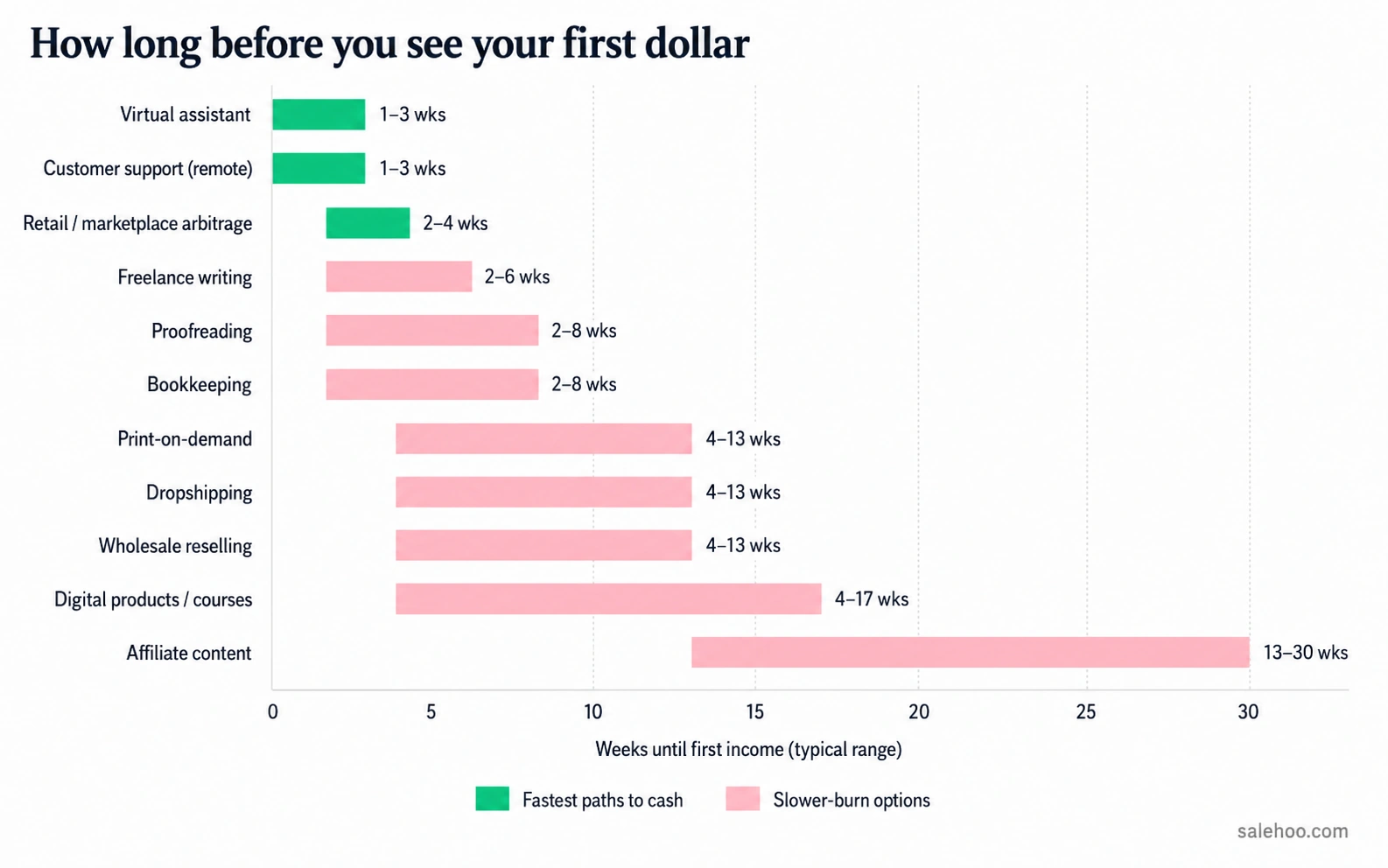
- The fastest paths to real money are remote customer support and virtual assistant work, paying $17-$35/hr with income possible inside 1-3 weeks.
- If you can't take calls, proofreading, data entry, product research, print-on-demand, and dropshipping are all silent and async.
- Product businesses (dropshipping, wholesale, arbitrage) take 1-3 months to pay but have the biggest ceiling, and supplier choice is the single biggest lever on margin.
- $500-$2,000/month is the realistic first milestone for most parents: three to six regular clients, or one product that reliably sells.
- Never pay for a "job," ignore guaranteed-income promises, and vet every supplier before you send money. The expensive mistakes are all avoidable.
Let's be honest about why you're here. You're not looking for another article telling you to work during nap time. You want to know what you can actually do from home that pays, and which of those options won't fall apart the first time your toddler skips a nap or your eight-year-old gets sent home with a temperature.
So that's what this is. Real options, sorted by how they fit a life with kids in it. What each one pays, what it costs to start, how long before you see a dollar, and the honest downsides nobody mentions when they're trying to sell you a course.
Some of these are jobs. Some are little businesses you build yourself. A few are SaleHoo's home turf (dropshipping, wholesale, product sourcing), and we'll be upfront about when one of those is right for you and when a simple freelance gig would serve you better.

Quick answer: The best work-from-home option for your situation
If you've got three minutes before someone needs a snack, start here.
- Best if you need money this month: remote customer support or virtual assistant work. Real hourly pay, you can start within a week or two.
- Best if you have zero experience: virtual assistant, online customer service, or product-research assistant. No portfolio required to begin.
- Best if you can't take calls (baby asleep, house chaotic): proofreading, data entry, SEO assistant, product research, print-on-demand. All silent, all async.
- Best for tiny pockets of time (naps, after bedtime): print-on-demand, affiliate content, retail/marketplace arbitrage, podcast editing.
- Best if you want something that can grow into real income: dropshipping, wholesale reselling, or digital products.
- Best SaleHoo fit: dropshipping, wholesale reselling, and marketplace selling, where vetted suppliers and product data save you the months most beginners waste.
Now the detail.
Compare the best work-from-home options for parents
This is the part the other guides skip. Most comparison tables sort by job type. Parents don't live by job type. You live by "can I do this with a baby on my hip and no childcare." So those are the columns.
| Option | Best for | Flexibility | Startup cost | Time to first income | Realistic income | Calls needed? | Childcare needed? | SaleHoo fit |
|---|---|---|---|---|---|---|---|---|
| Virtual assistant | Fast start, no experience | High | $0–$50 | 1–3 weeks | $18–$35/hr | Sometimes | Low | — |
| Customer support (remote) | Steady income | Medium | $0–$50 | 1–3 weeks | $17–$22/hr | Often | Medium | — |
| Freelance writing | Word people | High | $0–$50 | 2–6 weeks | $20–$50/hr | Rarely | Low | — |
| Proofreading | Detail people, silent work | High | $0–$50 | 2–8 weeks | $20–$45/hr | No | Low | — |
| Bookkeeping | Numbers people | Medium | $0–$100 | 2–8 weeks | $25–$80/hr | Rarely | Low | — |
| Print-on-demand | Naps/evenings, creative | High | $0–$50 | 1–3 months | $0–$2,000+/mo | No | Low | Medium |
| Affiliate content | Long game, no inventory | High | $0–$50 | 3–6+ months | $0–$1,000+/mo | No | Low | Medium |
| Retail/marketplace arbitrage | Hands-on, low cash | High | $20–$100 | 2–4 weeks | $0–$5,000/mo | No | Low | High |
| Dropshipping | Scalable, off-hours | Medium | $50–$300 | 1–3 months | $0–$5,000+/mo | No (email/chat) | Low | High |
| Wholesale reselling | Better margins, some capital | Medium | $300+ | 1–3 months | Varies widely | No | Low | High |
| Digital products / courses | Expertise you already have | Medium | $50–$200 | 1–4 months | $0–$10,000+/mo | No | Low | Low |
Note: Income and startup ranges are approximate, vary by country and experience, and should be checked against current SaleHoo data and reputable salary sources before publish. Pay figures are USD; rates differ in NZ/UK/AU markets.
A quick word on reading this table: the "income" column is the one people misread. The high end takes real time and effort. Most parents earning steady money from home are clustered at the modest, reliable end, not the screenshot-on-Instagram end. More on that further down.
Best online business ideas for parents
These are the build-your-own-thing options. More upside than a job, more patience required. This is where SaleHoo actually helps, so we'll be specific about where, and honest about where we don't.
1. Dropshipping
You sell products on your own store, and your supplier ships them straight to the customer. No stockroom in the spare bedroom, no boxes by the door. That last part matters more than people realize when there's a stair gate in the hallway.
Take Jeff Moriarty. A dad and full-time marketing consultant who started a pet-niche store, DogChristmasStockings.com, in his off-hours. He built the store in a single weekend and kept it deliberately small because he didn't want to burn out, and dropshipping let him avoid holding inventory or dealing with shipping. The store now makes him about $10,000 a year in profit from very little work, mostly around the holidays, and it pays for the family's travel each year. That's the realistic, lovely end of dropshipping. Not a yacht. A funded family vacation.
Why it suits parents: you can run it during nap windows and after bedtime, customer contact is email and chat (no calls), and you can test ideas without sinking money into stock.
Pros: low overhead, no inventory, scalable if you want it to be.
Cons: paid ads can eat cash fast, the learning curve is real, and supplier reliability makes or breaks you. Jeff's honest about this: because he's a small client, his supplier ships its biggest customers first, which meant a wave of late orders one Christmas.
How to start: read Dropshipping, explained. Pick a niche you actually care about (see the earnings section below for why). Where SaleHoo helps: the supplier directory is full of vetted dropship suppliers, so you skip the part where beginners lose weeks (and sometimes money) to unreliable ones.
2. Wholesale reselling
You buy products in bulk at wholesale prices and resell them, on your own store or a marketplace, at retail. Better margins than dropshipping, because you're not splitting the pie with a supplier on every sale. The trade-off is you need some upfront cash and somewhere to put the stock.
This is how a lot of bigger sellers eventually operate. Maggie Outridge grew her dog-accessories brand St Argo from $12K to $600K in 18 months, and plenty of sellers move from dropshipping into wholesale once they know what sells.
Why it suits parents: once your stock and listings are set, the day-to-day can fit small time pockets.
Cons: capital tied up in inventory, plus packing and shipping (unless you use fulfillment), which does interrupt family time.
How to start: dropshipping vs wholesale lays out which fits you, and how to order from a wholesale supplier covers the mechanics, including MOQ (minimum order quantity, the smallest batch a supplier will sell you).
3. Print-on-demand
You design something (a slogan, an illustration), it gets printed on a mug or tee only when someone buys, and the printer ships it. Zero inventory, zero upfront cost, genuinely doable in a nap window.
Pros: no stock, no money down, creative.
Cons: thin margins, a crowded market, and you still have to drive traffic. This is a "build slowly" option, not a fast-cash one.
How to start: the best print-on-demand companies.
4. Retail and marketplace arbitrage
You buy discounted items (clearance aisles, liquidation lots, marketplace deals) and resell them for more on eBay or Amazon. Low cash to start, fast to see whether it works, and you can source on a weekend grocery run.
Cons: income depends on finding deals, some weeks are dry, and you're storing inventory (even if it's a corner of the closet).
How to start: eBay arbitrage. Be careful here, though: Jeff Moriarty learned this one the hard way. He once over-ordered a product that was selling well on Amazon to get better margins, another seller undercut him close to cost, and he lost money clearing the inventory. Don't bet big on a trend you can't defend.
5. Digital products
Templates, printables, planners, an online course teaching something you already know. You make it once and sell it many times. Becky Beach, a mom and blogger, made around $100,000 in sales in her first year building digital-first income streams.
Cons: real upfront effort, and you need an audience or a marketing plan before the "passive" part kicks in.
6. Affiliate content
You write or post about products you like, and earn a commission when someone buys through your link. Great for parents who enjoy content and play the long game. The honest catch: it pays slowly at first, and "at first" can mean six months. See passive income ideas.
7. Product-research services
If you get good at spotting what sells (using tools like SaleHoo's market insights), other sellers will pay you to do it for them. Niche, but in demand, and it builds a skill you can use on your own store later.
Best remote jobs for parents
If you'd rather have a paycheck than build a business, these are the flexible roles parents actually land. Shorter format on purpose.
- Virtual assistant. Admin, inbox, scheduling, social posting for busy professionals. ~$18–$35/hr. Most in-demand entry point. Find work on Upwork, Fiverr, or parent-focused boards.
- Remote customer support. Chat, email, sometimes phone, for online stores. ~$17–$22/hr. Steady, but shifts can be fixed.
- Freelance writing. Blogs, product descriptions, email copy. ~$20–$50/hr once you have samples. Fully async.
- Proofreading and editing. Quiet, detail-led, no calls. ~$20–$45/hr.
- Bookkeeping. If you can manage a household budget, you can learn this. ~$25–$80/hr. Handles sensitive data, so accuracy matters.
- SEO assistant. Keyword research, on-page tweaks, reporting. Self-taught is fine. ~$15–$30/hr.
- Social media manager. Content calendars and engagement for small brands. ~$25–$40/hr. Mostly async with the odd quick-response expectation.
- Online tutoring. Teach a subject you know. Predictable hourly pay, but scheduled. ~$18–$30/hr.
- Data entry. Easy to learn, repetitive, lower pay (~$15–$25/hr), but flexible and silent.
- Community manager. Moderate a brand's group or forum. ~$19–$40/hr. Check-ins through the day rather than set hours.
Best work-from-home options if you have no experience
Don't let "no experience" stop you. Several of the options above need none to start:
- Virtual assistant
- Online customer support
- Product-research assistant
- Marketplace listing assistant
- Data entry
- Retail/marketplace arbitrage
- Print-on-demand
For each, the first step is the same: pick one, do a free YouTube crash course over a weekend, set up a basic profile or a free trial, and take one small job or list one product. Confidence comes from the first dollar, not from waiting until you feel ready. You won't feel ready. Nobody does.
Choose your option by your actual schedule
Here's the part most guides forget. The best option isn't the highest-paying one. It's the one you can actually do given the shape of your week.
If you only have nap times (short, unpredictable blocks): product research, proofreading, print-on-demand, marketplace listing, short writing tasks. Anything you can stop and restart without losing your thread.
If you only have school hours: almost anything, but this is your window for deeper work. Bookkeeping, client calls if needed, store management, batch content.
If you can't take calls: proofreading, data entry, SEO assistant, product research, digital products, dropshipping (customer contact is email and chat). Cross customer support off this list.
If you need income fast: remote support, VA work, tutoring, arbitrage. Skip the slow-burn options (affiliate, courses) for now.
If you want something scalable: dropshipping, wholesale reselling, digital products, affiliate content. Slower to start, bigger ceiling.
If you're a single parent with no backup: prioritize async, stop-start-friendly work with no fixed hours. Arbitrage, product research, print-on-demand, writing. Jeff Moriarty's "deliberately small, mostly automated" model is a good template here.
If you have a little money but very little time: dropshipping or wholesale, where cash can buy you speed (ads, tools, done-for-you fulfillment).
If you have time but no money: freelancing, VA work, support, arbitrage. Trade hours for income while you learn.
I tried this in the nap window: a real dropshipping test
I wanted to know if you can actually start a dropshipping business around small kids, so I tested it the only way a parent can. In stolen 40-minute chunks during my youngest's nap, and after both kids were finally down for the night.
Week one didn't go into store building. It went into product research. I picked one niche I half understood already, silicone toddler mealtime gear (suction plates, bibs, the stuff that ends up on my own kitchen floor daily), checked the demand and competition numbers, and messaged three suppliers. First reality check arrived fast: one supplier quoted a 7-day lead time that turned out to be 11. Not a disaster. But if I'd promised customers 7, I'd have spent week two apologizing.
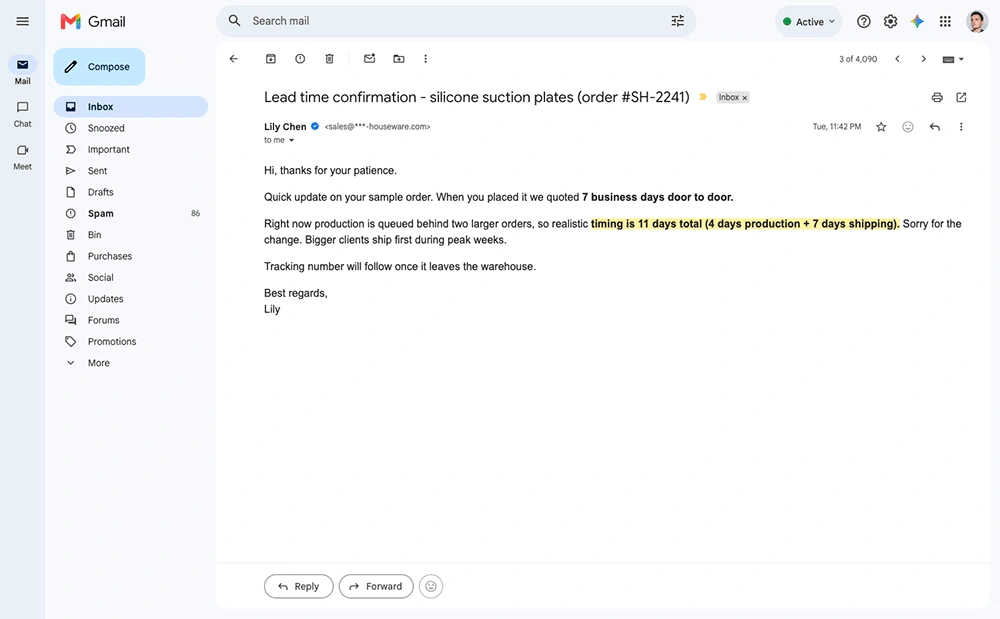
The quoted 7 days became 11. Small clients ship last during peak weeks.
Building the Shopify store took about six hours total, spread across one weekend of nap windows. Listing the first products ate another two sessions, roughly 90 minutes. So far, so doable.
Then the unglamorous part nobody puts in their highlight reel. PayPal held my first payout for 21 days, which is standard for a brand-new seller and absolutely worth knowing before you mentally spend that money. The first sale came on day nine. The first complaint came on day eleven: a shipping delay I couldn't do anything about, handled over chat with one hand while stirring dinner with the other.
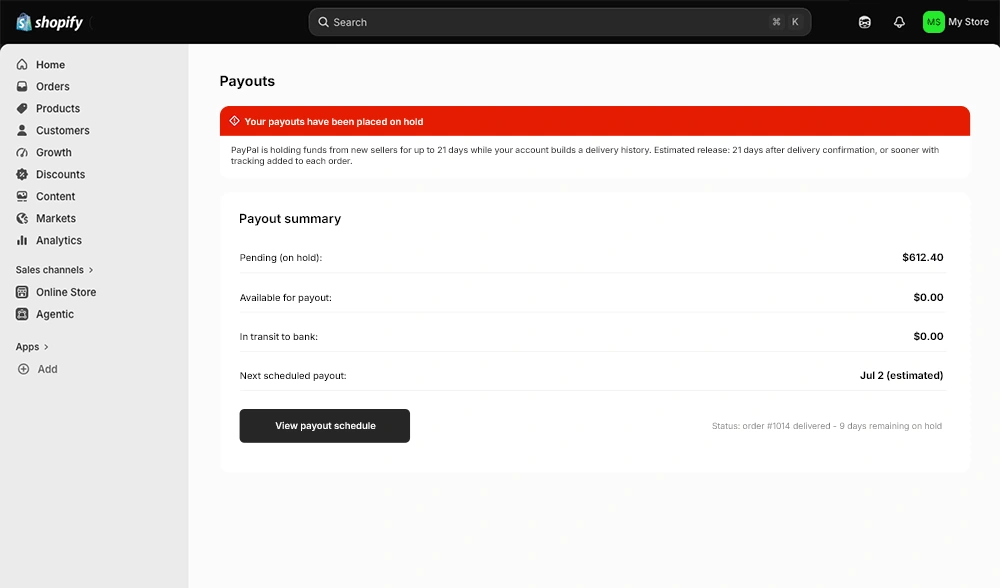
The 21-day payout hold every new seller hits. Don't mentally spend that money.
Thirty days in, the numbers were honest rather than heroic. 14 orders, $684 in revenue, $310 on Meta ads. With my first supplier, that left me barely above break-even once product cost came out. Switching to a vetted supplier dropped my unit cost by about $4 an item and pushed my margin from roughly 19% to 34%. Same product. Same ads. Different supplier.
Here's what surprised me, and it's the part most people get backwards. The work that actually mattered wasn't the store. Anyone can build a Shopify store in a weekend now. It was the supplier and the product. Get those two right and the rest is admin you can genuinely do one-handed. Get them wrong and no amount of midnight hustle saves you. That's the entire reason a vetted supplier list exists.
A real parent who made it work

Jeff Moriarty's story is worth telling in full because it's the realistic version, not the highlight reel.
He's a dad with a full-time job. He didn't quit anything. He noticed his marketing clients were dropshipping, figured he could do it too, and chose a deliberately tiny niche: Christmas items for pets. By the second year, the store had funded a family trip across Asia, and it now makes around $10,000 a year for work he mostly does over the holidays.
His advice for anyone starting is dead practical. Differentiate, because others can sell the same product, so compete on service, packaging, or a smarter spin. And market to the customers you already have, using email and SMS, instead of only chasing new ones.
He's not alone. Chris Wane in the UK failed five stores before making £10,000 in six weeks, then £500K that year. The pattern in nearly every SaleHoo success story is the same: a few false starts, then a niche that clicks. The false starts are not the exception. They're the tuition.
How much can parents realistically earn?
Time for the honest conversation, because this is where the internet lies to you.
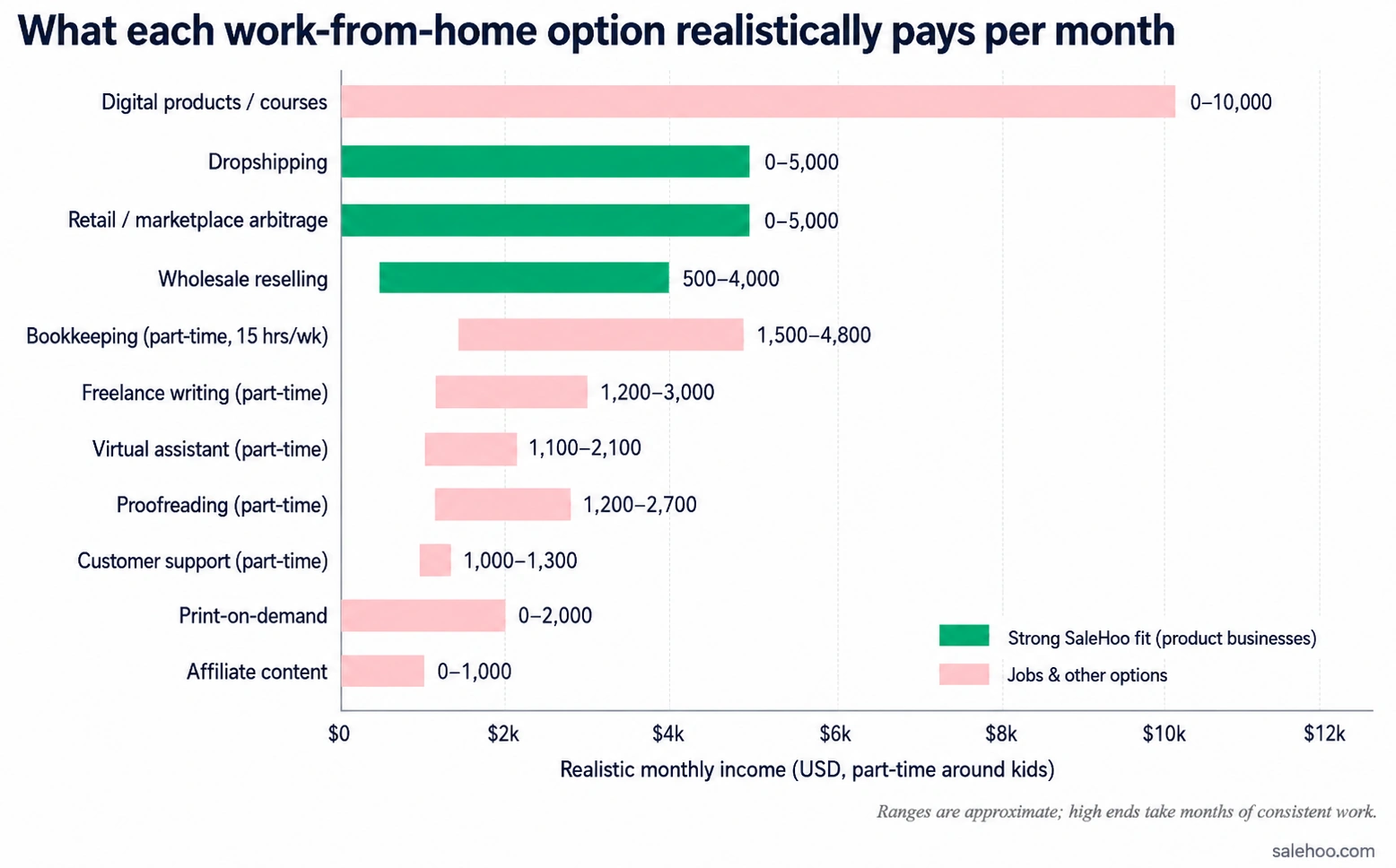
In the first 30 days, expect roughly nothing from a product business. You're learning, testing, and probably making your first mistakes. That's normal and it's fine. Jobs and freelancing pay faster: a VA or support role can put real money in your account inside a month.
A rough map of the paths:
- $0–$500/month: most people's first few months in eCommerce, or a light gig (surveys, occasional arbitrage). Treat this as the learning phase.
- $500–$2,000/month: very achievable with steady freelance or VA work, or a small store that's found its feet. Most parents reach $2,000 by landing three to six regular clients, or one product that reliably sells.
- $2,000–$5,000/month: a real part-time business. Dropshipping, wholesale, or a busy service. Months of work, not weeks.
- $5,000+/month: a genuine business that probably outgrows nap windows. Possible, but be honest about the time it asks for.
What takes longer than people expect: building an audience (affiliate, content, courses), and getting a store profitable on paid ads. What can work faster: services you can sell today (writing, VA, bookkeeping) and arbitrage.
On product businesses specifically, the single biggest lever is niche choice. As Simon Slade, SaleHoo's CEO, puts it: think laterally to find product ideas that aren't obvious, because the more specific your niche, the better. Jeff's "Christmas stockings for dogs" is exactly that. Specific beats broad, almost every time.
How to avoid work-from-home and supplier scams
This corner of the internet is crawling with people who want your money, not your success. A few rules keep you safe.
Never pay for a "job." Legitimate employers and clients pay you. If a "job" asks for an upfront fee, a starter kit, or a deposit, walk away.
Be skeptical of guaranteed income. "Make $5,000 a month guaranteed" is a sales pitch, not a plan. Real income takes real work, and you know that already.
Watch for MLMs dressed as opportunities. If the "business" is mostly about recruiting other people, that's the tell. Google the company plus the word "scheme" before you commit a cent.
For product sellers, vet your suppliers like your business depends on it, because it does. The classic traps: suppliers who won't verify their details, prices that look too good, no clear returns policy, and counterfeit goods that get your selling account banned. Learn the warning signs in how to spot and avoid counterfeit goods and how to choose suppliers.
This is the boring stuff that protects everything else. It's also exactly why SaleHoo exists: every supplier in the directory is vetted, so the most expensive beginner mistake is one you don't have to make. Reviewer Dylan Clarke put it simply: SaleHoo's commitment to vetting suppliers gives him peace of mind he hasn't found elsewhere.
Working from home with kids without burning out
You've picked something. Now the daily reality: doing focused work with small humans who need you. Here's what actually helps.
Make a workspace, even a tiny one. A corner counts. It tells your brain "this is work," and it tells the kids the same thing. If little ones will be in the room, child-proof it so you're not jumping up every 90 seconds.
Use a visual signal. A closed door, a particular hat, a sign on the desk. Younger kids respond to a clear "Mom's working now" cue better than to a long explanation.
Plan childcare honestly. Be realistic about what you can do with zero help versus a few hours of cover. Two hours of a sitter or a grandparent can be worth more than the cost, if those two hours move your business forward. Run the math.
Batch your deep work into your best block. Most parents get one good window a day (nap, school hours, after bedtime). Protect it. Do the hard thinking then, and save admin for the scrappy in-between moments.
Let the house be a little messier. This one's hard, especially if mess gets under your skin. But the dishes will wait. Your work block won't come back. Decide what actually matters today.
Build a weekly rhythm and plan for chaos. Sick days and school holidays will blow up your schedule. Assume it. A business that only works on perfect weeks isn't built for parenting. Build in slack.
Joe, a single dad in the SaleHoo community, learned the hard parts of this firsthand, including losing a marketplace seller status to one bad supplier before rebuilding. The lesson isn't "it's easy." It's that the setbacks are survivable, and the parents who keep going are the ones who planned for the bad weeks instead of pretending they wouldn't come.
How SaleHoo shortens the path for product businesses
If you've landed on dropshipping, wholesale, or marketplace selling, here's the plain version of what SaleHoo does and doesn't do.
It won't run your store for you. It won't promise you riches. What it does is remove the two things that sink most beginners: bad suppliers and bad product choices. You get 8,000+ vetted suppliers so you're not gambling on a random factory you found at midnight, plus market insights that show you what's actually selling, so you choose products with data instead of hope. Behind it sits 24/7 support and a community of 137,000+ sellers who've been exactly where you are.
If you're not sure selling products is your path at all, that's completely fine. A freelance gig from the list above might suit your life better right now. We'd rather you pick the right thing than the SaleHoo thing.
Frequently asked questions
There isn't one "best." The best is the one that fits your schedule and skills. For fast, flexible income with no experience, virtual assistant or remote customer support are the easiest starts. For something that can grow, dropshipping or digital products. Use the comparison table above to match an option to your actual week.
Virtual assistant, online customer support, data entry, product-research assistant, marketplace listing, retail arbitrage, and print-on-demand all need no prior experience. Pick one, learn the basics over a weekend, and take one small job to start.
Yes, and it's one of the more realistic targets. Most parents hit it by landing three to six regular freelance clients, or by getting one product business steady. It usually takes a few months, not a few weeks.
Print-on-demand, affiliate content, retail/marketplace arbitrage, and product research are the most nap-window-friendly, because you can stop and restart without losing your place. Dropshipping works too, since customer contact is email and chat rather than calls.
It can be, if you keep it small and choose suppliers and products carefully. Jeff Moriarty runs a pet-niche store that makes around $10,000 a year for work he mostly does over the holidays. It's not instant money, and supplier reliability matters enormously, which is the main thing to get right early.
Proofreading, data entry, SEO assistant, product research, writing, digital products, and dropshipping are all silent or async. Avoid live customer support if you can't take calls.
Never pay for a job, ignore guaranteed-income promises, be wary of anything built on recruiting others, and vet suppliers carefully if you're selling products. If it sounds too good to be true, it is.
Pick one async option (product research, print-on-demand, proofreading, or a small writing workload), and protect your best weekly window for it. Five focused hours beats fifteen distracted ones. Build slowly and let it compound.
About this article
About the author


)



Thanks for sharing :) It's great to hear about your struggles and successes and I was pleased to hear that the Monday Market niches have helped your business.
Keep up the good work!
Thanks for your comment :) I think having set times for things is a great idea and it's something I'm attempting to do more of. Scheduling set times for tasks seems to work better than just having a big to-do list of everything!