Key takeaways
- Pick the offer from your margin before you announce it. We ran five common offers through 10 real wholesale products. In an own store, a two-pack at 15% off kept 7 of 10 above a 20% margin. Free shipping lost money on 8 and left a ninth under 5%.
- Get stock counts and last dispatch dates from every supplier in writing, before your first Black Friday email goes out.
- Keep eBay at list price. After the final value fee, ads and returns, none of the 10 products reached 20% on eBay even with no discount at all.
- Put a delivery-by date on everything. For a supplier that dispatches in three business days, that's "Order by Monday 14 December for Christmas delivery" on USPS Ground Advantage.
- Use Cyber Monday and December to turn first-time buyers into repeat ones, then score every supplier in January.
Most Black Friday advice is written for brands that own their stock. You probably don't. If you buy from a wholesaler, a dropship supplier or a brand's wholesale list, your supplier sets your cost, decides when stock reaches you or your buyer, and can run out at the worst possible moment.
So here are 20 Black Friday marketing ideas built for resellers, in the order you'd actually run them, for a sale on Friday 27 November 2026 with Cyber Monday on 30 November. After the ideas, we ran five common offers through 10 real wholesale products to see which ones still pay after fees. (Short version: the offer everybody runs is the worst one.)
Reading this the week of 23 November? Every idea says whether it's still open.

Why Black Friday is harder when your supplier holds the stock
Here's the part most Black Friday guides skip.
A brand running 30% off is cutting into a gross margin it set for itself. You're working with the gap between a wholesale price and a retail price. On seven of the 10 products we tested, wholesale cost was roughly half the shelf price before a single fee, label or ad came out. On the other three it was over 60%. That's not much room for a big red banner.
Then there's everything you don't control. Your supplier's other resellers are promoting the same SKUs that weekend, so your stock can hit zero at 10am Friday because somebody else's ad worked. Your supplier's warehouse has a holiday cut-off that comes before the carrier's. And when a parcel is late, the buyer leaves the one-star review on your listing. Not theirs.
None of that means skip Black Friday. It means the order of operations changes. A brand picks a discount and plans around it. A reseller confirms stock and dates first, works out what the margin can carry, and only then picks the offer. Every idea below follows that order.
The running example. Say you resell Woof Creek's pet supplements from a Shopify store, with a smaller eBay shop on the side. Your hero product is the Hip + Joint topper, which Woof Creek's wholesale list prices at $17.00 and which sells for $32.99. We'll keep coming back to that tin, because it shows almost every trap on this page.
Black Friday marketing ideas at a glance
All 20, in the order you run them. Anything marked "next" goes straight into your 2027 calendar.
| # | Idea | When | Still open the week of 23 Nov? | Matters most for |
|---|---|---|---|---|
| Before Black Friday | ||||
| 1 | Offer set by margin | By 25 Nov | Yes | Everyone |
| 2 | Supplier dates in writing | Before your first send | Yes | Dropshippers |
| 3 | Honest "was" prices | From October | Partly; next: October 2027 | Everyone |
| 4 | Price-break stock | Lands by 26 Nov | Partly; next: October 2027 | Inventory sellers |
| 5 | Same-supplier bundles | By 25 Nov | Yes | Everyone |
| 6 | Open marketplace promotions | Before 26 Nov | Partly; Amazon deal slots shut by 13 Nov | Marketplace sellers |
| 7 | Five dated sends | 23 to 30 Nov | Yes; four of five if scheduled by 25 Nov | Everyone |
| 8 | One landing page | Live by 26 Nov | Yes | Own-store sellers |
| During the sale | ||||
| 9 | Stock-out substitutes | From 26 Nov | Yes | Dropshippers |
| 10 | Repricer floors | From 26 Nov | Yes | Marketplace sellers |
| 11 | One hero deal a day | 26 to 29 Nov | Yes | Inventory sellers |
| 12 | Free shipping at two items | 26 to 29 Nov | Yes | Own-store sellers |
| 13 | Morning ad moves | 26 to 29 Nov | Yes | Everyone |
| 14 | Delivery-by dates | 26 Nov to 17 Dec | Yes | Everyone |
| After Black Friday | ||||
| 15 | Cyber Monday from leftovers | 30 Nov | Yes | Inventory sellers |
| 16 | Returns window matched | Before 26 Nov | Yes | Everyone |
| 17 | Add-ons in tracking emails | December | Yes | Own-store sellers |
| 18 | Reviews on delivery | From delivery | Yes | Marketplace sellers |
| 19 | Gift cards after the cut-off | After your order-by date | Yes | Own-store sellers |
| 20 | Offer and supplier scores | January 2027 | Yes | Everyone |
Before Black Friday: 8 ideas to prepare your sale
Finish these by Wednesday 25 November. The first two decide whether the other eighteen are worth doing.
1. Choose your offer from your margin, not your competitors' banners
When: By Wednesday 25 November. Still open? Yes. It's an afternoon with a spreadsheet.
Shoppers compare your offer with everyone else's. Your margin only answers to your costs. An offer you can't afford still sells out, and then you've worked the busiest weekend of the year to end up poorer than if you'd stayed at list price.
So flip the usual process. Don't ask "what discount do I need to compete?" Ask "what's the deepest discount my costs allow?" and announce nothing deeper.
How to run it:
- List the landed cost of each deal item: supplier price, inbound freight, packaging and label, your channel's fee, then an allowance for ads and returns.
- Pick a floor margin. I use 20% contribution margin for a sale weekend. Below that, one bad ad day on Friday wipes out Saturday and Sunday.
- Work out the lowest sale price that still clears your floor with the formula below, turn it into a percentage, and round down to the nearest 5.
The topper can carry about 17% off at a 20% floor, so the deepest discount to announce is 15%.
The gotcha: run that formula on your hero and you'll often find the "20% off everything" banner already loses money on the one product you planned to push hardest. That's the topper's story. And the formula leaves out inbound freight and sales tax, so your real limit sits a little lower. Round down. Never up.
2. Confirm stock and last dispatch dates with your supplier in writing
When: Answered before your first send. Still open? Yes. It's one email.
A deal you can't ship turns into refunds. Those refunds land in the exact week you most need good feedback, and your supplier's holiday cut-off always comes before the carrier's. You need both dates, plus a number, in writing.
Send this to every supplier on your deal list:
How to run it:
- Send it today to every supplier you'd feature, and note how long each one takes to reply.
- Check the carrier's limit. USPS gives Thursday 17 December as its 2026 send-by date for Ground Advantage in the lower 48, Friday 18 December for Priority Mail and Saturday 19 December for Priority Mail Express.
- Market only what ships inside both your supplier's date and the carrier's.
The gotcha: a supplier that won't commit to a number is telling you something. Don't build a hero deal on its stock. And if a supplier takes more than four business days to answer a pre-sale question in early November, assume that's its best case on Black Friday weekend.
3. Keep your prices steady so your "was" price holds up
When: From October. Still open? Partly. This year, show honest "was" prices only. Next year, start in October 2027.
A strikethrough price makes a deal look like a deal. A made-up one loses the buyer who checks, and it can get you in trouble. The FTC's pricing guides want a former price offered "on a regular basis for a reasonably substantial period of time."
How to run it:
- Pull the last 90 days of price history for each deal item from your store or repricer.
- Show a strikethrough only where the item actually sold at that price, steadily. Where it didn't, drop the strikethrough and just say "Black Friday price."
- Selling into the EU? The Price Indication Directive makes your reference price, in most cases, the lowest you charged in the 30 days before the cut.
- Put "hold prices steady from 1 October" into your 2027 calendar now.
The gotcha: dropshippers who reprice every time a supplier moves its cost have no steady price to point at. If that's you, your "was" price is whatever you charged most often, not the highest number you ever listed.
4. Buy your deal stock at the supplier's price break
When: Stock landed by 26 November. Still open? Partly, if your supplier can deliver in time.
Plenty of wholesalers price in quantity tiers, and the next tier up can fund part of your discount. Studio Neat's wholesale list sells its Glif phone tripod mount at $19 a unit in a pack of 30 and $16 in a case of 180. At a $28 shelf price, that $3 lifts the Glif's own-store margin from 14.3% to about 25%. It goes from failing a 20% floor to clearing it.
How to run it:
- Ask each supplier for its tier pricing, even if it isn't published.
- Cap the order at what you realistically expect to sell by the end of January, so leftover units don't eat the saving.
- Dropshipping instead? Ask for a short-term price on committed volume: "If I commit to 100 units shipped between 26 November and 18 December, what unit price can you do?"
- If stock can't land before 26 November, put a tier order in the October 2027 calendar.
The gotcha: read the terms before you spend the saving. The Glif's $28 is Studio Neat's minimum retail price, so the tier saving has to stay as margin. You can't pass it on as a discount.
5. Build bundles from what your supplier already stocks
When: By Wednesday 25 November. Still open? Yes. A bundle is just a listing change.
The buyer pays one shipping charge for two items. That one detail is why a two-pack was the strongest own-store offer in our test, by a distance.
How to run it:
- Pair a hero with slower stock from the same supplier, so both units ship in one parcel. For the Woof Creek seller, that's the topper with the $14.99 Boo Boo Balm.
- Check the pair stays in a cheap weight band. In our test, a second light unit moved the label from $8.60 to $10.95. Heavier items jump further: two backpacks cost $17.45.
- Price the bundle through the formula in idea 1, using the bundle's combined cost and label.
- Beyond two-packs, offer a bundle or upsell only where the add-on genuinely lifts order value.
The gotcha: bundling two heroes together just gives away margin on things that would have sold anyway. The point of a bundle is to move the slow stock.
6. Use the marketplace deal tools that are still open in late November
When: Set before Thursday 26 November. Still open? Partly. Seller-run promotions, yes. Amazon's big deal slots close earlier.
Marketplace shoppers filter for deals that week, so a listing with no promotion badge is easy to scroll past. Amazon originally set 20 October 2026 as the deadline for Black Friday and Cyber Monday deal submissions, PPC Land reported from Seller News. On 23 October, My Amazon Guy reported an extension to 13 November. After that date, assume the big slots are gone.
How to run it:
- Before 13 November, open your Amazon Deals dashboard and check what's still accepting submissions.
- After that, Amazon coupons are seller-run, at $5 a coupon plus 2.5% of coupon sales by one agency's reading.
- eBay Store subscribers have Promotions Manager. Any Etsy shop can run sales and promo codes.
- Price every one through the idea 1 formula with that channel's own fee. On eBay, most will fail (the offer test below shows why).
The gotcha: Amazon re-validates discounts every 24 hours against your reference price, according to PPC Land, so a deal can go invalid partway through the event if that reference price shifts. Don't touch the base price of a deal item once it's submitted.
7. Write five sends dated by your supplier's dispatch cut-off
When: 23 to 30 November. Still open? All five if scheduled by Monday 23 November, the last four by Wednesday 25.
Your email list is the cheapest Black Friday traffic you'll get. Every other click that weekend is bought at auction against everyone else. And a delivery-by date in the email answers the one question that stalls late gift buyers: will it get here?
How to run it:
- Write all five in one sitting, so the offer is worded the same way in every one.
- Put the order-by date from idea 2 in each email, and in its subject line where it fits.
- Text only people who opted in to texts.
Write all five in one sitting, then schedule them.
The gotcha: the most expensive line in any Black Friday email is a delivery promise your supplier hasn't confirmed. If idea 2 hasn't come back yet, leave the date out rather than guess it.
8. Build one landing page from confirmed supplier stock
When: Live by Thursday 26 November. Still open? Yes.
Every ad, email and holiday social post should land in one place. Most of those visitors will be on a phone: Adobe's Cyber Monday 2025 figures put 57.5% of that day's US online sales on mobile devices. So if the page is awkward on a phone, it's awkward for most of your buyers.
How to run it:
- Build one collection page with three things above the fold: the offer, the delivery-by date and a countdown to the end of Cyber Monday.
- List only items your supplier confirmed in writing. Never one on hope.
- Build it on your phone first, then check it on desktop. Not the other way round.
The gotcha: sending Black Friday traffic to your homepage. It makes the buyer hunt for the deal, and half of them won't.
During the sale: 6 ideas for Black Friday weekend
Thursday 26 to Sunday 29 November. One rule covers the whole weekend: sell only what can ship, at a price that still pays.
9. Have a substitute ready for every deal item that sells out
When: Named before Thursday 26 November. Still open? Yes.
A reseller's stock-out arrives through somebody else's feed, usually after you've already paid for the click. A same-supplier substitute keeps that traffic instead of sending it back to Google.
How to run it:
- Before Thursday, write one substitute next to every deal item. For the topper, that might be the Salmon + Hemp Seed Oil from the same Woof Creek order.
- Switch off the setting that keeps dropship listings selling at zero stock.
- When an item drops out, swap the listing and pause its ads inside the hour.
- If your only supplier in a category has nothing spare, you need a second one before Thursday, not on Friday. You can build a shortlist for free from Google and trade show exhibitor lists if you've got a spare afternoon, then vet each one yourself. Or use SaleHoo's supplier directory where suppliers are already vetted, to get to a shortlist in a few minutes.
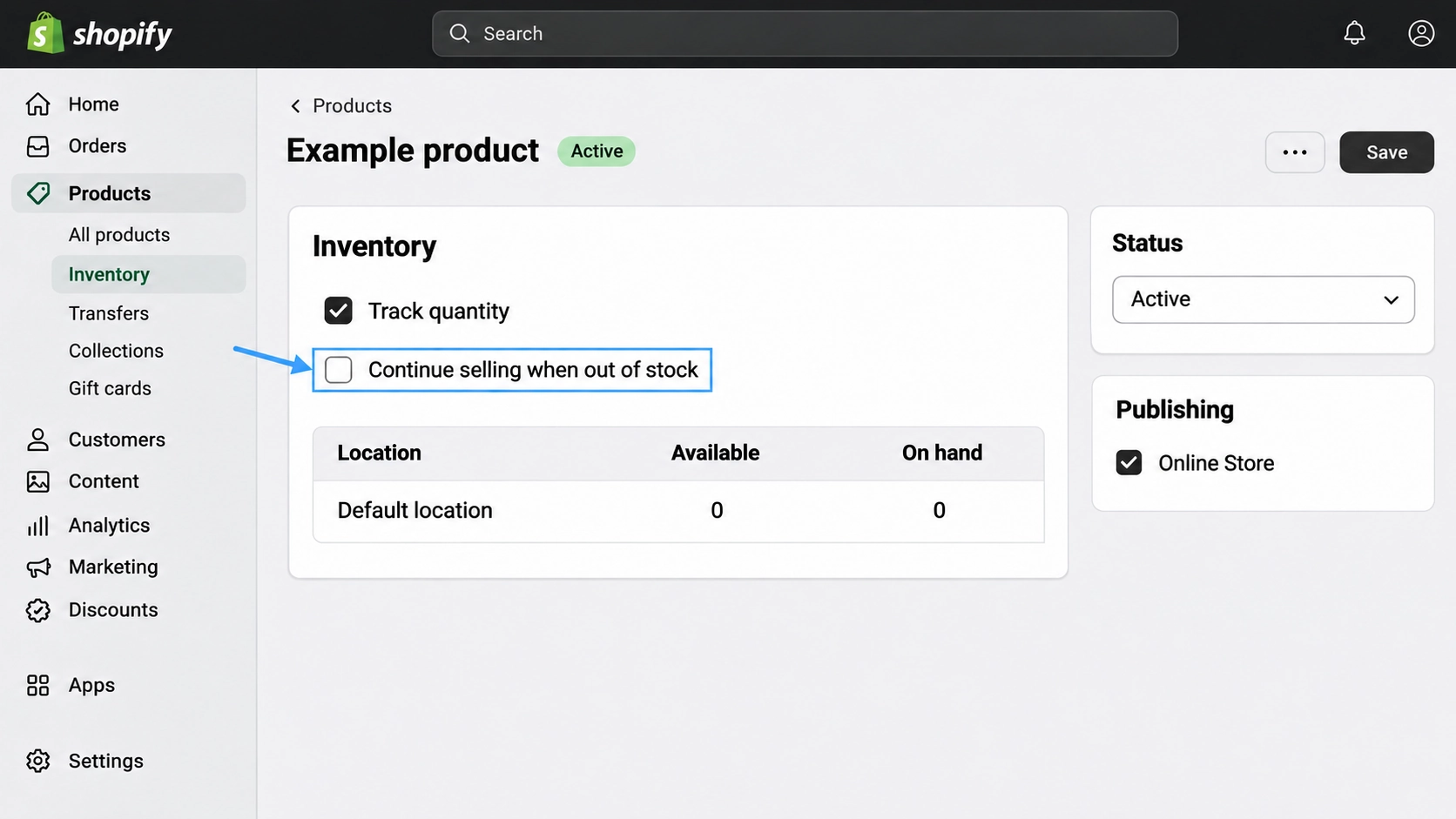
In Shopify, open each deal item and untick "Continue selling when out of stock" before Thursday.
The gotcha: even a sync app leaves a gap. EZ Inventory runs hourly at best, and on a busy Friday morning an hour is a lot of orders for something you can't ship.
10. Set your repricer floor at the offer's margin floor
When: From Thursday 26 November. Still open? Yes.
One offer, worded the same way everywhere, is easier to trust. A repricer chasing a rival down can quietly undercut your own deal, and you'll only find out from the payout.
How to run it:
- On Amazon, Automate Pricing is free on the Professional plan and takes a minimum price. Set it at the floor price from idea 1.
- Do the same in any third-party repricer you use on eBay or Walmart.
- Where the floor sits above your shelf price, take the item out of the sale on that channel.
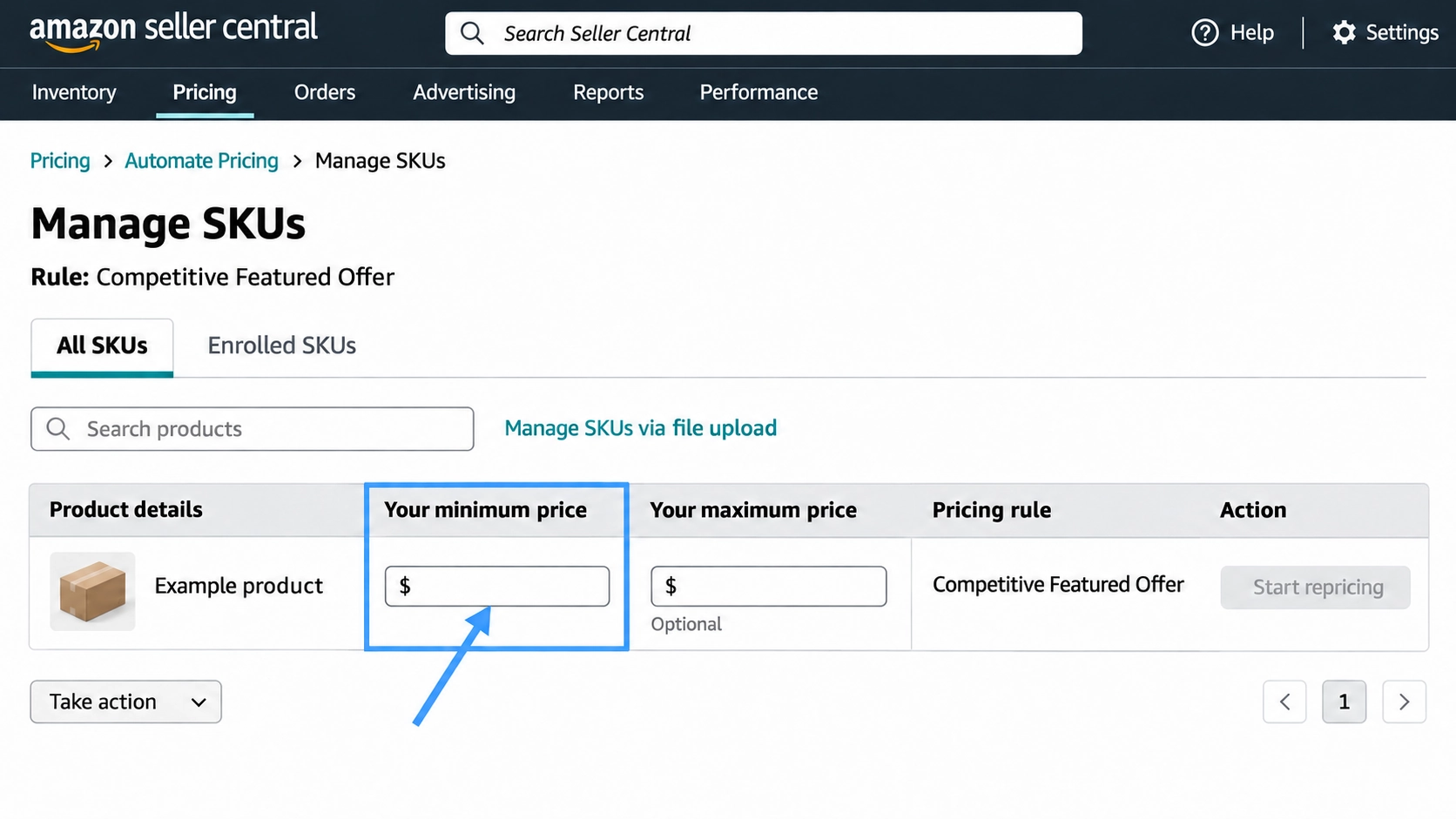
In Automate Pricing, the "Your minimum price" field is where the floor price from idea 1 goes.
The gotcha: on eBay, that last step catches more items than you'd expect. After fees, ads and returns, the Salmon + Hemp Seed Oil needs $47.42 to keep 20%. Its shelf price is $46.00. So it sits the eBay sale out entirely and runs only in the own store.
11. Run one hero deal a day, sized to what the supplier can ship
When: 26 to 29 November. Still open? Yes.
A new deal each morning gives people a reason to come back on Saturday and Sunday, and gives you a fresh line for every email and post. It also spreads your supplier risk across four days instead of betting the weekend on one SKU.
How to run it:
- Pick one hero for each day and cap it at the units your supplier confirmed in idea 2.
- Alternate suppliers where you can, so one late truck doesn't sink the whole weekend. A seller carrying Woof Creek and RiseWell might run: Thursday, the topper. Friday, the RiseWell PRO toothpaste two-pack. Saturday, the salmon oil. Sunday, the RiseWell mouthwash.
- When a cap sells out, end the deal and say so on the page.
The gotcha: letting a capped deal keep running "just this once." A sold-out banner costs you nothing. A backorder costs you the refund, the review and probably the customer.
12. Put free shipping where a second item fits the parcel
When: 26 to 29 November. Still open? Yes.
Free shipping pulls buyers. It was also the most expensive offer in our test by a long way. On a single item it left 9 of 10 products unviable in an own store, and even with a two-item threshold, none of the 10 reached a 20% margin. A $12 toothpaste simply can't carry an $8.60 label.
How to run it:
- Offer it only where the idea 1 formula still clears your floor with the label in the cost line.
- If you do run it, set the threshold just above one unit's price, so qualifying orders hold a second same-supplier item in the same parcel.
- Where you're already running a two-pack, skip the threshold. The two-pack does the same job better.
The gotcha: here's the topper's maths. Free shipping on one tin leaves a 5.6% margin. Free shipping on two tins leaves 15.5%. A two-pack at 15% off with the buyer paying shipping leaves 22.4%. Same buyer, same parcel, very different weekend.
13. Move ad spend each morning to items with stock and margin
When: Every morning, 26 to 29 November. Still open? Yes.
An ad that sells an item your supplier just ran out of costs you twice. You pay for the click, then you pay the refund. So the weekend's most profitable fifteen minutes are the ones before you open your inbox.
How to run it:
- Every morning, check live stock at each supplier and the margin at the current sale price.
- Pause ads on anything close to selling out, and move that budget to items that still pay at the sale price.
- Put a daily cap on every campaign, so a pricey Friday auction can't spend Saturday's money.
The gotcha: judging ads on revenue that weekend. A campaign selling lots of free-shipping single units can top your revenue report and still lose money on every order.
14. Put the delivery-by date on product pages, ads and emails
When: 26 November to 17 December. Still open? Yes.
For stock that ships from a supplier, the delivery date is part of the offer. A clear one converts hesitant gift buyers, and a vague one ("ships soon!") sends them to Amazon.
How to run it:
- Start from the carrier. USPS recommends sending Ground Advantage by Thursday 17 December for Christmas delivery in the lower 48, and says actual dates may vary.
- Work back by your supplier's dispatch time in business days, using the chart below.
- Put the result on product pages, in ads and in every email from idea 7.
- Give overseas stock its own, earlier line. Don't fold it into the domestic date.
The slower your supplier dispatches, the earlier your order-by line has to be.
The gotcha: these dates assume your supplier hits its normal dispatch time in the busiest month of its year. If its reply to idea 2 hedged at all, add a day.
After Black Friday: 6 ideas for Cyber Monday and December
Monday 30 November into the new year. By now the weekend has shown you what sold, what's left and which suppliers kept their word.
15. Build Cyber Monday's offer from the stock the weekend left
When: Monday 30 November. Still open? Yes.
Rerunning Friday's deals on the same items tells weekend buyers they paid too early. New items give Monday its own reason to exist.
How to run it:
- Build Monday's offer on what the weekend didn't sell, or on a second supplier's range. Don't re-advertise anything you swapped out in idea 9.
- Use a two-pack for leftover units. It held up best in the offer test, and it clears stock twice as fast per order.
- Add one last-chance line for Friday's offer, ending at midnight on 30 November.
The gotcha: going deeper on Monday to "finish strong." If the formula said 15% on Friday, it still says 15% on Monday.
16. Match your holiday returns window to your supplier's
When: Set before Thursday 26 November. Still open? Yes.
A generous returns window lifts gift sales. But Black Friday orders come back in January, and if your window outlasts your supplier's, you carry every late return yourself.
How to run it:
- Read each supplier's holiday returns terms (you asked for them in idea 2).
- Extend your own window only as far as theirs, and say in your returns policy who pays return shipping.
- Where a marketplace sets a longer window than your supplier, price that gap into the listing.
That last step matters more than it used to. On Amazon, items bought from 1 November to 31 December 2026 can go back until 31 January 2027 (Apple-brand items until 15 January), and PPC Land reports it covers seller-fulfilled orders as well as FBA, every year from now on. Walmart goes further: most items bought from 1 October to 31 December 2026 can be returned through 31 January 2027, Value Added Resource reported.
The gotcha: assuming your supplier will take a January return on a November order just because the marketplace made you accept it. Ask. If the answer is no, that return is your cost.
17. Use shipping updates to sell the next order
When: December. Still open? Yes.
A tracking email is the one email a buyer is actually waiting for. They open it. A second order from a happy first-time buyer costs you no ad at all.
How to run it:
- Give the delivery date honestly in the shipping confirmation. Pad it, don't trim it.
- Add one item from the same supplier underneath. For a Woof Creek order with a topper, that's the $14.99 Boo Boo Balm.
- Make it a one-click add to a new order, with the same delivery-by date.
The gotcha: recommending something from a different supplier. Two parcels, two labels, two chances to be late. That second order is where customer retention starts to pay, so keep it simple.
18. Ask for reviews when the parcel arrives, not when it ships
When: From delivery. Still open? Yes.
Reviews written in December sell January. But a review request that beats the parcel asks the buyer to review nothing, and an annoyed buyer who hasn't got their order yet is exactly who you don't want to prompt.
How to run it:
- For dropship orders, time the request off the supplier's tracking "delivered" event. A supplier parcel can take days longer than one you ship yourself.
- On Amazon, requests can only go out 5 to 30 days after delivery, so one scheduled from dispatch can land too early.
- Set your store's review app to count from delivery too.
The gotcha: most review apps default to "X days after fulfillment." For a dropshipper, fulfillment is when the supplier got the order, which can be a week before the buyer has anything in hand.
19. Switch to gift cards once your shipping cut-off passes
When: The day after your last order-by date. Still open? Yes.
Late shoppers still buy when the message tells them exactly what arrives and when. An emailed gift card arrives the same day.
How to run it:
- Once your last order-by date from idea 14 passes, swap the homepage banner and your ads to digital gift cards. For a three-day supplier on Ground Advantage, that's Tuesday 15 December.
- Keep physical products listed, with an honest "arrives after Christmas" note.
- Treat every gift card sold that week as a January order, spent once the rush is over and your supplier has stock again.
The gotcha: leaving the Black Friday delivery-by line on your product pages after it's expired. Someone will order on 18 December believing it.
20. Score each offer and supplier, then date your 2027 plan
When: January 2027. Still open? Yes.
Revenue flatters a bad offer. Profit per order, measured the same way as the offer test below, tells you which offer to repeat. And the weekend is the best supplier audit you'll get all year, because it's the only time every supplier is under pressure at once.
How to run it:
- Score every supplier on the three things that cost you money: dispatch dates met, stock-outs flagged in time, and holiday returns honored.
- Give next year's hero slots to the suppliers who scored well. Use the table below.
- Put this year's missed dates into the 2027 calendar: steady prices and price-break orders from October, Amazon deal submissions before its deadline, supplier emails by early November. Black Friday 2027 falls on Friday 26 November, with Cyber Monday on 29 November.
| Supplier score in January | What it means | What to do for 2027 |
|---|---|---|
| Met every dispatch date, flagged stock-outs within hours | It held up under peak pressure | Give it next year's hero slots and ask for tier pricing in October |
| Missed one date or flagged a stock-out late | Usable, with a backup | Keep it, but never as the only supplier for a hero |
| Missed two or more dates, or refused holiday returns | It cost you money and reviews | Drop it from Black Friday entirely and find a replacement by September |
The gotcha: scoring suppliers from memory in February. Do it the first week of January, while the late-shipment emails are still in your inbox.
Which Black Friday offer leaves you the most profit?
We took 10 real products from four suppliers that publish their wholesale prices and ran five common Black Friday offers through each one, in two channels: an own store on Shopify Payments, and eBay. The model assumes stock you buy and ship yourself.
How we worked it out
Cost comes from each supplier's own list: Studio Neat, RiseWell, Woof Creek and FE Active. Selling price is the same item's price on the day we checked, at Studio Neat's store, RiseWell, NHC, Dr. Judy Morgan's shop or Tractor Supply.
Each order's margin is the price after the offer, minus:
- Product cost from the supplier list.
- Channel fee: Shopify Payments at 2.9% plus 30 cents on Basic, or eBay's final value fee of 13.6% of item and shipping plus $0.40 an order over $10. That's the rate with no Store or a Starter Store. A Basic Store's 12.7% still left no product at 20%.
- Shipping: USPS Ground Advantage at its retail price to zone 5 from the 12 July 2026 price list, by estimated packed weight. Label software can buy at USPS commercial prices instead, and any peak-season surcharge is left out.
- Ads and returns: 10% and 3% of the price. Both are working assumptions, not sourced rates, so swap in your own.
Inbound freight and sales tax are left out, which flatters every margin a little.
The five offers are 20% off, 30% off, free shipping paid by you, free shipping once the order reaches two units (the threshold), and a two-pack at 15% off with the buyer paying one shipping charge. Viable means a contribution margin of 20% or more, marginal is 5% to under 20%, and unviable is under 5%. A second unit moves the parcel up a weight step or two: $10.95 for light items, up to $17.45 for two backpacks.
Own store results
Out of 10 products in an own store, the two-pack at 15% off kept seven above a 20% margin. Free shipping kept none.
The two-pack works for RiseWell and Woof Creek because they are light items with a wholesale cost around half the shelf price, so a second unit adds far more margin than it adds to the shipping label. It misses on the backpack, where two units push the label to $17.45, and on Studio Neat, where cost is already 68% to 72% of the shelf price before any offer.
Own store vs eBay
How many of the 10 products kept a 20%+ margin under each offer:
| Offer | Own store | eBay |
|---|---|---|
| No offer | 8 of 10 | 0 of 10 |
| 20% off | 1 of 10 | 0 of 10 |
| 30% off | 0 of 10 | 0 of 10 |
| Free shipping | 0 of 10 | 0 of 10 |
| Two-unit threshold | 0 of 10 | 0 of 10 |
| Two-pack at 15% off | 7 of 10 | 0 of 10 |
Even the best eBay result, the Salmon + Hemp Seed Oil at full price, only reached 18.4%.
What the results say
Lead with the two-pack. In an own store it kept seven products viable, where 20% off kept one and 30% off kept none. The buyer pays one shipping charge for two units, and that does more work than any percentage.
Free shipping hurts most. A $12 toothpaste can't carry an $8.60 label. Only the Hip + Joint topper stayed out of the unviable band. A second-unit threshold softens the blow but still left 7 of 10 unviable.
On eBay, discounts stop working. With the final value fee on top of ads and returns, no product reached 20% even at full price, and both percentage-off offers were unviable on all 10. Run the deal in your own store, keep eBay at list price, and cut ad spend there before you cut price.
In an own store, the topper clears a 20% floor only at full price or as a two-pack.
Read the supplier's terms first. Studio Neat's Glif and Cosmonaut sell at exactly the minimum retail prices its wholesale terms set, and Studio Neat keeps Amazon sales for itself. A discount on either breaks the terms before it breaks your margin.
Which offer should you run? A five-question decision tree
Work down this list for each deal item. Stop at the first answer that applies.
- Does the supplier set a minimum retail price? If yes, no percentage discount. Bundle it with a non-restricted item from the same supplier, or leave it out of the sale.
- Is the sale on eBay? If yes, keep list price. Cut promoted-listing spend before you cut price.
- Do two units ship in one parcel, within one weight step? If yes, run a two-pack at 15% off with the buyer paying one shipping charge.
- If not, what does the idea 1 formula allow? Run a percentage off no deeper than that, rounded down to the nearest 5.
- Still want free shipping? Only if the formula clears your floor with the label in the cost line. In our test, that was none of the 10.
Stop at the first yes. In our own-store test, the two-pack was the only offer that kept most products viable.
Want to run your own catalog through the same sum? The ecommerce profit calculator does it with your real fee and ad cost.
What goes wrong on Black Friday weekend, and how to recover
Even with every idea above in place, something will break. These are the five failures we'd plan for, what each one looks like while it's happening, and the fix.
Your hero sells out at 10am Friday
What it looks like: orders keep arriving for an item your supplier's feed now shows at zero, usually at the next sync, not the moment it happens.
The fix: pause the ads first, then swap in your idea 9 substitute, then email every buyer caught in the gap within a few hours. Give them a choice rather than an apology:
Discounts stack and eat the margin
What it looks like: orders where a sitewide automatic discount, a welcome code and a free-shipping threshold all applied at once. You'll spot them because the order total looks oddly low.
The fix: before Thursday, place a test order with every code you've ever handed out. If your platform lets discounts combine, switch combinations off for the sale weekend.
The parcel misses Christmas
What it looks like: "where's my order?" emails from around 18 December, all from orders placed close to your cut-off.
The fix: email those buyers before they email you, with the tracking link and an honest new date. In my experience, a buyer who hears from you first is far less likely to open a dispute than one who has to chase you.
Fraud orders slip through
What it looks like: high-value orders with mismatched billing and shipping addresses, or one buyer trying several cards. For a dropshipper, each one costs the product and the chargeback.
The fix: check every order's risk rating before you place the supplier order, not after. More on that in the FAQs below.
January returns outlast your supplier's window
What it looks like: returns arriving in late January for November orders that your supplier will no longer take back.
The fix: for this year, list those units again as open-box or bundle extras. For next year, idea 16 stops it happening.
Which apps do you need for Black Friday?
You don't need many. Where an app genuinely helps with one of the ideas above, here's one option, priced on 2 November 2026.
| Job | One option | Free tier or price |
|---|---|---|
| Email and text sequence | Klaviyo | Free up to 250 profiles and 500 emails a month, with $5 of texts |
| Countdown on the landing page | Essential Countdown Timer Bar | Free to 1,000 views a month, then $6.99 a month |
| Stock sync from a supplier feed | EZ Inventory | From $19.95 a month; no free plan |
| Repricer floor | Amazon Automate Pricing | Free on the $39.99-a-month Professional plan |
| Reviews | Judge.me | Free plan with unlimited reviews; $15 a month for Awesome |
Black Friday checklist
Run through this by Wednesday 25 November. It's short enough to work from on your phone.
- Every offer priced against landed cost, with its sale-price margin written down.
- Stock counts and last dispatch dates from each supplier, in writing.
- No "was" price you can't show the item sold at.
- Marketplace promotions priced through the same sum.
- All five sends scheduled, each with a delivery-by date.
- Landing page live and checked on a phone.
- A same-supplier substitute named for every deal item.
- Repricer minimums set at your margin floor.
- Delivery-by dates on product pages, ads and emails.
- A daily cap on every ad campaign.
- A holiday returns window no longer than your supplier's.
- A gift card ready for the day after your last order-by date.
If you only do one thing this week, send the supplier email from idea 2. Everything else depends on the answers.
Which offer are you running this year, and what margin does it leave you after fees? If your numbers say free shipping works for your catalog, we'd genuinely like to see them.
FAQs
Only if the numbers survive the offer. A new store has no email list, so nearly every order is bought with ads, and that's the most expensive traffic of the year. Treat the weekend as list-building for December rather than a profit event.
Our offer test assumes stock you ship yourself. Rerun it with your supplier's shipping charge, and lead with a two-pack only if both units ship in one parcel.
Earlier than the sale, later than the brands. Hold prices steady from October so your "was" prices stand up, email suppliers for stock and dispatch dates in early November, and start your sends on the Monday of Thanksgiving week, which is 23 November this year.
Check before you place the supplier order, because a dropshipped fraud order costs you the product and the chargeback.
Shopify's fraud analysis rates each order low, medium or high risk, flagging failed address or CVV checks and buyers who tried several cards. Verify or cancel high-risk orders first.
In the UK, Australia and New Zealand, yes, for stock you already hold. Boxing Day falls on Saturday 26 December 2026, after every Christmas shipping date, so there's no delivery promise to keep.
Usually it lowers it, because tax follows the price the buyer pays. In the UK, HMRC's guidance says to charge VAT on the discounted price.
In the US it depends on the state. Rhode Island's rule, for one, takes a discount you fund off the taxable price, but taxes the full price when a manufacturer reimburses the coupon.
About this article
About the author