




Quick Answer: What Do Men Buy Online the Most?
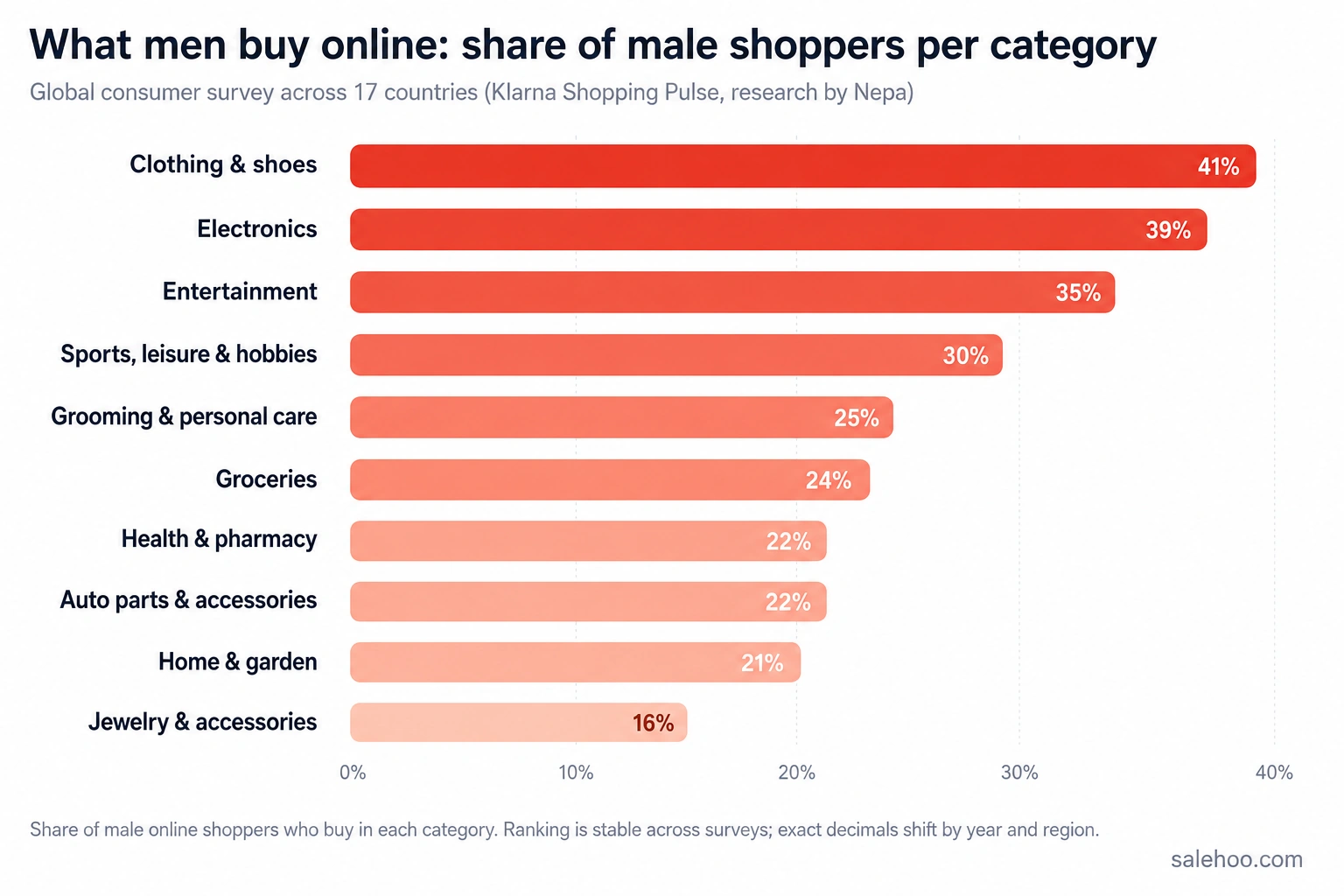
Men shop online in a handful of high-volume categories led by clothing and shoes, followed by electronics and entertainment. Strong secondary categories include sports and hobby gear, grooming, and groceries. Then come health and pharmacy products, auto parts, home and garden, and jewelry and accessories.
Short version: Men buy clothing and shoes online more than anything else, then electronics, then entertainment. After that the list runs through sports and hobby gear, grooming, groceries, health and pharmacy, auto parts, home and garden, and jewelry and accessories.
That's the answer most people came for. But if you're reading this to decide what to sell, the ranking is only half the story. The biggest category isn't always the best one to build a store around. So we're going to give you the data first, with real sources, then the part nobody else does: which of these categories are worth your money, which ones quietly eat your margin, and how to tell the difference before you order a single unit. (If you want the other side of the coin, here's what women buy online.)
Here's the part to sit with if you're a seller. Apparel has the most buyers, and it's also the most crowded, highest-return, hardest-to-differentiate category on the list. The easier money is often one tier down: grooming, accessories, hobby gear, and select electronics add-ons. More buyers does not mean more profit. We'll show you which is which.

The Full Ranking: What Men Buy Online
These figures come from a consumer survey run with research agency Nepa across 17 countries and around 17,200 people. They reflect the share of male shoppers who buy in each category online. The order has held steady across surveys; the exact percentage shifts a little by year and region, so treat the ranking as solid and the decimals as a guide.
| Rank | Category | Share of male shoppers (Klarna) | What they actually buy | Why they buy it online | Seller opportunity | Watch out for |
|---|---|---|---|---|---|---|
| 1 | Clothing & shoes | ~41% | Sneakers, tees, jeans, workwear, jackets, dress shoes | Size range, price comparison, fast restocks | Huge demand, strong repeat buying | High return rates, sizing, commoditized |
| 2 | Electronics | ~39% | Headphones, phone accessories, gaming gear, smart home | Spec comparison, reviews, warranty | High order value, frequent buyers | Warranty/support load, IP risk on brands |
| 3 | Entertainment | ~35% | Games, collectibles, subscriptions, hobby media | Instant access, community-driven | Passion buyers, repeat spend | Licensing/IP traps |
| 4 | Sports, leisure & hobbies | ~30% | Outdoor gear, gym equipment, hobby tools | Specs, niche selection | Deep niches, enthusiast loyalty | You need real product knowledge |
| 5 | Grooming & personal care | ~25% | Beard care, skincare, shaving kits, fragrance | Routines, reorders, bundles | Repeat purchase, easy bundling | Claims and ingredient compliance |
| 6 | Groceries | ~24% | Snacks, specialty food, subscriptions | Convenience, delivery slots | Reliable reorders | Thin margins, cold-chain logistics |
| 7 | Health & pharmacy | ~22% | Fitness trackers, recovery tools, supplements | Trends, reviews, certifications | Strong tailwinds | Health-claim regulation |
| 8 | Auto parts & accessories | ~22% | Accessories, detailing, replacement parts | Fitment search, niche availability | High-intent buyers | Fitment errors drive returns |
| 9 | Home & garden | ~21% | Tools, fixtures, storage, smart-home, decor | Practical, research-led | Solid practical demand | Bulky, expensive to ship |
| 10 | Jewelry & accessories | ~16% | Watches, wallets, sunglasses, rings | Gifting, personalization | Gift-driven, high margin potential | Needs real brand differentiation |
Source: Global consumer research, Nepa, 2023. Categories with a heavy "buying for someone else" skew, like children's products, are left off this men's-focused view.
How Sure Are These Numbers? (Why We're Showing Our Work)
Honesty first, because a stat-led page that hides its sources doesn't deserve your trust.
The ranking above is about as settled as ecommerce data gets. Different surveys, different years, same order: clothing leads, electronics and entertainment follow, accessories sit at the bottom. The exact percentages wobble depending on who ran the survey and where. For a second reference point, UK government data (the Office for National Statistics, 2020) found 49% of men bought clothing, shoes, or accessories online, 27% bought computers, phones, or accessories, 23% bought consumer electronics like TVs and cameras, and 22% bought sports goods. A 2017 US survey by Loqate landed on the same headline figure: about 49% of men had bought clothing online. The categories sort the same way no matter who's counting.
One caveat worth more than any decimal point: share of buyers is not the same as profit. A category can have the most shoppers and still be a poor place to start, because demand attracts competition, and competition crushes margin. Keep that in mind for everything below.
Category by Category: What's Worth Selling, and What Isn't
1. Clothing and Shoes
This is where the most male shoppers are, and where the most sellers crash. Men's apparel online means sneakers, plain and printed tees, jeans, workwear, hoodies, jackets, and the occasional dress shoe or suit for a wedding or a job interview. Utility leads, style refines it. And the market is enormous: global apparel passed $1.95 trillion and is on track to top $2 trillion, according to Euromonitor.
The demand is real and it repeats. The trap is just as real: returns and sizing. Apparel has the highest return rate on this whole list, and every return is a refund, a restock, and a shipping cost you swallow. So if you sell apparel, you live or die on accurate size charts, real fit photos on real bodies, and a returns process that doesn't punish the buyer for guessing.
The smarter play here is usually a sub-niche, not "men's clothing" broadly. Workwear. Big and tall. Performance and gym wear. Premium basics. You compete on something other than price. For sourcing reference, SaleHoo Market Insights currently pegs printed tees in roughly the $11 to $27 range and men's dress shirts in the $64 to $85 band. That tells you the tee is an impulse, multi-unit, volume play and the shirt is a considered purchase with cross-sell room (ties, belts, shoes). Two different businesses, really.
If apparel is your lane, start narrow: how to source wholesale jeans for profit and how to sell wholesale shoes are good next steps.
2. Electronics
Phone accessories, headphones, chargers, gaming peripherals, smart-home gadgets. The category is gigantic, around $1.03 trillion in global revenue in 2026 per Statista, and men comparison-shop it harder than almost anything, reading specs and reviews before they commit. That's good for you (high intent) and bad for you (they'll notice if your listing is thin).
Order values run higher here, so a single sale is worth more. The catch is support. Electronics generate warranty questions, compatibility questions, and "it stopped working" emails. Sell branded gear and you're also wading into IP and authorized-reseller territory, which is a fast way to get a listing pulled.
For most newer sellers, the sweet spot is accessories, not headline devices. A phone case, a charging stand, a cable organizer: low support burden, easy to ship, healthy margin, and you're not competing with Best Buy on a $900 phone.
3. Entertainment
Games, collectibles, hobby media, gear tied to a fandom. This is passion-buying, and passion buyers spend. They also know more than you do about their niche, so credibility matters. The watch-out is licensing. Anything with a logo, a character, or a franchise attached can be a legal minefield, and "I bought it from a supplier" is not a defense. Stick to unlicensed or properly licensed goods, and you've got a loyal, repeat-spending audience.
4. Sports, Leisure, and Hobbies
Outdoor gear, gym equipment, fishing and cycling kit, hobby tools. Around 30% of male shoppers buy here, and the enthusiast angle is gold. People who are into a thing buy deep, buy often, and trust sellers who clearly know the gear. That's also the bar: you need genuine product knowledge, or your listings read like a spreadsheet. Comparison tables and honest use-case guides convert well in these niches.
5. Grooming and Personal Care
Beard care, skincare, shaving kits, fragrance. Men's grooming stopped being niche years ago. And here's why it's quietly one of the best categories on this list for a seller: it reorders. A guy who likes your beard oil buys it again in six weeks without shopping around.

Bundles work beautifully here (a starter kit converts better than a single SKU), and subscriptions lift lifetime value if you make pause-and-skip easy. The watch-out is compliance: skincare and anything with a health or "results" claim is regulated, and the rules vary by market. Keep claims clean and you've got a repeat-purchase machine.
6. Groceries and Consumables
Roughly a quarter of men buy groceries online, mostly for convenience and subscription delivery. Honest take: this is a strong buyer category and a tough seller category for most independent stores. Margins are thin, perishables need cold-chain logistics, and you're up against giants with their own delivery fleets. There are good plays in shelf-stable specialty food and snack subscriptions. There are very few good plays in trying to out-Amazon Amazon on bananas.
7. Health and Pharmacy
Fitness trackers, recovery tools, mobility and sleep aids, supplements. Strong trend tailwinds, and men research these heavily before buying. The hard line: supplements and anything making a health claim are regulated, and getting it wrong is expensive in a way a bad apparel return never is. Equipment and accessories (resistance bands, massage guns, a smart scale) are the lower-risk entry point. Supplements are for sellers who understand the compliance side cold.
8. Auto Parts and Accessories
Car accessories, detailing products, replacement parts. These are high-intent buyers: someone searching for a part for a specific make and model is ready to buy now. The entire game is fitment. Sell a part that doesn't fit and you get a return plus a frustrated customer, so fitment tools and clear compatibility info aren't optional, they're the product. Accessories and detailing (mats, organizers, cleaning kits, lighting) are friendlier for newer sellers than precision parts.
9. Home and Garden
Tools, storage, fixtures, decor, smart-home upgrades. Practical, research-led demand that holds up year-round, and one of the categories ONS data shows men buying online at a healthy clip. The friction is physical: this stuff is heavy and bulky, and shipping eats your margin fast. Smaller tools, smart-home devices, and hardware ship better than a 40-pound toolbox. Run your shipping math before you fall in love with a product.
10. Jewelry and Accessories
Watches, wallets, sunglasses, rings, belts. Lower buyer share, higher margin potential, and a heavy lean toward gifting. A lot of men's jewelry is bought for a man, not by him, which changes how you market it (think occasions, gift guides, personalization). The watch-out is differentiation: this category needs a brand, a story, or a customization angle, because a generic watch is a race to the bottom. For one well-trodden path, see selling smartwatches online.
The Part Most Sellers Skip: Which Category Should You Pick?
The ranking tells you where the buyers are. It doesn't tell you where you should start. That depends on your goal, your budget, and your stomach for support tickets. Here's how we'd steer it.
| Your goal | Best men's categories | Why |
|---|---|---|
| Beginner-friendly | Accessories, grooming kits, hobby add-ons | Cheap to ship, few sizing returns, low support load |
| Repeat purchase | Grooming, select wellness, consumables | Men reorder winners without shopping around |
| High order value | Electronics accessories, smart home, watches, tools | Bigger baskets, fewer sales needed to hit revenue |
| Niche authority store | Auto accessories, outdoor gear, hobby equipment | Enthusiast demand, loyal buyers, defensible against price wars |
| Avoid until you're experienced | Groceries, supplements, branded electronics | Compliance, logistics, IP, and support risk stack up fast |
If you want the next level of detail (15 specific men's products with price ranges and supplier recommendations), that lives on our dedicated guide: Sourcing and Selling High-Demand Products and Gifts for Men.
How Men Actually Decide to Buy Online
Knowing what men buy is useful. Knowing why they buy it the way they do is what makes your store convert.
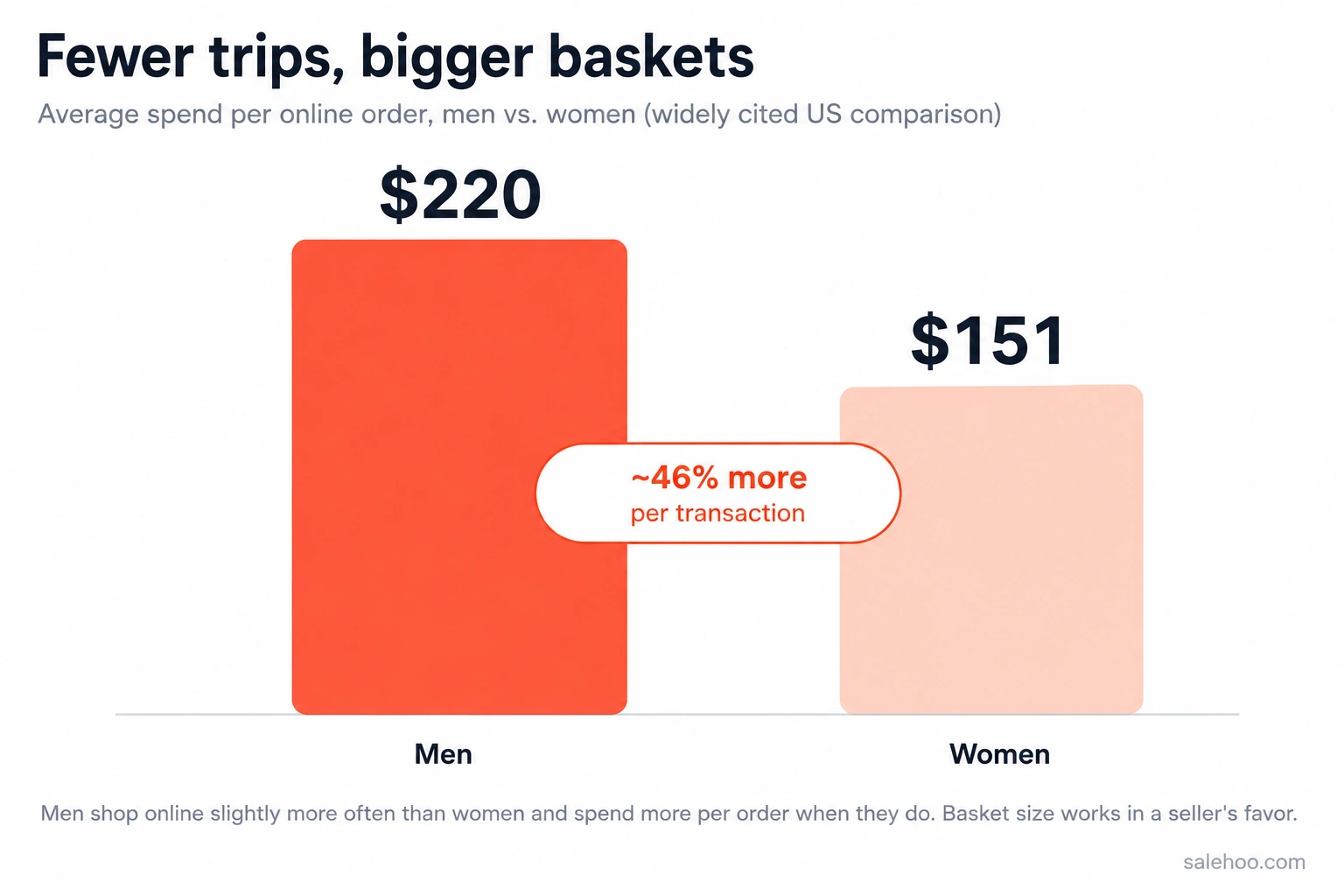
There's an old line out of Wharton, from marketing professor Stephen J. Hoch, that men buy and women shop. The idea is that men tend to treat shopping as a task to finish rather than an experience to enjoy: find the thing, confirm it's the right thing, buy it, leave. It's framing from around 2015, so treat it as a durable behavioral pattern rather than a fresh stat, but it lines up with what sellers see every day, and the spending data backs it up. Men shop online slightly more often than women and spend more per order when they do, somewhere around $220 a transaction in one widely-cited comparison against roughly $151 for women. Fewer trips, bigger baskets. They decide fast once they trust the listing, and they hesitate when anything's unclear.
That hesitation is your real competition. So:
On apparel, the question in their head is "will this fit?" Answer it with a real size guide and photos on real people, and put your returns policy where they can see it.
On electronics and auto parts, the question is "will this work, or fit my setup?" Answer it with compatibility info, specs, and a visible warranty or support promise.
On grooming and health products, the question is "will this actually do what it says?" Answer it with ingredients, honest use instructions, and reviews, not hype.
Across all of it, delivery certainty beats a slightly better price. Men reward a store that tells the truth about shipping times and then hits them. Publish your cutoffs. Hit your dates. That reliability is what turns a one-time buyer into the guy who reorders your beard oil for the next three years.
What Actually Trips Up New Sellers (Learn It Before Your First Order)
The polished version of this helps nobody, so here's the unglamorous reality.
SaleHoo exists because of this stuff. Simon (our co-founder) started it after years selling on Trade Me, where the constant question was always the same: where did you source that? The answer is rarely as clean as a supplier's sales page makes it look. Two things bite new sellers more than anything, and neither shows up in a category ranking.
First, lead times run long. A supplier advertises one shipping window and the real one, once you've placed an actual order, is longer. If you've already set customer-facing delivery estimates off the advertised number, you're now late on every order out of the gate. The fix is boring and it works: order a sample yourself, time it from click to doorstep, and set your store's promises off that number, not the brochure.
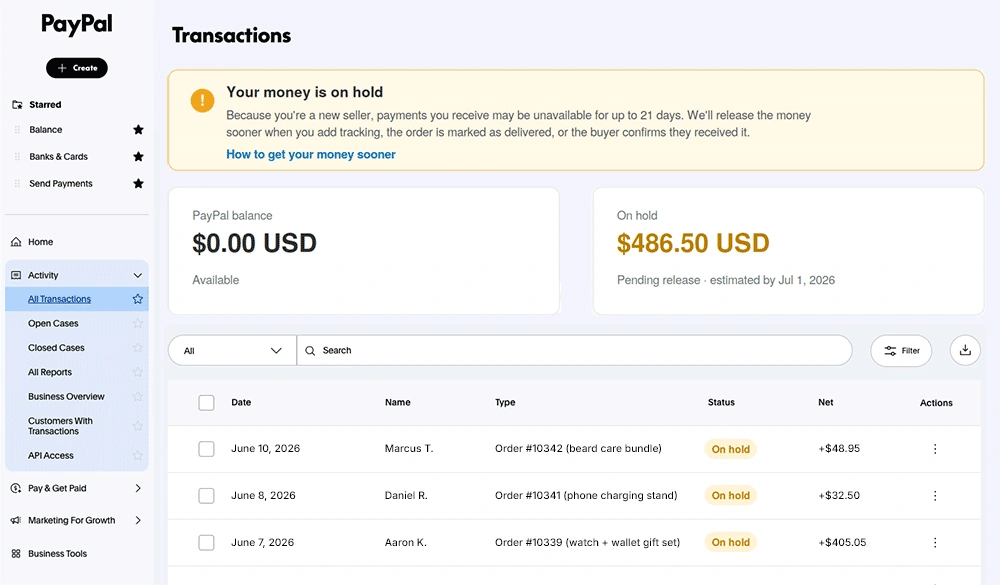
Second, payment holds. New seller accounts often have funds held by the payment processor while the account builds a track record. PayPal, for example, can hold a new seller's money for up to 21 days per order. Completely normal, completely cash-flow-wrecking if you didn't plan for it, because you've paid your supplier and you're waiting on money you've technically already earned. Read coping with PayPal payment holds before your first sale, not after.
Men's Products That Look Easy but Bite Back
Most articles only show you the opportunities. Here's the other half, because avoiding a bad category is worth as much as picking a good one.
Supplements and anything with a health claim. Regulated, market by market, and the penalties for getting it wrong dwarf any return headache. Don't touch this without understanding the compliance side.
Branded electronics. Selling someone else's brand without authorization invites IP complaints and pulled listings, plus you inherit warranty and support expectations you can't always meet. Accessories sidestep most of this.
High-return apparel categories. Fitted clothing, anything where "true to size" is a gamble. The demand is there, but the return rate can quietly turn a profitable margin into a loss.
Bulky home and garden goods. A great product that costs $30 to ship is not a great product. Weigh it, measure it, price the freight before you commit.
Licensed entertainment and collectibles. Logos, characters, franchises. If you can't prove the licensing, walk away.
None of this means "never." It means know what you're walking into, and don't make it your first product while you're still learning the basics.
How to Validate a Men's Product Before You Order a Single Unit
Picking a category is step one. Validating a specific product is what saves you from a garage full of inventory nobody wants. The short version:
Check that real demand exists and isn't already collapsing, using actual data rather than a gut feeling. Check how crowded the listing space is, because a product everyone already sells is a price war you'll lose. Compare a few suppliers on price, minimum order quantity (MOQ, the smallest batch a supplier will sell you), and lead time, not just the cheapest unit cost. Run your margin honestly with shipping, fees, and returns baked in. Then test small, and only scale the winners.
This is the whole reason SaleHoo's research tools exist: to take the guessing out of that loop. You can dig into finding profitable products, browse trending products to dropship, and when you're ready to source, the supplier directory gives you 8,000+ vetted suppliers so you're not gambling on a stranger. For the money side, understanding dropshipping profit margins keeps you honest about what's actually left after costs.
Frequently Asked Questions
Clothing and shoes, by a clear margin, with around 41% of male shoppers buying in the category online per Klarna's Shopping Pulse. Electronics (about 39%) and entertainment (about 35%) follow. After that: sports and hobby gear, grooming, groceries, health products, auto parts, home and garden, and accessories.
Grooming and personal care lead on repeat purchase (beard care, skincare, shaving supplies), along with consumables and some health products. Once a man finds a product he likes, he tends to reorder it without shopping around.
Accessories, grooming kits, and hobby add-ons. They're cheap to ship, rarely cause sizing returns, and don't generate the support load that electronics or regulated products do.
Yes, for most sellers it's one of the strongest on this list, because it reorders and bundles well. Just keep product claims compliant, since skincare and health-adjacent products are regulated.
Higher-margin opportunities cluster in accessories, watches, smart-home and electronics add-ons, and well-branded niche gear. Men also spend more per online order than women on average, so basket size works in your favor. Margin comes from differentiation, not from selling the same commodity everyone else lists.
Groceries (thin margins, logistics), supplements (regulation), branded electronics (IP and support), and bulky home and garden goods (shipping cost). Possible, but not where beginners should start.
Clothing and shoes edge out electronics on share of buyers (roughly 41% versus 39% in Klarna's data). But electronics accessories often carry higher order values and lower return rates, so "more buyers" and "more profit" can point in different directions.
Anything regulated (supplements, health-claim products), anything you can't legally brand (unlicensed logos, unauthorized branded electronics), and anything that's expensive or fragile to ship until you've got a handle on fulfillment.
About this article
About the author


)


