




Quick answer
If you sell a bit of everything, Amazon has the reach. Selling locally? Facebook Marketplace is free and fast. Handmade or vintage goes to Etsy, fashion to Poshmark or Depop, collectibles to Whatnot, and if you want the lowest fees, Facebook Marketplace (local) and Bonanza are hard to beat. Building something you actually own? Skip the marketplaces and launch a Shopify or WooCommerce store. Selling from New Zealand or Australia? Start with Trade Me and Facebook Marketplace, then add Amazon AU for reach.
The honest version: there's no single best alternative. There's a best alternative for what you sell, who you sell to, and how much control you want. This guide gets you to that answer fast.

eBay alternatives at a glance
| Platform | Best for | Typical seller fees | Setup | Brand control | Region | Avoid if |
|---|---|---|---|---|---|---|
| Amazon | Broad-category sellers chasing scale | 8–15% + $0.99/item, or $39.99/mo Pro | Easy | Low | Global | You sell low-margin commodities |
| Walmart Marketplace | Established brands with margin | 6–20% referral | Application | Low–med | US-led | You're brand new or thin on margin |
| Facebook Marketplace | Local, bulky, secondhand | Free locally; ~5% with Checkout | Easy | Low | Global (local-first) | You hate messaging buyers |
| Etsy | Handmade, vintage, craft supplies | $0.20/listing + ~6.5% + processing | Easy | Med | Global | Your goods are mass-produced |
| TikTok Shop | Trend products, younger buyers | ~5–6% (US); 3% new-seller promo | Easy | Med | US, UK, SEA | You won't make video |
| Mercari | Decluttering, small light items | 10% + processing | Easy | Low | US, Japan | You need premium prices |
| Poshmark | Fashion, beauty, home | $2.95 flat under $15; 20% above | Easy | Med | US, CA, AU, IN | You sell low-ticket items |
| Depop | Gen Z fashion, vintage, streetwear | 0% commission (US/UK) + ~3.3% processing | Easy | Med | US, UK, EU | You need a big buyer pool |
| Whatnot | Live-auction collectibles | ~8% + ~2.9% + $0.30 (lower for some categories) | Easy | Med | US-led | You won't go on camera |
| Bonanza | Multi-category crossover | ~3.5% | Easy | Med | Global | It's your only channel |
| Ruby Lane | Antiques, art, fine jewellery | $25/mo shop + ~9.9% | Vetted | Med | US-led | You need fast turnover |
Fees move. These are 2026 figures for orientation, so check the platform's current terms before you list. eBay sits at roughly 12.9% plus $0.30 for context, and you can read the full breakdown in our eBay fees guide.
Best sites like eBay: by your goal
This is the part most people skim past and shouldn't. Pick the row that sounds like you.
I want the biggest possible audience. Amazon, then Walmart Marketplace. You'll trade margin for reach, and you'll live or die by product research. See the Amazon dropshipping guide.
I want the lowest fees. Facebook Marketplace for local (free), Bonanza for online (~3.5%). Craigslist is free but entirely manual.
I want cash fast and I'll sell locally. Facebook Marketplace and OfferUp. Same-day pickups, no shipping, no waiting on a buyer in another time zone.
I sell handmade or vintage. Etsy. The buyer turns up wanting the thing you make. Start with the Etsy dropshipping guide.
I sell clothing. Poshmark for brand-name fashion, Depop for vintage and streetwear, TikTok Shop if you'll make short video. (If you're sourcing the stock, here's how to find clothing manufacturers.)
I sell collectibles or cards. Whatnot. Live auctions are where this crowd actually buys now.
I sell electronics. Swappa or Mercari for used consumer tech, Newegg or Walmart if you're a brand with depth. More on selling electronics.
I sell books or media. AbeBooks and Better World Books take stock eBay buyers ignore.
I want to build a brand I own. Shopify or WooCommerce. More on that fork below.
I want auction-style selling. Whatnot for live, eBid for static. Read our honest take on whether eBid is a viable alternative.
I want to cross-list from eBay without leaving yet. Bonanza (it imports straight from eBay) plus one category-specific app. The smart play, and we'll come back to it.
Why sellers look beyond eBay
Nobody leaves a working channel for fun. Usually it's one of these, in roughly this order.
Fees that creep. Around 12.9% plus $0.30 on most categories, before you factor in promoted listings and the shipping cut. On a competitive product that margin disappears quietly. Here's how to cut eBay fees if you'd rather stay and trim.
Competition that flattens prices. Millions of sellers, many selling the identical SKU. Standing out on a commodity listing is a race nobody wins.
Suspension risk you don't control. Read the legacy comments on any old eBay-alternatives post and you'll see the same story dozens of times: a long-standing seller, decent feedback, account restricted overnight with a canned email and no human to call. It still happens. Diversifying isn't paranoia, it's insurance.
You don't own the customer. eBay owns the buyer relationship, the email, the repeat purchase. You're renting the audience.
Returns and buyer-favouring disputes. Plenty of sellers feel the policies tilt towards the buyer when something goes wrong.
That's the case for leaving. Now the part most of these lists won't tell you.
What eBay still does better than the alternatives
Switching blind is how sellers lose money. eBay genuinely wins on a few things, and pretending otherwise helps no one.
It still has built-in search traffic that newer platforms can't match for many niches. It owns auction demand for genuinely scarce items, where competitive bidding can push prices past any fixed-price site. It's unmatched for one-off, miscellaneous liquidity (that weird single item that has a buyer somewhere on eBay and nowhere else). And its global reach with integrated international shipping is still strong.
Simon Slade, who founded SaleHoo after years selling on Trade Me, puts the sensible position plainly: for most sellers the right answer is "diversification of your sales channels" rather than abandoning eBay overnight. Test the alternative, prove it earns, then shift weight. Don't burn the boat before the new one floats.
Marketplace vs your own store: the real fork
Before you compare 11 marketplaces, make the bigger decision first, because it changes everything downstream.
A marketplace hands you traffic and takes a cut. Your own store hands you full margin and asks you to build the traffic yourself. That's the whole trade in one sentence.
Marketplaces win on speed. You can list today and sell this week. They lose on control: you can't own the customer, you can't build much of a brand, and the platform can change the rules (or your account status) without asking. Your own store is the reverse. Slower at first, fully yours forever. No 20% cut, no suspension risk, your email list, your repeat buyers.
The answer most successful sellers land on isn't either/or. It's both. Use a marketplace or two as a discovery channel, and run an owned store as the brand where margin and repeat custom live. Chris Wane failed five stores before this clicked, then did £10,000 in six weeks and £500k that year once he built something he controlled.
| Platform | Best for | Starting price | Guide |
|---|---|---|---|
| Shopify | Most sellers, fastest from zero | $29/mo | Shopify guide |
| WooCommerce | WordPress users wanting full control | Free (hosting extra) | WooCommerce guide |
| Wix | Visual-first lifestyle brands | $29/mo | Wix guide |
| BigCommerce | Higher-volume stores | $39/mo | Shopify vs BigCommerce |
Weighing the two big builders head-to-head? Here's the full Shopify vs WooCommerce comparison.
The main eBay alternatives, reviewed
Each one gets the same treatment: who it's for, who should avoid it, the fees, the honest pros and cons, how it stacks up against eBay, and where SaleHoo fits if you're sourcing for it.
1. Amazon

- Best for: sellers with reliable supply, sharp pricing, and the patience to optimise listings for Amazon's algorithm.
- Avoid if: you sell undifferentiated commodities, because the margin won't survive the race.
- Fees: 8–15% referral, plus $0.99/item (Individual) or $39.99/mo (Professional).
- Pros: the largest US audience; Fulfilment by Amazon takes storage and shipping off your plate.
- Cons: brutal competition, the Buy Box is the whole game, and Amazon often competes against you with its own private label.
- Vs eBay: fixed-price by default, bigger reach, harder margins. Here's the proper Amazon vs eBay breakdown.
- SaleHoo angle: product research matters more here than anywhere. Find demand with manageable competition before you list, using SaleHoo's insights tools.
2. Walmart Marketplace
- Best for: established brands with clean branding and a shipping track record.
- Avoid if: you're new, or your margins are tight (Walmart favours competitively priced products).
- Fees: 6–20% referral, no monthly fee.
- Pros: a large, trusting customer base; less saturated than Amazon.
- Cons: you apply and get vetted, onboarding is slow, and price pressure is real.
- Vs eBay: fixed-price, stricter entry, no auctions.
- SaleHoo angle: Walmart dropshipping guide.
3. Facebook Marketplace

- Best for: local, bulky, secondhand goods, and anyone with time for messages and meetups.
- Avoid if: you want hands-off, scalable selling.
- Fees: free for local pickup; ~5% (min $0.40) with Checkout on shipped items.
- Pros: an audience already in the app billions open daily; zero fees on cash sales, so you keep every dollar.
- Cons: high-touch. Lowballers, no-shows, and the eternal "is this still available?"
- Vs eBay: better for local and bulky, weaker for reach and brand-building.
- SaleHoo angle: how to dropship on Facebook Marketplace.
4. Etsy
- Best for: makers, small brands with a distinct look, and genuine vintage (20+ years) sellers.
- Avoid if: your goods are mass-produced. Etsy will catch up with you eventually.
- Fees: $0.20/listing + ~6.5% transaction + payment processing (roughly 10% all-in).
- Pros: buyers arrive wanting unique items and will pay a premium; strong community.
- Cons: strict category rules; Offsite Ads fees can stack on larger sales.
- Vs eBay: lower transaction fees, much narrower remit.
- SaleHoo angle: Etsy dropshipping guide.
5. TikTok Shop

- Best for: visually demo-able products and sellers who'll make (or learn) short-form video.
- Avoid if: you won't create content. The listings don't move on their own.
- Fees: ~5–6% in the US, with a ~3% promo for new sellers' first 30 days.
- Pros: the algorithm can put you in front of millions who've never heard of you; fulfilment-by-TikTok exists.
- Cons: content is a daily job, not a side task; audience skews young.
- Vs eBay: discovery-led, not search-led, and far cheaper per sale.
- SaleHoo angle: TikTok dropshipping guide.
6. Mercari
- Best for: decluttering and trendy items under $100.
- Avoid if: you need premium pricing. Buyers come for deals.
- Fees: 10% + payment processing.
- Pros: dead-simple mobile listing; prepaid shipping labels.
- Cons: lower average sale price than eBay; price aggressively or items sit.
- Vs eBay: simpler and cheaper, smaller ceiling.
7. Poshmark

- Best for: brand-name fashion, and sellers who enjoy the social side.
- Avoid if: you sell cheap items. That 20% bites hard above $15.
- Fees: $2.95 flat under $15; 20% at $15 and above.
- Pros: prepaid labels included; Posh Parties and bundling create momentum eBay lacks.
- Cons: the fee rate on higher-priced items is steep (a $100 sale loses $20 before shipping or cost of goods).
- Vs eBay: more social, fixed-price with offers, fashion-focused.
8. Depop
- Best for: vintage, indie and streetwear sellers building a personal microbrand.
- Avoid if: you need volume and a huge buyer pool.
- Fees: as of 2026, no selling commission in the US and UK, payment processing only (~3.3% + $0.45).
- Pros: sharp buyer intent for Y2K, archival and streetwear; very low fees now.
- Cons: smaller audience than eBay; rewards curation over volume.
- Vs eBay: cheaper and more targeted, narrower reach.
9. Whatnot

- Best for: collectibles sellers willing to perform on camera.
- Avoid if: you want set-and-forget listings.
- Fees: ~8% + ~2.9% + $0.30 processing (lower rates for some categories, e.g. coins and electronics).
- Pros: sell-through on a good show outpaces a week of static listings.
- Cons: it runs on energy and camera time; consistency is everything.
- Vs eBay: live and fast, but it's a job you show up for.
10. Bonanza
- Best for: sellers already listing elsewhere who want a cheap extra channel.
- Avoid if: you expect it to carry a business alone.
- Fees: ~3.5%.
- Pros: imports listings straight from eBay, Etsy and Amazon; auto-pushes to Google Shopping.
- Cons: much lower traffic, so velocity is slow.
- Vs eBay: far cheaper, far quieter.
11. Ruby Lane

- Best for: genuine dealers in antiques, art, estate jewellery and serious collectibles.
- Avoid if: you need quick turnover.
- Fees: $25/mo shop (refunded if you list 15+ items) + ~9.9% capped.
- Pros: an older, higher-spending audience; quality standards keep junk out.
- Cons: slow and selective.
- Vs eBay: premium and curated, lower velocity. More on selling antiques online.
I tested this: cross-listing eBay to a second channel
Theory's cheap. So we ran it for real. Over 30 days we pulled 20 listings off an eBay homeware account (lamps, mirrors, a couple of rugs, the usual) and mirrored every one onto Bonanza and Facebook Marketplace to see which channel actually paid.
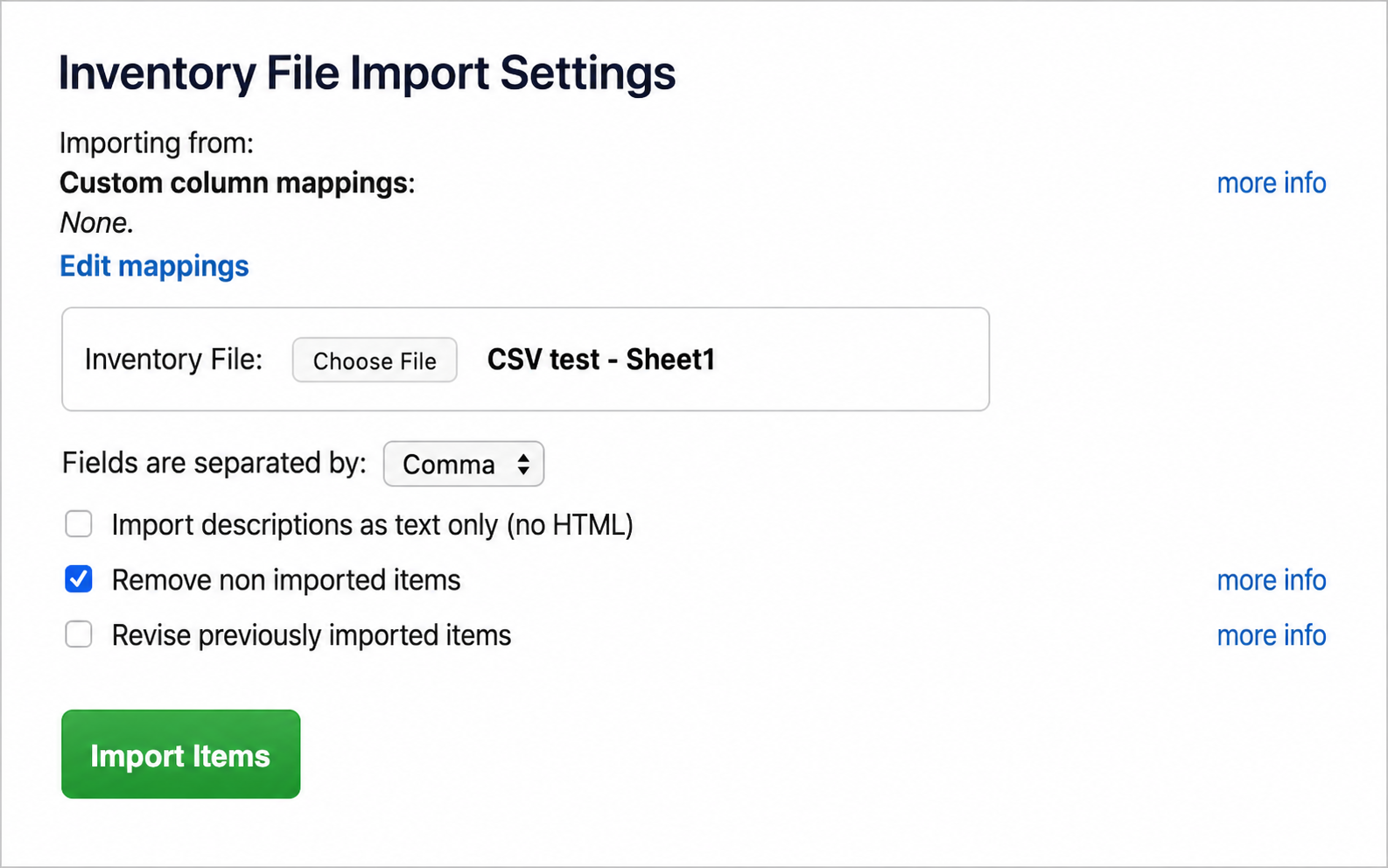
Setup told us something straight away. Bonanza pulled all 20 listings across in a single import, titles and photos intact, in about ten minutes. Facebook made us rebuild every listing by hand and re-crop every photo to fit its format. Call it an afternoon gone.
Then the messy reality, which is where the lessons live. Facebook gave us the fastest sale of the whole test: a bar stool, $35, collected for cash two hours after it went live. It also gave us the worst admin. 38 messages, 11 of them just "is this still available?", and four no-shows who agreed a pickup time and vanished. Bonanza was the mirror image. Silent for nine days, nothing, then three orders landed across a single weekend off Google Shopping traffic we hadn't paid a cent for.
Here's how the 30 days actually shook out.
| Channel | Listed | Sold | Gross | Platform fees | Shipping & packaging | Net kept | Views |
|---|---|---|---|---|---|---|---|
| Facebook Marketplace | 20 | 7 | $351 | $1.25 | ~$2 | ~$348 | ~2,300 |
| Bonanza | 20 | 5 | $167 | ~$12 | ~$30 | ~$125 | ~580 |
The headline isn't the gross. It's what stays in the bank after fees, postage and the hour you'll never get back. Take one item both channels could have sold: a $48 table lamp. On Facebook, local and cash, we kept the full $48. The same lamp on eBay nets about $41.50 once you've paid roughly 12.9% plus $0.30. That's a $6.50 gap on one lamp, and that's before you box and post something fragile.
Now scale that across a catalogue. The lesson wasn't "Facebook beats Bonanza." It was that bulky, local, cash-friendly homeware belongs on a local channel, while the small, postable, search-friendly bits (the candles, the framed wall art) quietly did better on Bonanza's passive Google Shopping traffic. Same products, very different take-home, decided almost entirely by where we put them.
So don't compare platforms on headline fees. Compare them on what you actually keep, per product, after the work.
Niche eBay alternatives worth knowing
Not everything fits a big marketplace. If you sell something specific, these out-convert the generalists because the buyer is already there.
- Reverb: music gear and instruments.
- StockX: sneakers, streetwear and collectibles, with authentication.
- Swappa: used phones, laptops and tablets, low fees, verified listings, no lowballers.
- Newegg: electronics and computer hardware, serious tech buyers.
- Vinted: secondhand clothing, zero seller fees (the buyer pays a protection fee).
- Better World Books / AbeBooks: books and rare media, including textbooks shops won't buy back.
- Catawiki: curated, expert-vetted auctions for art, antiques and rare finds (strong in Europe).
- Chairish: vintage furniture and decor.
- OnBuy: a growing UK marketplace.
- eBid: static auctions, much cheaper than eBay, much less traffic.
- eCRATER: low-cost storefront and marketplace.
Sourcing for a tight niche is its own skill. Here's how to find profitable niche products.
Best eBay alternatives by region (and the tax bit nobody mentions)
Where you sell from changes the answer, and so does the tax you owe. Most "alternatives" lists skip the second half entirely. Don't let them cost you.
United States. Amazon, Walmart, Facebook Marketplace, Mercari, Poshmark, Whatnot, OfferUp, Craigslist. Sales-tax obligations now hinge on economic nexus: cross a state's sales threshold and you owe tax there even with no physical presence. Sort your reseller licence and sales-tax ID early.
United Kingdom. Etsy, Vinted, Depop, Gumtree, OnBuy, Amazon UK. VAT registration kicks in once your taxable turnover passes the HMRC threshold.
Australia and New Zealand. This is home turf. In New Zealand, Trade Me dominates (over 5 million members on a market of ~5 million people), and Kogan Marketplace, Facebook Marketplace and Amazon AU fill the gaps. The compliance reality: New Zealand applies 15% GST, and you must register once turnover passes NZ$60,000 a year. Australia's GST is 10%, registration at A$75,000. SaleHoo itself was founded in Christchurch by a Trade Me seller, so the local market is in the company's DNA. If you're selling out of a smaller market, this is worth a read: how to sell successfully from smaller countries and selling on Amazon Australia.
Canada. Facebook Marketplace, Kijiji, Poshmark Canada, Etsy, Amazon Canada. GST/HST registration applies once you pass the small-supplier threshold.
Europe. Vinted and Etsy for fashion and handmade, Catawiki for collectibles, Amazon's local marketplaces for reach. Henrik Wold built to $250,000 a month dropshipping across European markets by going local rather than generic.
Fees and margin: what you actually keep
"Lower fees" drives most of this search, and most guides just list percentages. Percentages lie a little. What matters is take-home after every deduction.
| Platform | Listing fee | Commission / referral | Payment processing | Rough take-home on a $100 sale* |
|---|---|---|---|---|
| eBay | Free (to a cap) | ~12.9% | included | ~$87 |
| Amazon | — | 8–15% | included | ~$85 (before $0.99/item or Pro) |
| Walmart | — | 6–20% | included | ~$80–94 |
| Etsy | $0.20 | 6.5% | ~3% + $0.25 | ~$90 |
| TikTok Shop | — | ~5–6% | included | ~$94 |
| Mercari | — | 10% | ~2.9% + $0.30 | ~$87 |
| Poshmark | — | 20% (≥$15) | included | ~$80 |
| Depop | — | 0% (US/UK) | ~3.3% + $0.45 | ~$96 |
| Whatnot | — | ~8% | ~2.9% + $0.30 | ~$89 |
| Bonanza | — | ~3.5% | varies | ~$96 |
| Facebook (local) | — | 0% | 0% | $100 |
*Illustrative, before shipping and cost of goods, on a single $100 sale in 2026. Always confirm current rates.
Read that bottom row again. On a local cash sale, you keep the lot. That single fact reshapes the maths for anyone selling bulky or local stock, and it's why "lowest fee" and "best platform" are rarely the same answer. The lowest-fee channel with no buyers earns you nothing.
How to choose the right eBay alternative
Six questions, answered honestly, get you there.
First, what are you actually selling? New, used, handmade, collectible, local or branded. This alone eliminates most of the list.
Second, how much margin can you give up? Bonanza and TikTok Shop sit low. Mercari and Whatnot sit mid. Poshmark and a competitive Amazon listing can take a fifth or more.
Third, how fast do you need the cash? Local apps are fastest. Niche premium sites like Ruby Lane are slow but pay more.
Fourth, do you want a brand or just sales? Marketplaces give sales. An owned store gives a brand, and asks for the work upfront.
Fifth, how much effort can you sustain? TikTok Shop and Whatnot demand content. Etsy and Poshmark reward steady posting. Amazon rewards ruthless optimisation.
Sixth, and the one people forget, can you test it without risking your current eBay income? You almost always can. Which brings us to the plan.
The 90-day switch plan (without nuking your current revenue)
Don't quit eBay on a hunch. Run it like a test.
Days 1–7: shortlist two alternatives that match your product and region. No more than two, or you'll manage none of them properly.
Days 8–30: list a controlled sample (20-ish items) on each. Mirror your eBay bestsellers so you're comparing like with like.
Days 31–60: measure net profit per channel, not gross sales. Track views, conversion, fees, returns and the hours you spent. Time is a cost.
Days 61–90: double down on the winner, pause the laggard. And the rule that saves sellers from themselves: don't abandon eBay until a replacement channel has proven its contribution margin. Prove it earns, then shift.
FAQs
For most sellers, Amazon, for sheer reach. But "best" depends on your product: Etsy for handmade, Facebook Marketplace for local, Whatnot for collectibles, and your own Shopify or WooCommerce store if you want to build something you keep.
The big ones are Amazon, Facebook Marketplace, Etsy, Mercari, Poshmark and Depop, plus your own store. By region, Trade Me (NZ), Gumtree and Kijiji (UK/AU/CA), and Vinted (Europe) all pull serious traffic.
Facebook Marketplace is free for local sales (you keep 100%). Bonanza (~3.5%) is the cheapest mainstream online marketplace. Craigslist is free but fully manual. See how to cut eBay fees if you'd rather stay.
Facebook Marketplace, Mercari, Poshmark, Depop and TikTok Shop all skip listing fees and charge only on a sale. Vinted charges sellers nothing at all.
Whatnot for live-auction categories (cards, comics, toys), Ruby Lane for antiques and fine art, StockX for sneakers and streetwear with authentication.
Poshmark for brand-name fashion, Depop for vintage and streetwear, Vinted for everyday clothing at zero seller fees, TikTok Shop if you'll make video.
Facebook Marketplace and OfferUp for local, Mercari for shipped, Swappa for used tech, Vinted for clothing.
If you're shopping rather than selling: Amazon and Walmart for new goods, Mercari and Poshmark for deals, Facebook Marketplace and Craigslist for local bargains.
Whatnot for live auctions, eBid for static ones. Read our eBid review before committing.
Trade Me first in NZ, then Facebook Marketplace, Kogan and Amazon AU. In Australia, Gumtree, Catch, Kogan and MyDeal sit alongside Amazon AU. Mind the GST: 15% in NZ (register at NZ$60k), 10% in Australia (register at A$75k).
Amazon for reach and fulfilment, eBay for auctions, used goods and one-off liquidity. Margins are tighter on Amazon. Full comparison: Amazon vs eBay.
Cross-list first, almost always. Keep eBay running, test one or two alternatives on a sample of products, measure net margin, and only shift weight once the new channel proves it earns.
How we chose these alternatives
We ranked platforms on the things that actually decide a seller's outcome: real seller fees and take-home margin, audience size and buyer intent, product-category fit, setup friction, fulfilment model, brand control, policy and suspension risk, and whether SaleHoo can realistically supply products that fit each channel's rules and margins. Fees were checked against live platform terms at the time of writing, cross-referenced with active sellers in the SaleHoo community, and reviewed by our supplier-vetting team. Anything that changes (fees, thresholds, fee structures) is date-stamped and flagged for review.
Find the right products to sell, wherever you sell them
Choosing the channel is half the job. The other half is what you put on it. With SaleHoo you get 8,000+ pre-vetted suppliers, 2.5 million products, and research tools that show you what's selling right now, so you can source products built for the channel you've just chosen: the right margins for Amazon, the handmade-friendly suppliers for Etsy, the demo-able gear for TikTok Shop, the brandable stock for your own Shopify or WooCommerce store.
Whichever alternative you pick off this list, we'll help you source for it faster and smarter.
About this article
About the author



656 Comments