




Key takeaways
- Launching costs about $40, and it's the least important number here. Shopify's $1 intro month, a domain, a free importing app, two samples. Almost nobody fails at this because their store was too expensive.
- About 55% of a $29.95 sale is gone before you spend a cent on marketing. Product, supplier shipping, import duty, payment processing. What's left, $13.38, is your contribution margin.
- That margin has to beat your category's median CPA, or paid ads cannot work. Meta's median cost per purchase was $38.19 in 2025 across roughly 35,000 ecommerce brands. In Electronics it's $49.48. No amount of creative testing closes a gap like that.
- Finding a winner runs $400 to $700 over 60 to 90 days. Three or four 14-day tests. Most first products don't clear.
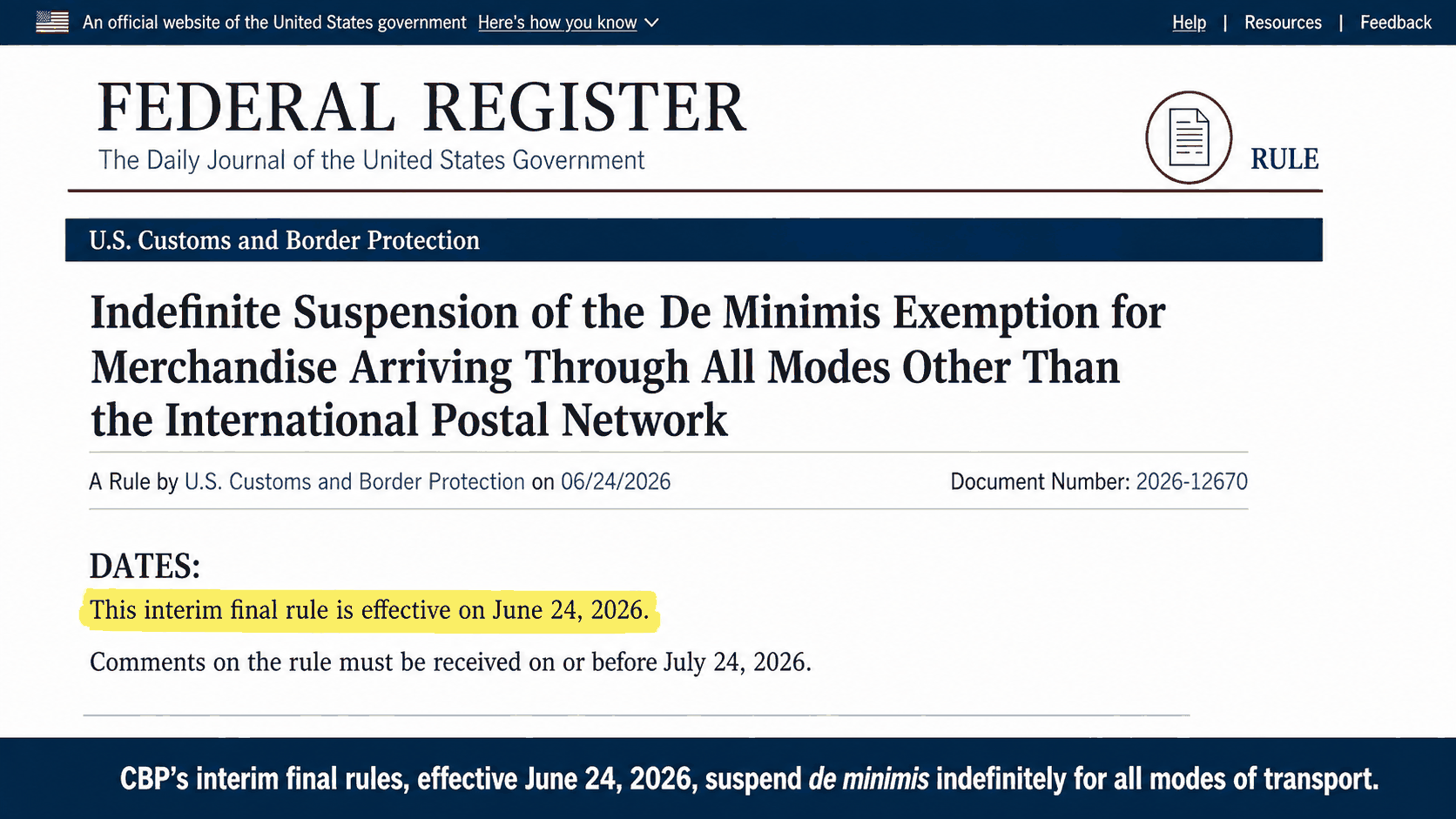
- The duty-free window on cheap imports closed. The US suspended de minimis indefinitely in June 2026, and the EU swapped its €150 exemption for €3 per item on July 1, 2026. Your supplier's shipping quote is no longer your landed cost.
- Budget roughly two weeks of operating cash you're not allowed to touch. You pay your supplier on day zero and get paid out on day 7 to 21. At three orders a day that's about $800. Fund those same orders with ads and it's north of $2,700.
You can be live and taking orders for about $40. Everyone will tell you $150, $300, or $700, and every one of them is pricing your store. Wrong thing to price.
Setting up costs almost nothing in 2026. Finding a product people will actually buy is what costs money, and it got harder in the last 18 months for three specific reasons nobody's put in one place. So here's the real stack: what you pay to switch the lights on, what comes out of every single order, what it costs to find a winner, and the number that quietly bankrupts profitable stores.

What it actually costs to switch the lights on
Here's the whole launch bill, priced from the vendors' own pages.
| Line item | Real cost | Notes |
|---|---|---|
| Shopify Basic, month 1 | $1 | 3 days free, then $1/month for 3 months. It's $39/month after that, or $29/month if you prepay a year |
| Domain (.com) | $6.79 to $11.28 | Namecheap. The $6.79 rate needs a promo code and is one per household. Renewal jumps to $18.48, so diarize it |
| Theme | $0 | Shopify's free themes convert fine. Paid themes are a $200 to $400 tax on procrastination |
| Two product samples | ~$30 | Including shipping |
| Logo | $0 | Canva. Twenty minutes |
| LLC / business registration | $0 for now | See below |
| Total to be live with a sample in hand | ~$40 |
That LLC line is where I'll disagree with most of the internet. Everyone prices business registration at $50 to $500 and puts it in the launch budget. Don't do it yet. You can operate as a sole proprietor without forming an entity, and an EIN from the IRS takes about ten minutes and costs nothing. Forming an LLC for a business that doesn't have a product yet is a confidence purchase, and it averages $132 in state filing fees.
Two things you probably do still need to file, even as a sole proprietor: a DBA or fictitious-name registration if you're trading as anything other than your own legal name, which you almost certainly are, and a local business licence in many cities and counties. Both are usually cheap. Neither is an LLC.
Sales tax permit is a different story, because a reseller certificate is what lets you buy from wholesale suppliers without paying sales tax on the purchase. That one's worth doing early, and it's free or nearly free in most states. Here's how to get a reseller license and sales tax ID.
Here's the part that makes this hard
That $40 is real, and it's also a trap, because it prices the least important few percent of what you're about to spend.
Almost nobody fails at dropshipping because their store cost too much. They fail because they spent $420 finding out that three products don't sell, ran out of money, and quit two products before the one that would have worked. The store is a fixed, knowable, tiny cost. The discovery process is variable, unknowable in advance, and it's the entire game.
And it got more expensive. Meta's median CPM across roughly 35,000 ecommerce brands rose 20% year over year to $14.19 in 2025. So the same audience costs a fifth more to reach than it did a year earlier, and you'll likely need three or four tests to find something that works. Meanwhile the duty-free window on cheap imports closed: the US suspended de minimis in August 2025 and made it indefinite in June 2026, and the EU killed its €150 exemption on July 1, 2026. Landed costs went up on exactly the sub-$20 products beginners start with.
None of that makes dropshipping a bad idea. It makes the cheap-product, buy-traffic-immediately version of it a bad idea, which is the version every YouTube video teaches.
The five costs that hit every single order
Let's price one real product all the way through. A magnetic phone mount, $9.40 from a Chinese supplier, sold at $29.95 on your own Shopify store.
| Cost | Amount | Where it goes |
|---|---|---|
| Product | $9.40 | Supplier |
| Supplier shipping | $3.80 | Supplier |
| Import duty (illustrative) | ~$2.20 | US Customs. Was $0 before August 2025 |
| Payment processing | $1.17 | Shopify Payments, 2.9% + 30¢ |
| Landed + processing | $16.57 | 55% of the sale price |
| Left over | $13.38 | This is your contribution margin |
That $13.38 is the only number that matters, and it's the one to write on a sticky note. It's what's left to pay for the customer, the refunds, the software and you.
Be careful with the duty line, because it's the one I can't hand you. It's illustrative, not a quote. Penn Wharton Budget Model measured the effective US tariff rate on Chinese imports at 23.4%, and 23.4% of $9.40 is $2.20. But that's a revenue-weighted average across every product category America imports from China, not a rate you can apply to a phone mount. Your actual number depends on the HS code, the country of origin and how your supplier declares the shipment. Which brings us to the section every competitor skipped.
What the de minimis change did to your landed cost
This is the biggest cost change in dropshipping since 2020.
For years, anything under $800 entered the US duty-free under Section 321. That's what made $9 AliExpress products viable. It's gone. The exemption was suspended for all countries on August 29, 2025. After February 2026's Supreme Court ruling struck down the IEEPA tariffs, the suspension was preserved by a fresh executive order on a different legal footing, and on June 23, 2026 CBP issued interim final rules (effective June 24) suspending de minimis indefinitely for every mode of transport. A new postal entry process took effect July 24, 2026, one week before this was written: the designated filer now transmits shipment data with 10-digit tariff classifications to CBP and remits duties through Pay.gov monthly.
Worth knowing: the executive order that kept the suspension alive rests on the argument that removing an administrative exemption isn't the same as imposing a tax, and that argument is being litigated right now. Don't build a business on the assumption it resolves either way.
Europe went the same direction, and its version is more expensive than most sellers realize. The EU's €150 duty-free threshold ended July 1, 2026, replaced by a flat €3 per item until 2028, charged to the business rather than the customer. Per item, not per parcel. A three-item order costs you €9 straight out of margin.
What this means in practice: your supplier's shipping quote is no longer your landed cost. Somebody pays the duty. If it isn't contractually your supplier, it's you, or worse, it's your customer at the door, and then it's a chargeback.
The email to send before you place a single order
Copy this into an email to every supplier you're considering.
Two suppliers will answer clearly. One will go vague on question two. That one just told you something.
The clean way around all of it is to source domestically for your first product. In my experience a comparable US supplier costs meaningfully more per unit, often somewhere north of 20%, and gives you zero duty exposure, zero customs delay and delivery in days instead of weeks. On a $29.95 product that trade is usually worth taking. You can find them by cold-emailing manufacturers directly, which works and takes a few weeks, or you can filter SaleHoo's directory by US warehouse location and skip the guesswork. More on that in our guide to finding American dropshipping suppliers.
The ad math that decides whether your product can work
Your contribution margin is $13.38. Here's what it costs to buy a customer.
Benchmarks, drawn from about 35,000 ecommerce brands and published in April 2026, put the median cost per purchase on Meta at $38.19. By category it runs from $29.99 in Lifestyle & Boutique to $49.48 in Electronics, the highest of the fifteen categories they track, and where a phone mount lives. Median conversion rate on that traffic: 1.6%.
So in Electronics, at the median, you'd pay $49.48 to make $13.38.
Read that again, because it's the whole article. You don't have a marketing problem, you have a product-selection problem, and no amount of creative testing closes a 3.7x gap. The break-even rule is simple: your contribution margin has to be bigger than your category's median CPA. If it isn't, the product cannot work on paid traffic, no matter how good your ads are.
| Category | Median Meta cost per purchase |
|---|---|
| Lifestyle & Boutique | $29.99 |
| Apparel & Accessories | $36.76 |
| Beauty | $37.92 |
| All categories (median) | $38.19 |
| Electronics | $49.48 |
There are exactly two ways out.
Raise the price. You need retail around $70 with a landed cost under $18. That leaves you about $50 of contribution, which clears even the Electronics median. In practice that means bundling, a better-differentiated product, or a market that isn't price-shopping. Harder, but it's real, and it's why high-ticket sellers are still doing fine. We've got a longer list of low-cost products with high profit margins if you need the starting points.
Don't buy traffic. This is the one I'd pick for a first product, and here's the number that makes the case. eBay takes 13.6% plus $0.40, so a $29.95 sale costs you $4.47 in fees. Meta's median advertiser pays $38.19 for that same customer. Marketplace fees look expensive right up until you price the alternative.
| Channel | Cost to make one $29.95 sale | Left after the $15.40 landed cost |
|---|---|---|
| eBay (13.6% + $0.40, card processing included) | $4.47 | $10.08 |
| Etsy (6.5% + $0.20 listing + 3% & 25¢ processing) | $3.30 | $11.25 |
| Amazon (15% referral + $39.99/mo over 20 units) | $6.49 | $8.06 |
| Own store + Meta ads (Electronics median CPA + processing) | $50.65 | -$36.10 |
eBay and Etsy calculate their percentage on the total including shipping and sales tax, so budget a few cents more than shown. Amazon's row amortizes the $39.99 subscription across the 20 units this article suggests you start with; at higher volume it falls away.
Decision rule: if your contribution margin is under $30, sell on marketplaces or organic social until you've proven demand. If it's over $50, you can buy traffic. Between $30 and $50, test with $10/day for 14 days and kill it if CPA hasn't landed under your margin by day 10.
The money you need that isn't a cost at all
Nobody writes about this and it's the thing that actually kills profitable stores.
You pay your supplier the moment the order comes in. You get paid out days later. In between, you're funding your customers' purchases out of your own pocket, and the gap is wider than you'd think for a new account.
Stripe and PayPal can both hold funds from new merchants. Stripe calls it a reserve, a temporary hold on part of your balance for a set period, triggered by long delivery timeframes (that's you, if you're shipping from China), unexplained volume spikes (that's you, if a product takes off) and elevated refund activity. PayPal's rolling reserve works the same way, and their own published example holds 10% of daily receipts for 90 days. eBay says that in limited circumstances new sellers may see holds of up to 21 days, released faster once tracking uploads or the buyer leaves feedback. Our guide on coping with PayPal payment holds covers the release levers in more detail.
Here's the formula:
Run it on our phone mount at three orders a day, sold on eBay with no ad spend:
- Cost of goods: 3 × $15.40 = $46.20/day
- Ads: $0
- Payout delay: 14 days
- Float required: $647
Add a refund buffer. At a 5% refund rate over 30 days that's roughly 4.5 refunds at $29.95, about $135, and you don't get the payment processing fee back on any of them. So call it $800 you need in the bank and cannot spend.
Now do the paid version, and watch what happens. To get three orders a day at the Electronics median CPA, you're spending $148 a day on ads. Total daily outflow becomes $194, and your float requirement jumps past $2,700. That's the real reason the organic-first path isn't just advice for beginners: it's four times cheaper to finance.
Either way, that's the honest answer to "how much money do I need to start dropshipping." Not $40. Not $173. About $40 to launch, and $800 or more you're not allowed to touch once orders start.
What I'd do with $500 this month
Ranked, and I'd do them in this order.
- Spend $40 and launch this week. Shopify at $1, a domain, SaleHoo Dropship, two samples. Nothing else. The store does not need to be good, it needs to exist.
- Spend $0 on ads for the first 30 days. Sell your first 20 units on eBay, Etsy, Facebook Marketplace or TikTok organic. You're not trying to build a business there. You're buying information about whether anyone wants the thing, at $4.47 a sale instead of $38.19.
- Keep the remaining $460 as float, not as budget. It's not for spending. It's for covering the gap between paying your supplier and getting paid.
- Only then, buy traffic. And only if your contribution margin cleared your category's median CPA in the table above. If it didn't, change the product or raise the price. Don't change the ad copy.
What I'd skip entirely at $500: a paid theme, an LLC, a course, a "done for you" store, any tool with a monthly fee, and a logo designer. That list is about $800 of things that feel like progress.
One place I'd spend money instead of time: if you're comparing more than a handful of suppliers, or sourcing in a category you don't know, vetting them yourself is genuinely slow work. That's what a directory is for, and SaleHoo's Starter plan runs $9/month billed annually with a 60-day refund. If you're sourcing one product from one brand you already know, don't bother, a free search will do it. Either way, start with how to find products to dropship that actually sell.
Four ways this goes wrong, and what it looks like
The reserve surprise
You're profitable on paper and your card declines. What it looks like: your store dashboard says $2,000 in sales and your available payout says $180, and you've got supplier invoices due. Recovery: upload tracking numbers the same day orders ship, which is the fastest way to get held funds released. Then hold 14 days of float permanently, not as a one-time buffer.
The DDP quote that wasn't
Your supplier said "we handle customs" in a chat message and your customer got a bill from the carrier. What it looks like: tickets saying "I was charged extra to receive this," followed by chargebacks. Recovery: get DDP in writing with the incoterm named on the purchase order, and cover the duty yourself on any order already in transit. Refunding a customer's duty charge is far cheaper than a chargeback, which costs you the sale, the goods, a $20 PayPal chargeback fee, and a mark against your dispute ratio.
The chargeback spiral
Long shipping times generate disputes, disputes generate more reserves, reserves generate cash problems. What it looks like: dispute rate creeping past 0.5%. Stripe charges $15 per dispute whether you win or lose. PayPal's $20 chargeback fee is waived only if you've met every Seller Protection requirement, which shipping from China with slow tracking often means you haven't. Recovery: put real delivery estimates on the product page rather than the checkout page, send tracking within 48 hours, and answer support inside 24 hours. Most disputes are impatience, not fraud.
Scaling the wrong number
You optimize for ROAS, hit 3x, scale spend, and your bank balance goes down. What it looks like: revenue climbing while cash falls. ROAS ignores your cost of goods entirely. Your break-even ROAS is 1 divided by your contribution margin, so on a 30% margin product you need 3.3x just to stand still, and a 3x ROAS is quietly losing money on every order. Recovery: track contribution margin per order, and set your ad target against that number, not against revenue.
.webp)
FAQs
Almost. You'll need a few dollars for a domain and enough cash to pay your supplier for the first customer's order. eBay's 250 free listings a month, or Facebook Marketplace, get you closest to zero, because you collect payment before you order from your supplier.
Your first month is about $1 on Shopify's intro rate. After that it's $39 a month billed monthly, or $29 if you prepay a year, plus $0 for a free importing app. Realistically expect $40 to $80 a month in fixed costs once you add an email tool and one paid app. Everything else scales with orders.
Usually yes, and this is the cost model's biggest catch. You pay your supplier when the order comes in, and your payment processor pays you out days later. Plan on funding roughly two weeks of orders yourself.
On the right products, yes. On $10 to $30 products sold with paid ads, the math mostly stopped working: Meta's median cost per purchase is $38.19 and a $29.95 product doesn't generate enough margin to cover it. Higher price points and marketplace or organic traffic are where the profitable sellers moved.
$10 a day for 14 days, so $140, and hold yourself to killing it at day 10 if cost per purchase hasn't come under your contribution margin. Three tests at that size is $420, and three is roughly what it takes.
Not to start. You can operate as a sole proprietor, and an EIN from the IRS is free. You will likely need a DBA registration if you're trading under a store name, and possibly a local business licence. A sales tax permit is the more useful early filing, because it's what lets you buy from wholesale suppliers tax-free.
Start here
Open the Shopify trial today, buy a domain, and order two samples of the product you've been thinking about. That's your $40 and your first week. While the samples are in transit, send the three-question supplier email to six suppliers and work out your contribution margin from the five-line table above.
If that number comes back under $15, you've saved yourself about $420 in ad spend by finding out now.
One thing I'd like to be wrong about: is anyone still making sub-$40 products work on paid traffic in 2026? If you are, tell me your contribution margin and your actual CPA, because every number I can find says it shouldn't be possible and I'd genuinely like to see the exception.
About this article
About the author


)


However, a manufacturer has to weigh these advantages against the disadvantages. Providing dropshipping services is very time-consuming, and most manufacturers can make money faster by simply pumping out tons of goods and selling them in bulk.
I have a question: While every customer has the same access to Aliexpress in terms of price and free shipping as of dropshippers, what would make customers to buy any product with higher cost from dropshippers rather than Aliexpress?
I know price is a big factor, but there are other important ones when choosing your suppliers like how reliable the supplier is. Settling for the supplier who offers the lowest price is one of the many reasons many resellers are scammed online.
Cheers!
1 - Is it possible that I make a deal with my supplier that i pay him for X amount of money and then I go sell my products on Shopify and then whatever of my products didn't sell i can have him refund my money ? Can i do it this way other than the traditional way ?
2 - Is it possible that I make a deal with the supplier that I can give him percentage along with paying him the labeled prices forhis product ?
3- Is it possible that I delay the receiving of money when someone purchase from my store and enters his cc until I go to aliexpress for example and send his product ?
Please refer to my reply below -
1 - Is it possible that I make a deal with my supplier that i pay him for X amount of money and then I go sell my products on Shopify and then whatever of my products didn't sell i can have him refund my money ? Can i do it this way other than the traditional way ? - You will have to ask the supplier directly. I think dropshipping would be a better method as you only pay the supplier when a product actually sells.
2 - Is it possible that I make a deal with the supplier that I can give him percentage along with paying him the labeled prices forhis product ? - Again this question is best discussed with the supplier directly.
3- Is it possible that I delay the receiving of money when someone purchase from my store and enters his cc until I go to aliexpress for example and send his product ?The faster you get the payment fro your customer the better, so you can pay your supplier for the products being ordered/bought by your customer.
All the best!
When getting most items shipped to Canada there always seems to be extra customs fees I have to pay if coming from another company.
How would this be explained in the shipping charges?
Or would it just be in the fine print?